Resources
About Us
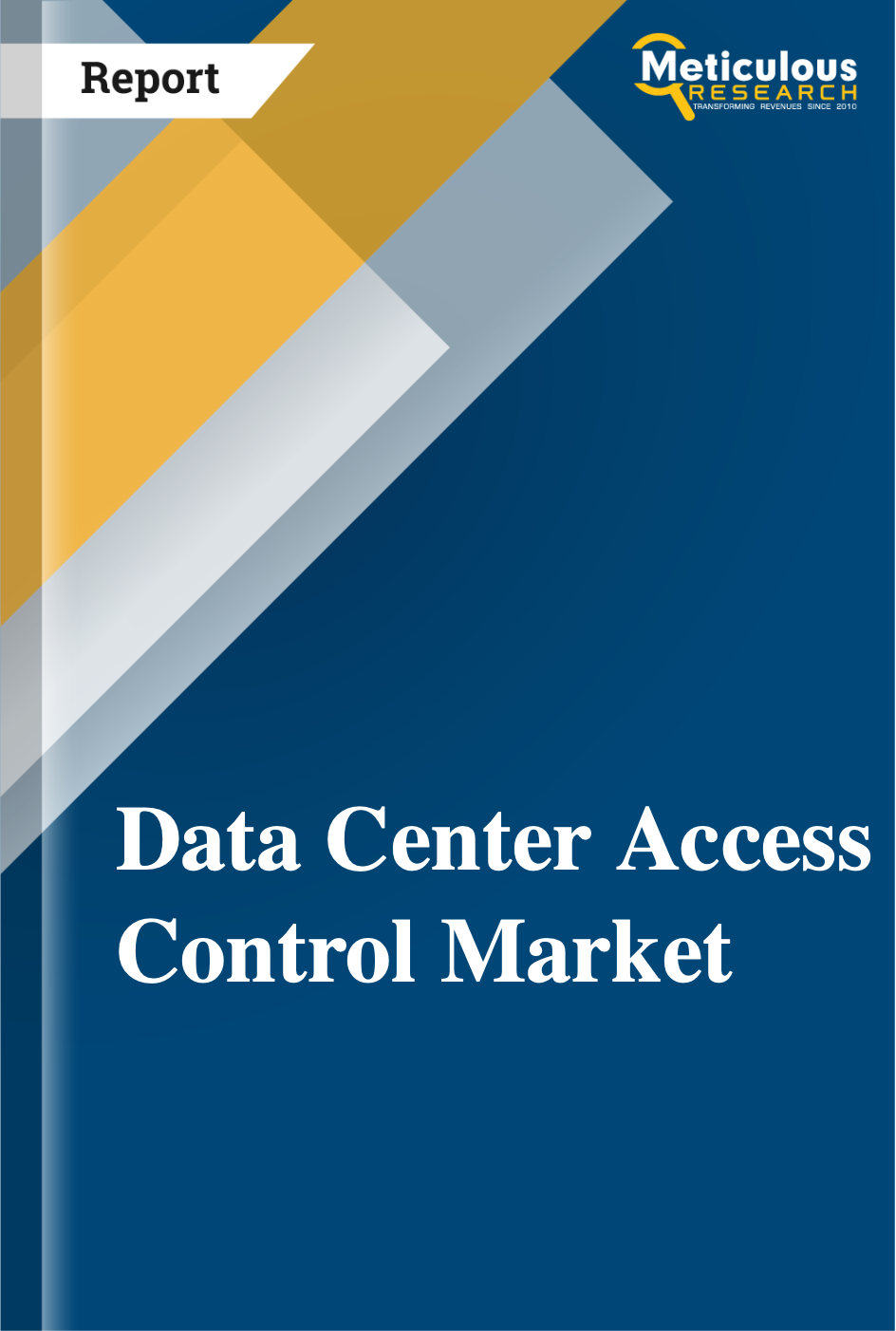
The global Data Center Access Control Market is estimated to be valued at USD 4.6 billion in 2025 and is projected to reach USD 5.2 billion in 2026. The market is expected to reach USD 16.3 billion by 2036, registering a CAGR of 12.1%during the forecast period (2026–2036).
The Data Center Access Control Market comprises hardware, software, and services that regulate, monitor, and secure physical access to critical areas within data centers, including facility entrances, server rooms, data halls, network operations centers (NOCs), utility rooms, and individual racks. Modern access control systems integrate technologies such as biometric authentication, RFID and smart cards, mobile credentials, facial recognition, AI-based access analytics, cloud-based access management platforms, and multi-factor authentication (MFA) to ensure only authorized personnel can access sensitive infrastructure. As data centers become increasingly critical to digital economies, physical security has become an essential component of overall cybersecurity strategy.
The market is experiencing strong growth due to the rapid expansion of hyperscale and AI data centers worldwide. These facilities host critical cloud services, AI computing infrastructure, financial systems, and government workloads, making them attractive targets for both cyber and physical security threats. According to Synergy Research Group, the number of hyperscale data centers worldwide has exceeded 1,100-1,200 facilities by 2025, with continued expansion by Amazon Web Services (AWS), Microsoft, Google, Meta, and other cloud providers. As investments in hyperscale infrastructure continue to increase, operators are strengthening physical security through advanced access control technologies capable of providing real-time monitoring, identity verification, and centralized access management.
Growing adoption of zero-trust security models is further accelerating market growth. Organizations are increasingly implementing integrated security architectures where physical identity verification, cybersecurity systems, video surveillance, and access management platforms work together to reduce security risks. At the same time, regulatory requirements such as ISO/IEC 27001, SOC 2, PCI DSS, and various data privacy regulations are encouraging operators to deploy more sophisticated authentication technologies and comprehensive access management systems. Continuous advances in artificial intelligence, cloud computing, mobile authentication, and biometric technologies are expected to further strengthen market adoption over the coming decade.
Rapid Expansion of AI and Hyperscale Data Centers
The rapid growth of AI infrastructure and hyperscale data centers is significantly increasing demand for advanced access control solutions. Modern AI facilities contain thousands of high-value servers, networking systems, and storage devices that require stringent physical security. As hyperscale operators continue expanding their global footprint, investments in intelligent access control systems capable of monitoring personnel movement, managing credentials, and protecting critical infrastructure are increasing. According to Synergy Research Group, the number of hyperscale data centers worldwide has surpassed 1,100, highlighting the growing need for advanced physical security systems across large-scale facilities.
Increasing Cyber-Physical Security Threats and Zero-Trust Adoption
Data centers are becoming increasingly vulnerable to both cyberattacks and unauthorized physical access. As a result, organizations are adopting zero-trust security models that require continuous verification of every individual attempting to access critical infrastructure. Advanced technologies such as biometric authentication, facial recognition, multi-factor authentication (MFA), and AI-based access analytics provide higher levels of security than conventional card-based systems. The growing integration of physical security with cybersecurity platforms is encouraging data center operators to modernize access control infrastructure, making zero-trust security one of the key drivers of market growth.
High Deployment and Integration Costs
Deploying modern access control systems requires substantial investment in biometric readers, electronic locks, controllers, access management software, network infrastructure, and system integration services. Large hyperscale facilities often require thousands of access points, centralized monitoring platforms, and integration with video surveillance and cybersecurity systems, increasing implementation costs. These high capital requirements may slow adoption among smaller enterprise data centers and cost-sensitive operators.
Legacy Infrastructure Compatibility and Privacy Concerns
Many existing data centers continue to operate legacy physical security infrastructure that may not easily integrate with modern cloud-based access management platforms or AI-powered authentication technologies. Upgrading these facilities often requires significant infrastructure modifications and system reconfiguration. In addition, increasing use of biometric authentication technologies has raised concerns regarding personal data protection, privacy regulations, and secure storage of biometric information. Compliance with evolving privacy laws and identity protection requirements remains an important challenge for both vendors and end users.
Growing Adoption of AI-Enabled Access Management
Artificial intelligence is creating significant opportunities for the Data Center Access Control Market by improving the efficiency, accuracy, and responsiveness of physical security systems. AI-enabled access management platforms can analyze user behavior, detect abnormal access patterns, automate threat identification, and support real-time security decision-making. As AI data centers become larger and more complex, operators are increasingly adopting intelligent access control systems that reduce manual intervention while strengthening overall facility security. Integration of AI with biometric authentication, video surveillance, and cybersecurity platforms is expected to create substantial growth opportunities throughout the forecast period.
Expansion of Cloud-Based Physical Security Platforms and Edge Data Centers
The growing deployment of cloud-based access control platforms is creating new opportunities for centralized security management across geographically distributed data center networks. Cloud-native platforms enable operators to remotely manage credentials, monitor access events, automate software updates, and improve scalability while reducing infrastructure complexity. At the same time, rapid expansion of edge data centers is increasing demand for remotely managed physical security systems that provide consistent protection across multiple locations. These trends are expected to accelerate adoption of cloud-based access control solutions over the coming decade.
Identity Management Across Multiple Data Center Locations
Managing secure access across multiple geographically distributed data centers has become increasingly challenging for large cloud providers and colocation operators. Organizations must maintain consistent identity verification, user permissions, audit trails, and security policies across hundreds of facilities while ensuring uninterrupted operations. As data center networks continue expanding globally, centralized identity management and synchronized access control systems are becoming critical requirements for maintaining operational security.
Integration with Cybersecurity Platforms
Modern data centers require seamless integration between physical access control systems and cybersecurity platforms such as Security Information and Event Management (SIEM), identity and access management (IAM), video surveillance, and threat detection systems. Achieving interoperability across multiple hardware and software platforms can be technically complex and may require significant customization. Ensuring secure data exchange, real-time monitoring, and unified incident response remains a key challenge for both solution providers and data center operators.
Increasing Adoption of Touchless and Biometric Authentication
The demand for touchless authentication technologies has increased significantly as organizations seek to improve both security and user convenience. Facial recognition, iris recognition, palm vein recognition, and mobile credentials are increasingly replacing conventional card-based authentication in high-security data center environments. These technologies provide faster authentication, reduce the risk of credential sharing, and improve overall security while supporting contactless access management. As biometric technologies continue to improve in accuracy and reliability, their adoption across hyperscale and enterprise data centers is expected to accelerate.
Growing Integration of Physical and Cybersecurity Systems
Data center operators are increasingly integrating physical access control with cybersecurity platforms to establish a unified security framework. Modern access control solutions are being connected with identity management systems, video surveillance, AI-powered analytics, and SIEM platforms to provide centralized monitoring and automated incident response. This integrated approach improves threat detection, strengthens compliance, and supports zero-trust security strategies, making it one of the most important trends shaping the market.
Market Analysis by Component
Based on component, the global Data Center Access Control Market is segmented into Hardware, Software, and Services. Hardware is further segmented into Card Readers, Biometric Readers, Electronic Locks, Controllers, Door Management Systems, Turnstiles & Mantraps, and Access Control Panels. Software includes Access Management Software, Identity Management Software, Visitor Management Software, and Monitoring & Analytics Software, while Services comprise Consulting, System Integration, Managed Services, and Maintenance & Support.
In 2026, the Hardware segment is expected to account for the largest share of the global market. The large share of this segment is mainly due to the widespread deployment of biometric readers, electronic locks, controllers, and physical security infrastructure across hyperscale, colocation, and enterprise data centers. However, the Software segment is projected to register the fastest growth during the forecast period. The rapid growth of this segment is attributed to increasing adoption of AI-powered access management, cloud-based security platforms, identity management solutions, and advanced security analytics.
Market Analysis by Authentication Technology
Based on authentication technology, the market is segmented into Card-Based Authentication, Biometric Authentication, Mobile Credentials, Multi-Factor Authentication (MFA), and PIN & Password-Based Authentication.
In 2026, Biometric Authentication is expected to account for the largest market share due to its superior security, accuracy, and increasing adoption across mission-critical data center environments. However, Multi-Factor Authentication (MFA) is projected to witness the highest CAGR during the forecast period owing to growing adoption of zero-trust security architectures and increasingly stringent compliance requirements.
Market Analysis by Deployment Model
Based on deployment model, the market is segmented into On-Premises, Cloud-Based, and Hybrid.
In 2026, the On-Premises segment is expected to account for the largest market share because many hyperscale and enterprise operators continue to prefer complete control over mission-critical security infrastructure. However, the Cloud-Based segment is projected to register the highest CAGR during the forecast period due to increasing demand for centralized management, remote monitoring, scalability, and lower maintenance requirements.
Market Analysis by Access Point
Based on access point, the market is segmented into Facility Entrances, Server Rooms, Data Halls, Individual Racks & Cabinets, Network Operations Centers (NOCs), and Critical Utility Rooms.
In 2026, Facility Entrances are expected to account for the largest share of the market as they represent the primary security checkpoint for all personnel entering data center facilities.However, Individual Racks & Cabinets are projected to register the highest CAGR due to increasing deployment of rack-level security systems in hyperscale AI data centers and colocation facilities.
Market Analysis by Data Center Type
Based on data center type, the market is segmented into Hyperscale Data Centers, Colocation Data Centers, Enterprise Data Centers, Edge Data Centers, and Modular Data Centers.
In 2026, Hyperscale Data Centers are expected to account for the largest market share due to continued investments by global cloud providers and AI infrastructure developers.However, Edge Data Centers are projected to witness the highest CAGR during the forecast period as distributed computing infrastructure and 5G networks continue to expand globally.
Market Analysis by End User
Based on end user, the market is segmented into Cloud Service Providers, Colocation Providers, Telecommunications Operators, BFSI, Government & Defense, Healthcare, and IT & ITES.
In 2026, Cloud Service Providers are expected to account for the largest market share due to rapid expansion of hyperscale cloud infrastructure and AI computing facilities. However, Government & Defense is projected to register the highest CAGR during the forecast period, driven by increasing investments in secure digital infrastructure, critical national data centers, and stringent physical security requirements.
Based on geography, the global Data Center Access Control Market is segmented into North America, Europe, Asia-Pacific, Latin America, and the Middle East & Africa.
In 2026, North America is expected to account for the largest share of the global Data Center Access Control Market. The region's leadership is driven by the presence of the world's largest concentration of hyperscale data centers, significant investments in AI infrastructure, and stringent security requirements for critical digital infrastructure. The United States hosts a large number of hyperscale facilities operated by Amazon Web Services (AWS), Microsoft, Google, Meta, and other cloud providers, all of which require highly secure physical access management systems. In addition, increasing adoption of zero-trust security frameworks, growing cybersecurity investments, and strict compliance requirements such as SOC 2, PCI DSS, and ISO/IEC 27001 are accelerating the deployment of advanced biometric authentication, AI-powered access analytics, and cloud-based access management solutions across the region.
However, Asia-Pacific is projected to register the highest CAGR during the forecast period. Rapid expansion of hyperscale and edge data centers, increasing digital transformation, growing AI investments, and rising cloud adoption are creating strong demand for advanced physical security solutions across the region. Countries such as China, India, Japan, South Korea, Singapore, Australia, and Malaysia are witnessing substantial investments in data center infrastructure, supported by government digital initiatives and increasing enterprise cloud adoption. Growing awareness of cyber-physical security risks, combined with increasing deployment of smart buildings and intelligent authentication technologies, is expected to drive strong market growth throughout Asia-Pacific.
The global Data Center Access Control Market is moderately consolidated, with competition among physical security solution providers, biometric technology companies, identity management vendors, access control hardware manufacturers, cloud security platform providers, and system integrators. Companies compete primarily on authentication accuracy, system reliability, AI capabilities, cybersecurity integration, cloud compatibility, scalability, regulatory compliance, and ease of deployment.
Leading market participants are investing in AI-powered access analytics, facial recognition technologies, mobile credential systems, cloud-native access management platforms, touchless authentication, and integrated physical-cybersecurity solutions. Strategic partnerships with hyperscale cloud providers, acquisitions of identity management companies, product innovation, software platform enhancements, and expansion of managed security services remain the primary growth strategies adopted by market leaders. As AI data centers continue to expand globally, vendors are increasingly focusing on intelligent, scalable, and zero-trust-enabled access control solutions capable of securing highly distributed digital infrastructure.
The report provides a comprehensive competitive assessment of the leading companies operating in the global Data Center Access Control Market. The key players profiled in the report include Johnson Controls International plc, Honeywell International Inc., Siemens AG, Schneider Electric SE, HID Global Corporation, Assa Abloy AB, dormakaba Holding AG, Allegion plc, Axis Communications AB, Genetec Inc., Gallagher Group Limited, Suprema Inc., Bosch Security Systems, LenelS2 (Carrier Global), and Verkada Inc.
The global Data Center Access Control Market is estimated at USD 5.2 billion in 2026.
The market is projected to reach USD 16.3 billion by 2036.
The market is expected to grow at a CAGR of 12.1% during 2026–2036.
Rapid expansion of AI and hyperscale data centers, increasing cyber-physical security threats, growing adoption of zero-trust security models, and stricter regulatory compliance requirements are driving market growth.
Identity management across multiple sites, integration with cybersecurity platforms, high deployment costs, and privacy concerns related to biometric authentication remain key market challenges.
AI-based access analytics, biometric authentication, facial recognition, mobile credentials, cloud access control platforms, touchless authentication, and multi-factor authentication (MFA) are transforming the market.
Hardware is expected to account for the largest market share in 2026.
Software is projected to register the highest CAGR during the forecast period.
Biometric Authentication is expected to account for the largest market share.
Multi-Factor Authentication (MFA) is projected to witness the highest CAGR due to increasing adoption of zero-trust security frameworks.
On-Premises deployment is expected to account for the largest market share.
Cloud-Based deployment is projected to register the highest CAGR during the forecast period.
Facility Entrances are expected to account for the largest market share as they serve as the primary physical security checkpoint.
Individual Racks & Cabinets are projected to witness the highest CAGR due to increasing deployment of rack-level access security in AI and colocation data centers.
Hyperscale Data Centers are expected to remain the largest market segment owing to continued investments by cloud service providers.
Edge Data Centers are expected to register the highest CAGR, driven by increasing deployment of edge computing infrastructure and 5G networks.
Cloud Service Providers are expected to remain the largest end-user segment.
Government & Defense is projected to register the highest CAGR due to increasing investments in secure digital infrastructure and mission-critical data centers.
North America is expected to remain the largest regional market due to extensive hyperscale data center deployment and advanced physical security adoption.
Asia-Pacific is expected to witness the fastest growth, supported by rapid data center expansion, AI investments, and increasing digital transformation.
Leading companies include Johnson Controls, Honeywell, Siemens, Schneider Electric, HID Global, Assa Abloy, dormakaba, Allegion, Axis Communications, Genetec, Gallagher Group, Suprema, Bosch Security Systems, LenelS2, and Verkada.
1. Introduction
1.1 Market Definition
1.2 Market Ecosystem
1.3 Currency and Limitations
1.3.1 Currency
1.3.2 Limitations
1.4 Key Stakeholders
2. Research Methodology
2.1 Research Approach
2.2 Data Collection & Validation Process
2.2.1 Secondary Research
2.2.2 Primary Research & Validation
2.2.2.1 Primary Interviews with Experts
2.2.2.2 Country-/Region-Level Analysis
2.3 Market Estimation
2.3.1 Bottom-Up Approach
2.3.2 Top-Down Approach
2.3.3 Growth Forecast
2.4 Data Triangulation
2.5 Assumptions
3. Executive Summary
4. Market Overview
4.1 Introduction
4.2 Market Dynamics
4.2.1 Drivers
4.2.1.1 Rapid Expansion of AI and Hyperscale Data Centers
4.2.1.2 Increasing Cyber-Physical Security Threats
4.2.1.3 Growing Adoption of Zero-Trust Security Models
4.2.1.4 Rising Compliance Requirements for Critical Infrastructure
4.2.2 Restraints
4.2.2.1 High Deployment and Integration Costs
4.2.2.2 Legacy Infrastructure Compatibility Issues
4.2.2.3 Privacy Concerns Related to Biometric Authentication
4.2.3 Opportunities
4.2.3.1 AI-Enabled Access Management
4.2.3.2 Cloud-Based Physical Security Platforms
4.2.3.3 Multi-Factor Authentication (MFA) Adoption
4.2.3.4 Edge Data Center Expansion
4.2.4 Challenges
4.2.4.1 Identity Management Across Multiple Sites
4.2.4.2 Integration with Cybersecurity Platforms
4.3 Technology Landscape
4.3.1 Biometric Authentication
4.3.2 RFID & Smart Card Technologies
4.3.3 Mobile Credential Systems
4.3.4 Facial Recognition
4.3.5 AI-Based Access Analytics
4.3.6 Cloud Access Control Platforms
4.3.7 Touchless Authentication Technologies
4.4 Data Center Access Control Ecosystem
4.4.1 Hardware Manufacturers
4.4.2 Access Control Software Providers
4.4.3 Identity & Credential Providers
4.4.4 System Integrators
4.4.5 Data Center Operators
4.4.6 Managed Security Service Providers
4.5 Value Chain Analysis
4.5.1 Component Suppliers
4.5.2 Hardware Manufacturers
4.5.3 Software Developers
4.5.4 System Integrators
4.5.5 End Users
4.6 Regulatory & Compliance Landscape
4.6.1 ISO/IEC 27001
4.6.2 SOC 2 Compliance
4.6.3 PCI DSS
4.6.4 GDPR & Privacy Regulations
4.6.5 Critical Infrastructure Security Standards
4.7 Porter's Five Forces Analysis
4.8 Investment & Industry Trends
4.8.1 AI Data Center Investments
4.8.2 Physical Security Modernization
4.8.3 Smart Building Integration
4.8.4 Digital Identity Technologies
4.9 Cost Analysis
4.9.1 Hardware Cost Analysis
4.9.2 Software Licensing Cost
4.9.3 Deployment & Integration Cost
4.9.4 Total Cost of Ownership
5. Data Center Access Control Market, by Component
5.1 Introduction
5.2 Hardware
5.2.1 Card Readers
5.2.2 Biometric Readers
5.2.3 Electronic Locks
5.2.4 Controllers
5.2.5 Door Management Systems
5.2.6 Turnstiles & Mantraps
5.2.7 Access Control Panels
5.3 Software
5.3.1 Access Management Software
5.3.2 Identity Management Software
5.3.3 Visitor Management Software
5.3.4 Monitoring & Analytics Software
5.4 Services
5.4.1 Consulting
5.4.2 System Integration
5.4.3 Managed Services
5.4.4 Maintenance & Support
6. Data Center Access Control Market, by Authentication Technology
6.1 Introduction
6.2 Card-Based Authentication
6.2.1 RFID Cards
6.2.2 Smart Cards
6.2.3 NFC Credentials
6.3 Biometric Authentication
6.3.1 Fingerprint Recognition
6.3.2 Facial Recognition
6.3.3 Iris Recognition
6.3.4 Palm Vein Recognition
6.4 Mobile Credentials
6.5 Multi-Factor Authentication (MFA)
6.6 PIN & Password-Based Authentication
7. Data Center Access Control Market, by Deployment Model
7.1 Introduction
7.2 On-Premises
7.3 Cloud-Based
7.4 Hybrid
8. Data Center Access Control Market, by Access Point
8.1 Introduction
8.2 Facility Entrances
8.3 Server Rooms
8.4 Data Halls
8.5 Individual Racks & Cabinets
8.6 Network Operations Centers (NOCs)
8.7 Critical Utility Rooms
9. Data Center Access Control Market, by Data Center Type
9.1 Introduction
9.2 Hyperscale Data Centers
9.3 Colocation Data Centers
9.4 Enterprise Data Centers
9.5 Edge Data Centers
9.6 Modular Data Centers
10. Data Center Access Control Market, by End User
10.1 Introduction
10.2 Cloud Service Providers
10.3 Colocation Providers
10.4 Telecommunications Operators
10.5 BFSI
10.6 Government & Defense
10.7 Healthcare
10.8 IT & ITES
11. Data Center Access Control Market, by Geography
11.1 Introduction
11.2 North America
11.2.1 U.S.
11.2.2 Canada
11.3 Europe
11.3.1 Germany
11.3.2 U.K.
11.3.3 France
11.3.4 Netherlands
11.3.5 Ireland
11.3.6 Sweden
11.3.7 Norway
11.3.8 Rest of Europe
11.4 Asia-Pacific
11.4.1 China
11.4.2 Japan
11.4.3 India
11.4.4 South Korea
11.4.5 Singapore
11.4.6 Australia
11.4.7 Malaysia
11.4.8 Indonesia
11.4.9 Rest of Asia-Pacific
11.5 Latin America
11.5.1 Brazil
11.5.2 Mexico
11.5.3 Argentina
11.5.4 Chile
11.5.5 Colombia
11.5.6 Rest of Latin America
11.6 Middle East & Africa
11.6.1 UAE
11.6.2 Saudi Arabia
11.6.3 South Africa
11.6.4 Israel
11.6.5 Rest of Middle East & Africa
12. Competitive Landscape
12.1 Overview
12.2 Key Growth Strategies
12.3 Competitive Benchmarking
12.4 Competitive Dashboard
12.4.1 Market Leaders
12.4.2 Marker Differentiators
12.4.3 Vanguards
12.4.4 Emerging Players
12.5 Market Share/Ranking Analysis, By Key Player (2025)
13. Company Profiles
(Business Overview, Financial Overview, Product Portfolio, Strategic Developments, SWOT Analysis)
13.1 Johnson Controls International plc
13.2 Honeywell International Inc.
13.3 Siemens AG
13.4 Schneider Electric SE
13.5 HID Global Corporation
13.6 Assa Abloy AB
13.7 dormakaba Holding AG
13.8 Allegion plc
13.9 Axis Communications AB
13.10 Genetec Inc.
13.11 Gallagher Group Limited
13.12 Suprema Inc.
13.13 Bosch Security Systems
13.14 LenelS2 (Carrier Global)
13.15 Verkada Inc.
14. Appendix
14.1 List of Abbreviations
14.2 Discussion Guide
14.3 Related Reports
14.4 Customization Options






















Published Date: Apr-2026
Published Date: Apr-2026
Published Date: Feb-2026
Published Date: Feb-2026
Subscribe to get the latest industry updates