Resources
About Us
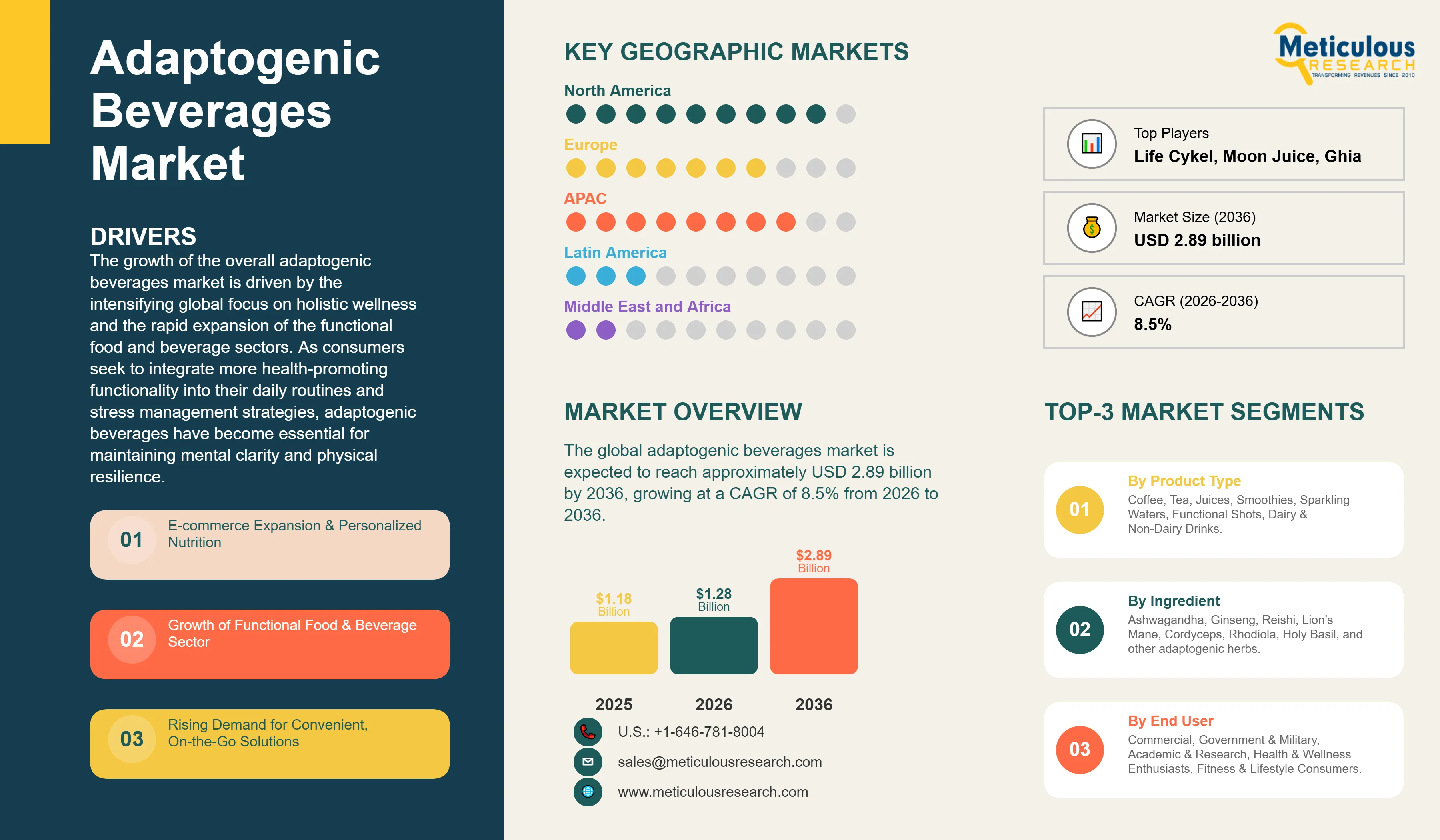
The global adaptogenic beverages market was valued at USD 1.18 billion in 2025. The market is expected to reach approximately USD 2.89 billion by 2036 from USD 1.28 billion in 2026, growing at a CAGR of 8.5% from 2026 to 2036. The growth of the overall adaptogenic beverages market is driven by the intensifying global focus on holistic wellness and the rapid expansion of the functional food and beverage sectors. As consumers seek to integrate more health-promoting functionality into their daily routines and stress management strategies, adaptogenic beverages have become essential for maintaining mental clarity and physical resilience. The rapid expansion of e-commerce platforms and the increasing need for convenient, on-the-go health solutions continue to fuel significant growth of this market across all major geographic regions.
Click here to: Get Free Sample Pages of this Report
Adaptogenic beverages are critical functional drinks that leverage botanical extracts to provide optimized physiological responses and improved mental wellbeing through a convenient liquid format. These products include integrated herbal blends, functional sweeteners, and bioavailable nutrients designed to balance the body's stress response and enhance performance across the wellness continuum. The market is defined by high-efficiency formulation technologies such as nano-emulsification and cold-brew extraction, which significantly enhance nutrient absorption and flavor profile in high-pressure consumer environments. These products are indispensable for health-conscious individuals seeking to optimize their internal balance and meet aggressive mental and physical performance targets.
The market includes a diverse range of solutions, ranging from simple herbal teas for basic relaxation to complex functional shots and protein-based smoothies. These products are increasingly integrated with advanced ingredients such as L-theanine and magnesium to provide benefits such as sustained energy without the crash and improved cognitive function. The ability to provide stable, high-precision nutritional data while minimizing artificial additives has made adaptogenic beverage technology the choice for consumers where health integrity and operational reliability are paramount.
The global beverage sector is pushing hard to modernize product capabilities, aiming to meet clean-label targets and personalized nutrition goals. This drive has increased the adoption of sustainable packaging solutions, with advanced biodegradable materials helping to stabilize the environmental footprint of high-volume production. At the same time, the rapid growth in the plant-based and non-alcoholic spirit markets is increasing the need for high-reliability, premium functional solutions.
Proliferation of Mushroom-Based Nootropics and Functional Coffees
Beverage manufacturers across the industry are rapidly shifting to mushroom-optimized formulations, moving well beyond traditional herbal teas toward high-potency and nootropic-rich setups. Four Sigmatic’s latest mushroom coffee platforms deliver significantly higher cognitive support, while REBBL’s recent product launches have integrated diverse adaptogenic stacks to handle the mental fatigue of modern life. The real game-changer comes with “ready-to-drink” (RTD) formats featuring integrated adaptogenic blends that maintain peak potency even in shelf-stable environments. These advancements make high-precision wellness support practical and cost-effective for everyone from busy professionals to fitness enthusiasts chasing excellence in focus and lower stress levels.
Innovation in Alcohol Alternatives and Botanical Spirits
Innovation in alcohol alternatives and botanical spirits is rapidly driving the adaptogenic beverages market, as social drinking habits become more health-focused and the "sober-curious" movement more automated. Product developers are now designing drinks that combine the complex flavors of traditional spirits with the calming effects of adaptogens in a single bottle, saving consumers from the negative effects of alcohol while simplifying social logistics. These systems often involve advanced botanical distillation and cold-pressing capable of handling complex flavor profiles without compromising ingredient integrity or nutritional reliability.
At the same time, growing focus on sustainable sourcing is pushing manufacturers to develop adaptogenic beverage solutions tailored to regenerative agriculture and fair-trade principles. These systems help reduce environmental impact through ethically sourced herbs and the use of recyclable glass packaging. By combining high-density nutrient profiles with robust environmental performance, these new designs support both technological advancement and corporate sustainability, strengthening the resilience of the broader functional beverage value chain.
|
Parameter |
Details |
|
Market Size by 2036 |
USD 2.89 Billion |
|
Market Size in 2026 |
USD 1.28 Billion |
|
Market Size in 2025 |
USD 1.18 Billion |
|
Market Growth Rate (2026-2036) |
CAGR of 8.5% |
|
Dominating Region |
North America |
|
Fastest Growing Region |
Asia-Pacific |
|
Base Year |
2025 |
|
Forecast Period |
2026 to 2036 |
|
Segments Covered |
Product Type, Ingredient, Benefit, Distribution Channel, and Region |
|
Regions Covered |
North America, Europe, Asia-Pacific, Latin America, and Middle East & Africa |
Drivers: Holistic Wellness Shift and the Rise of Functional Snacking
A key driver of the adaptogenic beverages market is the rapid movement of the global food industry toward nutrient-dense, functional-first consumption models. Global demand for natural stress relief, mental clarity, and immune support has created significant incentives for the adoption of adaptogenic beverages. The trend toward “food-as-medicine” and the integration of herbal supplements into unified beverage platforms drive manufacturers toward scalable solutions that adaptogenic beverages can uniquely provide. It is estimated that as consumer adoption of functional RTDs rises and wellness goals become more personalized through 2036, the need for robust, clean-label infrastructure increases significantly; therefore, mushroom-infused drinks and herbal elixirs, with their ability to ensure high-density nutrient delivery, are considered a crucial enabler of modern health strategies.
Opportunity: E-commerce Expansion and Personalization of Nutrition
The rapid growth of the online retail market and personalized nutrition technologies provides great opportunities for the adaptogenic beverages market. Indeed, the global surge in direct-to-consumer (DTC) platforms has created a compelling demand for brands that can handle targeted marketing and provide subscription-based wellness solutions. These applications require high brand reliability, ingredient transparency, and the ability to handle varied dietary preferences, all attributes that are met with advanced adaptogenic beverage solutions. The personalized beverage market is set to expand significantly through 2036, with adaptogenic drinks poised for an expanding share as consumers seek to maximize their health outcomes and minimize their stress levels. Furthermore, the increasing demand for sugar-free and keto-friendly functional drinks is stimulating demand for modular formulation solutions that provide high-speed product innovation and operational flexibility.
Why Does the Tea and Coffee Segment Lead the Market?
The tea and coffee segment accounts for a significant portion of the overall adaptogenic beverages market in 2026. This is mainly attributed to the versatile use of these formats in supporting daily morning and evening rituals within modern lifestyle environments. These systems offer the most seamless way to ensure habit integration across diverse consumer groups. The retail and office sectors alone consume a large share of adaptogenic tea and coffee, with major projects in North America and Europe demonstrating the format’s capability to handle high-volume consumption requirements. However, the functional shots and sparkling waters segment is expected to grow at a rapid CAGR during the forecast period, driven by the growing need for convenient, low-calorie, and high-potency health boosts in complex urban environments.
How Do Ashwagandha and Medicinal Mushrooms Dominate?
Based on ingredient, the Ashwagandha and medicinal mushrooms (Reishi, Lion’s Mane, Cordyceps) segments hold the largest share of the overall market in 2026. This is primarily due to the extensive clinical backing and the high consumer awareness of their benefits for stress and cognitive health. Current large-scale beverage brands are increasingly specifying standardized herbal extracts to ensure compliance with global safety standards and consumer expectations for effective health outcomes. The Rhodiola and Holy Basil segments are expected to witness steady growth during the forecast period. The shift toward natural energy and the complexity of multi-functional herbal stacks are pushing the requirement for advanced adaptogenic systems that can handle varied flavor profiles and high-concentration extracts while ensuring absolute reliability for health-conscious consumers.
Why Does Stress & Anxiety Relief Lead the Market?
The stress and anxiety relief segment commands the largest share of the global adaptogenic beverages market in 2026. This dominance stems from its superior ability to address the most prevalent health concern of the modern workforce, making it the benefit of choice for high-performance functional drinks. Large-scale operations in workplace wellness and mental health support drive demand, with advanced formulations from providers like Four Sigmatic and REBBL enabling reliable performance in high-stress environments. However, the energy and focus segment is poised for rapid growth through 2036, fueled by expanding applications in cognitive performance and athletic recovery. Manufacturers face mounting pressure to optimize formulations for high-impact, natural energy solutions, where adaptogens provide a sustainable alternative to traditional caffeine-heavy drinks.
How is North America Maintaining Dominance in the Global Adaptogenic Beverages Market?
North America holds the largest share of the global adaptogenic beverages market in 2026. The largest share of this region is primarily attributed to the advanced wellness infrastructure and the presence of the world’s leading beverage innovators, particularly in the United States. The U.S. alone accounts for a significant portion of global adaptogenic beverage investment, with its position as a leading adopter of functional health and DTC brands driving sustained growth. The presence of leading brands like Four Sigmatic and a well-developed health-food supply chain provides a robust market for both standard and premium adaptogenic solutions.
Which Factors Support Asia-Pacific and Europe Market Growth?
Asia-Pacific and Europe together account for a substantial share of the global adaptogenic beverages market. The growth of these markets is mainly driven by the need for technological modernization in the traditional herbal and functional drink sectors. The demand for advanced adaptogenic systems in Asia-Pacific is mainly due to its rich heritage in Ayurvedic and Traditional Chinese Medicine and the presence of innovators in China, Japan, and India. In Europe, the leadership in organic food standards and the push for clean-label innovation are driving the adoption of high-reliability adaptogenic solutions. Countries like Germany, France, and the UK are at the forefront, with significant focus on integrating functional botanical solutions into daily diets and advanced health management systems to ensure the highest levels of performance and reliability.
The companies such as Four Sigmatic, REBBL (Rooted in Everything Better Better Life), Laird Superfood, Inc., and GT’s Living Foods LLC lead the global adaptogenic beverages market with a comprehensive range of herbal and mushroom-infused solutions, particularly for large-scale retail and wellness applications. Meanwhile, players including MUD\WTR, Life Cykel, Moon Juice, and Elements of Herbology focus on specialized nootropic blends, powder-to-drink formats, and premium herbal elixirs targeting the mental performance and boutique wellness sectors. Emerging manufacturers and integrated players such as Kin Euphorics, Ghia, and Three Spirit are strengthening the market through innovations in non-alcoholic adaptogenic spirits and modular functional platforms.
The global adaptogenic beverages market is expected to grow from USD 1.28 billion in 2026 to USD 2.89 billion by 2036.
The global adaptogenic beverages market is projected to grow at a CAGR of 8.5% from 2026 to 2036.
Tea and coffee is expected to dominate the market in 2026 due to its superior ability to support daily wellness rituals. However, functional shots and sparkling waters are projected to be the fastest-growing segments owing to the increasing need for convenient and low-calorie health solutions.
Nootropics and alcohol alternatives are transforming the landscape by demanding higher ingredient integrity, better flavor profiles, and improved mental health benefits. These trends drive the adoption of advanced platforms like botanical distillation and nano-emulsified extracts, enabling brands to support the complex requirements of next-generation functional drinkers.
North America holds the largest share of the global adaptogenic beverages market in 2026. The largest share of this region is primarily attributed to the advanced wellness culture and the presence of leading beverage innovators in the U.S. Asia-Pacific is expected to witness the fastest growth, driven by massive investments in modern functional health.
The leading companies include Four Sigmatic, REBBL, Laird Superfood, Inc., GT’s Living Foods LLC, and MUD\WTR.
1. Introduction
1.1. Market Definition
1.2. Market Scope
1.3. Research Methodology
1.4. Assumptions & Limitations
2. Executive Summary
3. Market Overview
3.1. Introduction
3.2. Market Dynamics
3.2.1. Drivers
3.2.2. Restraints
3.2.3. Opportunities
3.2.4. Challenges
3.3. Impact of Mental Health Awareness on Functional Beverages
3.4. Regulatory Landscape & Clean Label Standards
3.5. Porter’s Five Forces Analysis
4. Global Adaptogenic Beverages Market, by Product Type
4.1. Introduction
4.2. Coffee (RTD, Instant, Whole Bean)
4.3. Tea (Herbal, Green, Black, RTD)
4.4. Juices & Smoothies
4.5. Sparkling Waters & Tonics
4.6. Functional Shots
4.7. Dairy & Non-Dairy Drinks (Milk Alternatives)
4.8. Alcohol Alternatives & Botanical Spirits
5. Global Adaptogenic Beverages Market, by Ingredient
5.1. Introduction
5.2. Ashwagandha
5.3. Ginseng (Panax, American)
5.4. Medicinal Mushrooms
5.4.1. Reishi
5.4.2. Lion’s Mane
5.4.3. Cordyceps
5.4.4. Chaga
5.5. Rhodiola Rosea
5.6. Holy Basil (Tulsi)
5.7. Maca Root
5.8. Others (Schisandra, Turmeric, L-Theanine)
6. Global Adaptogenic Beverages Market, by Benefit
6.1. Introduction
6.2. Stress & Anxiety Relief
6.3. Energy & Focus (Nootropics)
6.4. Sleep Support & Relaxation
6.5. Immunity & Anti-Inflammation
6.6. Digestive & Gut Health
7. Global Adaptogenic Beverages Market, by Distribution Channel
7.1. Introduction
7.2. Online Retail (DTC, E-commerce Platforms)
7.3. Supermarkets & Hypermarkets
7.4. Specialty Stores (Health Food Stores, Boutiques)
7.5. Convenience Stores
7.6. Foodservice (Cafes, Restaurants)
8. Global Adaptogenic Beverages Market, by Region
8.1. Introduction
8.2. North America
8.2.1. U.S.
8.2.2. Canada
8.3. Europe
8.3.1. Germany
8.3.2. France
8.3.3. U.K.
8.3.4. Italy
8.3.5. Spain
8.3.6. Netherlands
8.3.7. Nordics
8.3.8. Rest of Europe
8.4. Asia-Pacific
8.4.1. China
8.4.2. India
8.4.3. Japan
8.4.4. South Korea
8.4.5. Australia
8.4.6. Thailand
8.4.7. Indonesia
8.4.8. Rest of Asia-Pacific
8.5. Latin America
8.5.1. Brazil
8.5.2. Mexico
8.5.3. Argentina
8.5.4. Chile
8.5.5. Colombia
8.5.6. Rest of Latin America
8.6. Middle East & Africa
8.6.1. Saudi Arabia
8.6.2. UAE
8.6.3. South Africa
8.6.4. Israel
8.6.5. Egypt
8.6.6. Nigeria
8.6.7. Rest of Middle East & Africa
9. Competitive Landscape
9.1. Overview
9.2. Key Growth Strategies
9.3. Competitive Benchmarking
9.4. Competitive Dashboard
9.4.1. Industry Leaders
9.4.2. Market Differentiators
9.4.3. Vanguards
9.4.4. Emerging Companies
9.5. Market Ranking/Positioning Analysis of Key Players, 2025
10. Company Profiles (Active Manufacturers & Brands)
10.1. Four Sigmatic
10.2. REBBL (Rooted in Everything Better Better Life)
10.3. Laird Superfood, Inc.
10.4. GT’s Living Foods LLC
10.5. MUD\WTR
10.6. Life Cykel
10.7. Moon Juice
10.8. Kin Euphorics
10.9. Elements of Herbology
10.10. Popadelics (Fun-Gal Snacks)
10.11. Ghia
10.12. Three Spirit
11. Appendix
11.1. Questionnaire
11.2. Related Reports
























Published Date: Feb-2026
Published Date: Jun-2025
Published Date: Jan-2025
Published Date: Dec-2024
Published Date: Jun-2024
Subscribe to get the latest industry updates