Resources
About Us
Plant-Based Protein Supplements Market by Type (Soy Protein, Rice Protein, Pea Protein, Spirulina Protein, Hemp Protein, Others), Form (Powder, Ready-to-Drink, Protein Bars, Others), Application (Sports Nutrition, Additional Nutrition), Distribution Channel (Modern Groceries, Online Retail, Specialty Retail, Others), and Geography—Global Forecast to 2036
Report ID: MRFB - 104447 Pages: 162 Feb-2026 Formats*: PDF Category: Food and Beverages Delivery: 24 to 48 Hours Download Free Sample Report
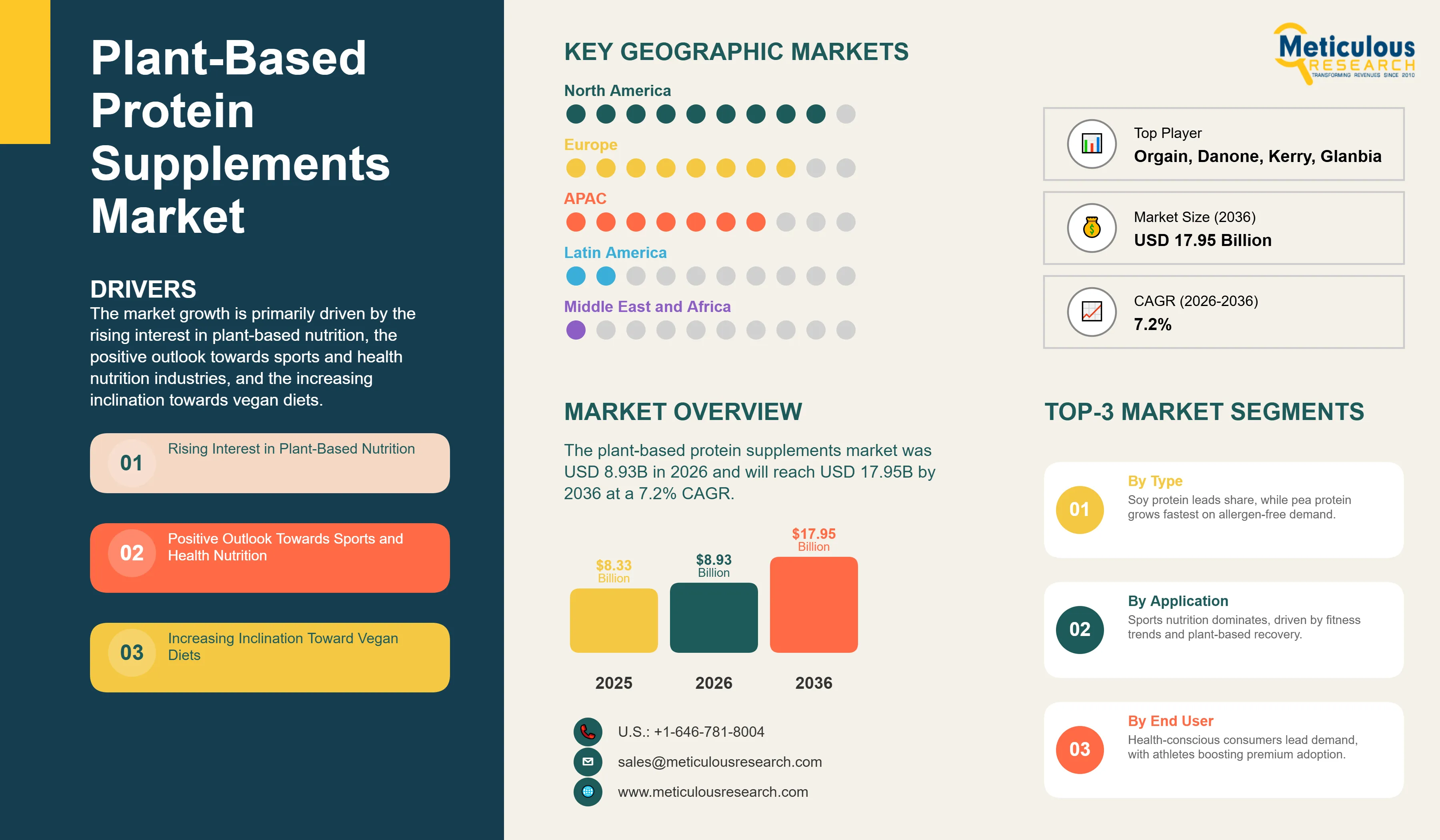
The global plant-based protein supplements market was valued at USD 8.93 billion in 2026 and is expected to reach USD 17.95 billion by 2036, growing at a CAGR of 7.2% from 2026 to 2036. The market growth is primarily driven by the rising interest in plant-based nutrition, the positive outlook towards sports and health nutrition industries, and the increasing inclination towards vegan diets. The growing demand for personalized nutrition, coupled with the expansion of e-commerce distribution channels, is further propelling market growth. Additionally, the emerging economies in Asia-Pacific, Latin America, and the Middle East & Africa present significant growth opportunities for market players during the forecast period.
 Click here to: Get Free Sample Pages of this Report
The global plant-based protein supplements market is experiencing robust growth, driven by a fundamental shift in consumer preferences towards sustainable and health-conscious nutrition. The market encompasses a diverse range of products derived from plant sources such as soy, pea, rice, hemp, and spirulina, catering to both fitness enthusiasts and general health-conscious consumers.
The market landscape is characterized by the presence of established nutritional companies and emerging specialized brands. Key players such as Glanbia Plc., Kerry Group Plc., Danone SA, and Orgain Inc. are actively innovating and expanding their product portfolios to meet evolving consumer demands. The competitive environment is intensifying, with companies investing in research and development to create novel plant-based formulations with improved taste, texture, and nutritional profiles.
The expansion of distribution channels, particularly e-commerce platforms, has democratized access to plant-based protein supplements, enabling consumers to explore diverse product options. The integration of digital marketing strategies and social media engagement has further accelerated market penetration, particularly among younger demographics. Additionally, the growing awareness of environmental sustainability and ethical consumption practices continues to drive consumer adoption of plant-based alternatives.
What are the Key Trends in the Plant-Based Protein Supplements Market?
Rising Adoption of Plant-Based Diets and Vegan Lifestyles
The increasing adoption of plant-based diets and vegan lifestyles is a significant trend driving the market. Consumers are increasingly seeking plant-based alternatives to conventional protein sources, motivated by health, environmental, and ethical considerations. This trend is particularly pronounced in developed markets such as North America and Europe, where vegan and vegetarian populations are expanding. The growing availability of plant-based protein supplements in mainstream retail channels reflects this shift in consumer behavior. Brands such as Orgain Inc. and Nutiva Inc. have capitalized on this trend by developing comprehensive product lines tailored to plant-based consumers.
Expansion of Online Retail and Direct-to-Consumer Models
The rapid expansion of online retail channels and direct-to-consumer (DTC) business models is reshaping the plant-based protein supplements market. E-commerce platforms provide consumers with unprecedented access to diverse product offerings, detailed nutritional information, and customer reviews. This channel shift has enabled smaller, specialized brands to reach global audiences without the constraints of traditional retail distribution. Companies are leveraging digital marketing, influencer partnerships, and subscription-based models to build customer loyalty and drive recurring revenue. The convenience of online shopping, combined with home delivery services, has significantly enhanced market accessibility.
|
Parameters |
Details |
|
Market Size by 2036 |
USD 17.95 Billion |
|
Market Size in 2026 |
USD 8.93 Billion |
|
Revenue Growth Rate (2026-2036) |
CAGR of 7.2% |
|
Dominating Protein Type |
Soy Protein |
|
Fastest Growing Protein Type |
Pea Protein |
|
Largest Form Segment |
Protein Powders |
|
Fastest Growing Form |
Ready-to-Drink Beverages |
|
Dominant Application |
Sports Nutrition |
|
Fastest Growing Distribution Channel |
Online Retail |
|
Base Year |
2025 |
|
Forecast Period |
2026 to 2036 |
Drivers: Rising Interest in Plant-Based Nutrition and Health Consciousness
The rising interest in plant-based nutrition is a primary driver of market growth. Consumers are increasingly aware of the nutritional benefits of plant-based proteins, including their lower environmental footprint compared to animal-derived proteins. The positive outlook towards sports and health nutrition industries is further amplifying demand. Athletes and fitness enthusiasts are recognizing the efficacy of plant-based protein supplements in muscle recovery and performance enhancement. Additionally, the growing prevalence of lactose intolerance and allergies to animal-derived proteins has expanded the addressable market for plant-based alternatives.
Opportunity: Emerging Markets and Product Innovation
Emerging economies in Asia-Pacific, Latin America, and the Middle East & Africa present substantial growth opportunities. Rising disposable incomes, increasing health consciousness, and growing urbanization in these regions are creating favorable conditions for market expansion. Furthermore, continuous product innovation, including the development of new plant protein sources, improved formulations, and convenient product formats, is expected to drive market growth. The introduction of plant-based protein supplements fortified with essential micronutrients and functional ingredients addresses evolving consumer preferences for comprehensive nutritional solutions.
Why Does Soy Protein Dominate the Market?
Soy protein is the dominant protein type in the market, accounting for the largest market share. This dominance is attributed to soy's complete amino acid profile, cost-effectiveness, and established production infrastructure. Soy protein has a long history of use in nutritional products and enjoys strong consumer acceptance. The widespread availability of soy-based supplements across retail channels and the competitive pricing of soy protein products have solidified its market leadership. Established brands such as Glanbia Plc. and Kerry Group Plc. have built substantial portfolios around soy protein.
How Is Pea Protein Gaining Market Share?
Pea protein is experiencing the fastest growth among all protein types. The rising consumer preference for non-GMO, allergen-free protein sources has driven demand for pea protein. Pea protein's hypoallergenic properties, combined with its favorable environmental profile and sustainable cultivation practices, have resonated with health-conscious and environmentally aware consumers. The improvement in pea protein's taste and texture, achieved through advanced processing technologies, has enhanced its appeal in ready-to-drink beverages and flavored powder formulations.
Why Do Protein Powders Lead the Market?
Protein powders represent the largest form segment in the market, in 2026. Their versatility, ease of use, and cost-effectiveness have made them the preferred choice for consumers. Protein powders can be easily mixed with various beverages and food items, offering flexibility in consumption. The established market infrastructure for protein powder distribution, combined with consumer familiarity and brand loyalty, has reinforced their market dominance.
How Are Ready-to-Drink Beverages Growing Rapidly?
Ready-to-drink (RTD) plant-based protein beverages are the fastest-growing form segment. The convenience factor, coupled with the growing demand for on-the-go nutrition solutions, is driving RTD beverage consumption. Busy lifestyles and the increasing prevalence of health-conscious consumers seeking convenient nutrition options have expanded the RTD market. Innovations in flavor profiles and packaging, combined with expanded distribution through convenience stores and online channels, are accelerating RTD beverage adoption.
How Does Sports Nutrition Dominate the Market?
Sports nutrition is the dominant application segment, driven by the growing participation in fitness activities and the increasing awareness of the role of protein in athletic performance. Athletes and fitness enthusiasts recognize the importance of adequate protein intake for muscle recovery and development. Plant-based protein supplements have gained acceptance within the sports community, with professional athletes endorsing plant-based products. The sponsorship of sports events and fitness influencers by plant-based supplement manufacturers has further elevated the market profile of these products.
How Does North America Maintain Its Leadership in the Global Plant-Based Protein Supplements Market?
North America is projected to account for a substantial share of the global plant-based protein supplements market during the forecast period. This is supported by high levels of health awareness, strong consumer purchasing power, and a well-established sports nutrition and wellness culture. Consumers in the region increasingly prioritize functional nutrition products that support fitness, weight management, and overall well-being, creating sustained demand for plant-based protein supplements.
The presence of established brands, advanced product innovation, and a mature retail ecosystem further strengthen the market. A well-developed distribution network, including specialty nutrition stores, modern retail chains, and highly penetrated e-commerce platforms, facilitates broad product accessibility. The U.S., in particular, represents a key market, with consumers actively seeking clean-label, allergen-friendly, and sustainable protein alternatives. Rising interest in vegan, flexitarian, and environmentally conscious diets continues to reinforce regional demand for plant-based protein formulations.
Which Regions Are Experiencing Rapid Growth?
Europe is expected to witness strong growth in the plant-based protein supplements market, supported by a sizable vegan and vegetarian population and increasing consumer focus on sustainable and ethically sourced nutrition products. Favorable regulatory environments promoting transparency, labeling standards, and product safety further enhance consumer confidence. Countries such as Germany, France, and the United Kingdom have recorded rising adoption of plant-based supplements, driven by expanding health and fitness trends and growing awareness of alternative protein sources.
Asia-Pacific is emerging as a high-growth region due to improving living standards, increasing disposable incomes, and growing awareness of preventive healthcare. Urbanization, expanding middle-class populations, and the influence of global nutrition trends are driving demand in countries such as China, Japan, and India. The expansion of modern retail channels and online platforms is further supporting market penetration across the region.
The global plant-based protein supplements market is characterized by the presence of established nutrition and ingredient companies focused on product innovation, brand expansion, and distribution strength. Key companies profiled in this report include Glanbia Plc., Kerry Group Plc., Danone SA, Orgain Inc., Nutiva Inc., The Nature's Bounty Co., Herbalife Nutrition Ltd., NOW Health Group, Inc., MusclePharm Corporation, and Iovate Health Sciences International Inc., among others. These players compete through product diversification, flavor and formulation innovation, and expansion of online and specialty retail channels.
The global plant-based protein supplements market is valued at USD 8.93 billion in 2026 and is expected to reach approximately USD 17.95 billion by 2036.
The market is expected to grow at a CAGR of 7.2% from 2026 to 2036.
The key players include Glanbia Plc., Kerry Group Plc., Danone SA, Orgain Inc., Nutiva Inc., The Nature's Bounty Co., Herbalife Nutrition, Inc., and others.
The main factors include rising interest in plant-based nutrition, positive outlook towards sports and health nutrition, increasing inclination towards vegan diets, and growing demand for personalized nutrition.
North America is expected to maintain leadership, while Europe and Asia-Pacific are projected to experience the fastest growth during the forecast period.





















Published Date: Mar-2026
Published Date: Jan-2025
Published Date: Jan-2025
Published Date: Jan-2025
Published Date: Jan-2025
Please enter your corporate email id here to view sample report.
Subscribe to get the latest industry updates


