Resources
About Us
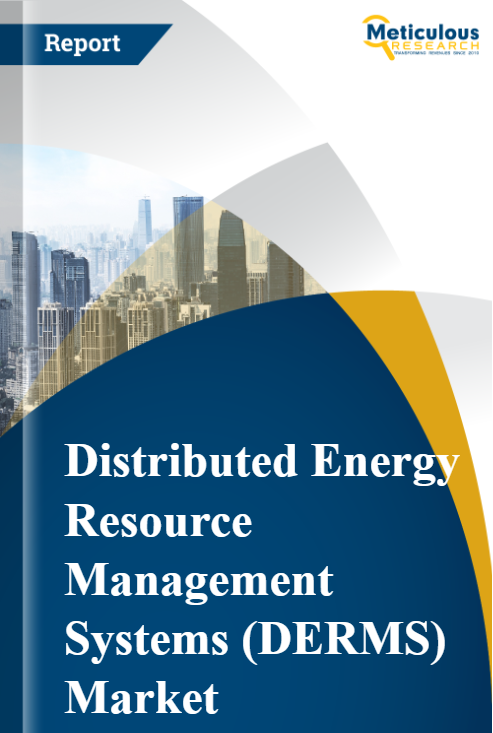
Distributed Energy Resource Management Systems (DERMS) Market Size, Share, & Forecast by Technology (AI-Optimized, Rules-Based), DER Type (Solar PV, Battery Storage, EVs), and Application (VPP, Microgrid) – Global Forecast (2026-2036)
Report ID: MREP - 1041682 Pages: 281 Jan-2026 Formats*: PDF Category: Energy and Power Delivery: 24 to 72 Hours Download Free Sample Report
The global distributed energy resource management systems (DERMS) market is expected to reach USD 4.87 billion by 2036 from USD 1.23 billion in 2026, at a CAGR of 14.7% from 2026 to 2036.
Distributed Energy Resource Management Systems (DERMS) are software platforms that monitor, control, coordinate, and optimize distributed energy resources (DERs). These include rooftop solar, battery storage systems, electric vehicles, demand response programs, and other behind-the-meter assets. DERMS help provide grid services, improve reliability, and maximize economic value for utilities and customers.
These systems use real-time data analysis, forecasting methods, optimization tools, and control features to combine thousands or millions of individual DERs into coordinated virtual power plants. They manage power flows in distribution networks, provide services like frequency regulation and voltage support, optimize energy trading and peak shaving, enable transactive energy markets, and work with utility distribution management systems (DMS) and energy management systems (EMS).
By using artificial intelligence and machine learning for predictive analysis and autonomous decision-making, cloud-based designs for scalability, communication protocols for device connectivity, and cybersecurity measures to protect infrastructure, DERMS allow utilities and aggregators to use distributed resources as flexible grid assets. This supports higher renewable energy use, grid updates, and the overall energy transition.
-market.webp)
Click here to: Get Free Sample Pages of this Report
Distributed Energy Resource Management Systems are essential software tools for changing electric power systems from centralized generation to distributed networks. These networks connect millions of active endpoints. These platforms help tackle the complexity that arises from high DER penetration. Traditional utility control systems, designed for one-way power flow from large generators to passive users, fail in this new context. DERMS offers visibility, forecasting, optimization, and control features needed to integrate distributed resources safely and cost-effectively while keeping the grid reliable and stable. As DER use grows worldwide, driven by lower solar and battery costs, supportive policies, a desire for energy independence, and commitments to combat climate change, DERMS has become crucial for supporting the energy transition.
Several transformative trends are changing the DERMS market. These include integrating artificial intelligence and machine learning for automation and predictive analytics, the rise of virtual power plants that combine various DER portfolios for market activity, electric vehicles acting as mobile distributed energy resources, advances in transactive energy systems that allow peer-to-peer and automated trading, and edge computing setups that balance local control with overall management. The combination of more DERs, the need to modernize the grid, changes in market structures, and improved digital technologies has moved DERMS from niche utility software to a key platform for grid transformation and new energy business models.
The DERMS market is quickly evolving toward smarter and more autonomous platforms that manage increasingly varied and complex DER portfolios. New DERMS setups include advanced features, such as AI-based forecasting of solar generation, load, and battery state-of-charge. This leads to better accuracy for reliable grid services. They also optimize multiple objectives, balancing grid limits, revenue, customer needs, and equipment lifespan. Real-time control can manage thousands or millions of devices with nearly instant responses. Integration with wholesale markets allows DER participation in energy, capacity, and support markets. Cybersecurity measures protect the grid from serious threats.
Artificial intelligence and machine learning are changing DERMS from simple rule-based systems to adaptive platforms that improve on their own. AI-driven DERMS use deep learning for solar and load forecasting, achieving 20-30% better accuracy than traditional methods. They leverage reinforcement learning for battery dispatch, discovering strategies that outperform human-designed rules, and predictive maintenance algorithms to anticipate equipment failures. Automated anomaly detection identifies cybersecurity threats, equipment issues, or problems with data quality. These features allow DERMS to handle complex situations at scale, managing thousands of devices, multiple goals, and real-time market shifts that exceed the capacity of traditional systems.
Virtual power plant applications are boosting DERMS use as utilities and independent aggregators see the economic benefits of coordinating distributed resources. VPPs combine diverse DERs, such as residential solar and batteries, commercial demand response, industrial loads, and EV charging, into portfolios that can bid in wholesale markets, provide capacity and support services, or execute utility programs like peak shaving and voltage support. Top VPP deployments manage hundreds of megawatts to multi-gigawatt portfolios, proving that distributed resources can deliver services traditionally provided by central generation. Regulatory changes are helping VPP participation, like FERC Order 2222 in the United States, which requires wholesale market operators to allow DER aggregation, along with similar initiatives in Australia, Europe, and Asia creating new market chances.
|
Parameter |
Details |
|
Market Size Value in 2026 |
USD 1.23 Billion |
|
Revenue Forecast in 2036 |
USD 4.87 Billion |
|
Growth Rate |
CAGR of 14.7% from 2026 to 2036 |
|
Base Year for Estimation |
2025 |
|
Historical Data |
2021–2025 |
|
Forecast Period |
2026–2036 |
|
Quantitative Units |
Revenue in USD Billion and CAGR from 2026 to 2036 |
|
Report Coverage |
Revenue forecast, company ranking, competitive landscape, growth factors, trends |
|
Segments Covered |
Technology Type, DER Type Managed, Application, Deployment Model, End-User, Region |
|
Regional Scope |
North America, Europe, Asia-Pacific, Latin America, Middle East & Africa |
|
Countries Covered |
U.S., Canada, Germany, U.K., France, Netherlands, Spain, Italy, Australia, Japan, China, South Korea, India, Brazil, Chile, Saudi Arabia, UAE, South Africa |
|
Key Companies Profiled |
Siemens AG, Schneider Electric SE, General Electric Company, ABB Ltd., Oracle Corporation, AutoGrid Systems Inc., Enbala Power Networks (Generac), Doosan GridTech (formerly Greensmith), Stem Inc. (now Enersight by Fluence), Advanced Microgrid Solutions (AMS), Distributed Energy Management, Open Access Technology International Inc. (OATI), Spirae LLC (Oracle), Enel X, Sunverge Energy (Centrica), Sunrun Inc., Tesla Inc., Itron Inc., Landis+Gyr, Energy Hub Inc., Voltus Inc. |
Driver: Explosive DER Deployment and Grid Integration Challenges
The rapid global spread of distributed energy resources creates a strong need for DER management systems to handle the resulting grid complexity. Distributed solar PV installations have surpassed 300 GW worldwide, with projections suggesting they will exceed 600 GW by 2030. Battery storage is growing even faster, as residential, commercial, and utility-scale behind-the-meter deployments are on the rise. This swift growth of DERs poses serious challenges to traditional grid operations, which were designed for one-way power flow. Issues such as voltage fluctuations, reverse power flow, coordination challenges, and visibility gaps have emerged. DER management systems tackle these problems by providing real-time insight into distributed resources, coordinating DER operations to avoid grid conflicts, optimizing DER dispatch to support grids, and enabling utilities to treat DERs as flexible grid assets instead of passive or problematic loads.
Driver: Regulatory Evolution and Market Structure Reform
Changing regulations and market structures are boosting DER management system adoption by enabling, and sometimes mandating, utilities and aggregators to coordinate distributed resources. FERC Order 2222 requires U.S. wholesale markets to allow DER aggregations to take part in energy, capacity, and ancillary service markets, creating opportunities for virtual power plants that need DERMS platforms. California's distribution resource plan mandates the use of DERMS by utilities. European regulations are increasingly requiring network operators to seek flexibility services from distributed resources. These frameworks present both opportunities, like revenue from market participation, and requirements, such as the need for utilities to manage DERs, driving investment in DER management systems.
Opportunity: Virtual Power Plant and Aggregation Business Models
The rise of virtual power plant business models presents a significant market opportunity for DER management systems as utilities, energy retailers, and independent aggregators compete to combine distributed resources. Virtual power plants can earn revenue from various sources, including wholesale market participation, utility programs, customer bill savings, and corporate renewable energy procurement. Advanced DER management systems are essential to optimize these opportunities while managing portfolio risk. The virtual power plant market is expected to surpass 100 GW globally by 2030. Each megawatt of managed capacity could generate $50 to $200 in annual DERMS software revenue, depending on the deployment model and features.
Opportunity: Grid Modernization and Resilience Enhancement
Utilities around the world are investing in grid modernization to improve reliability, integrate renewable energy, and increase resilience against extreme weather events caused by climate change. DER management systems are a strategic investment that supports multiple modernization goals, including visibility and control at the distribution grid's edge, coordination of distributed flexibility to delay traditional infrastructure investments, and the integration of utility-scale and distributed storage for improved reliability and resilience. They also help create microgrid and islanding capabilities for backup at critical facilities. These important benefits make investing in DER management systems worthwhile as part of broader grid transformation efforts.
By Technology:
AI-Optimized DERMS is experiencing the highest growth, driven by superior performance managing portfolio complexity and scale. AI platforms employ machine learning for accurate forecasting, reinforcement learning for autonomous optimization discovering strategies exceeding human-designed rules, and real-time adaptation to changing conditions. These capabilities enable management of diverse DER portfolios with thousands of devices, multiple simultaneous objectives, and dynamic market conditions that overwhelm traditional rule-based systems.
Rules-Based DERMS maintains market presence for applications where transparency and predictability are valued over optimization sophistication. These systems execute pre-programmed logic and heuristics, offering advantages including transparent decision-making important for regulatory compliance, predictable behavior avoiding unexpected actions, and lower computational requirements. However, rules-based systems struggle with portfolio complexity and sub-optimal performance compared to AI approaches.
By DER Type Managed:
Solar PV Integration is expected to command the largest market share in 2026, reflecting the massive installed base of distributed solar globally. DERMS provides solar forecasting for grid planning, curtailment management during oversupply periods, voltage regulation addressing solar-induced fluctuations, and visibility into behind-the-meter generation. The segment benefits from continued solar deployment and increasing penetration levels requiring active management.
Battery Storage Management is experiencing the highest growth rate, driven by explosive storage deployment and complexity of optimizing batteries across multiple value streams. DERMS optimizes battery dispatch for energy arbitrage, frequency regulation, capacity provision, backup power, and solar self-consumption simultaneously while respecting battery constraints and degradation considerations.
Electric Vehicle Integration represents an emerging but fast-growing segment as EV adoption accelerates. DERMS manages EV charging load to avoid grid stress, optimizes charging timing based on prices and renewable generation, and in advanced implementations enables V2G providing grid services from vehicle batteries.
By Application:
Virtual Power Plant (VPP) segment is expected to command the largest market share in 2026, driven by compelling economics of DER aggregation for market participation. VPPs aggregate diverse DERs into portfolios bidding into wholesale markets, providing capacity and ancillary services, or delivering utility programs. Leading VPP deployments manage hundreds of megawatts to multi-gigawatt portfolios, demonstrating distributed resources can reliably provide traditional generation services.
Microgrid Management serves applications requiring energy independence, resilience, or off-grid operation. DERMS coordinates generation, storage, and loads within microgrids, manages grid connection and islanding transitions, and optimizes local resources to minimize costs or emissions while maintaining reliability.
Distribution Grid Optimization applications focus on utility operational objectives including voltage regulation, congestion management, loss reduction, and infrastructure investment deferral by coordinating distributed flexibility to address grid constraints.
North America is expected to command the largest market share in 2026. This growth comes from strong DER deployment, especially in California, Texas, and the Northeast. Key factors include progressive regulations such as FERC Order 2222, state-level mandates, investments in modernizing utility grids, and the presence of leading DERMS vendors and innovative startups. The U.S. market benefits from competitive wholesale markets that create chances for VPP participation. High electricity prices in some areas make DER optimization appealing. California’s leadership in solar, storage, and EV adoption provides a testing ground for advanced DERMS.
Asia-Pacific is expected to grow the fastest. This growth is driven by China's significant solar deployment, which exceeds 400 GW of distributed capacity, rapid battery storage expansion, the world’s largest EV fleet, and government-backed smart grid initiatives. Australia leads the world in per-capita DER penetration, with over 30% of households using rooftop solar. This creates serious grid management challenges and a complex VPP market. Japan, South Korea, and India are also developing their DER markets with increasing DERMS needs.
Europe is a major market, supported by Germany's distributed solar and storage growth. Progressive regulations enable VPP participation, while the aggregator ecosystem matures in Germany, the UK, and the Netherlands. The Energiewende or energy transition is transforming the grid. This region focuses on transactive energy and local energy communities, which require careful coordination of DERMS.
Major players include Siemens AG (Germany), Schneider Electric SE (France), General Electric Company (U.S.), ABB Ltd. (Switzerland), Oracle Corporation (U.S.), AutoGrid Systems Inc. (U.S.), Enbala Power Networks/Generac (Canada/U.S.), Doosan GridTech (U.S.), Stem Inc./Fluence (U.S.), Advanced Microgrid Solutions (U.S.), Open Access Technology International (U.S.), Enel X (Italy), Sunverge Energy/Centrica (U.S./UK), Sunrun Inc. (U.S.), Tesla Inc. (U.S.), Itron Inc. (U.S.), Landis+Gyr (Switzerland), Energy Hub Inc. (U.S.), and Voltus Inc. (U.S.), among others.
The DERMS market is expected to grow from USD 1.23 billion in 2026 to USD 4.87 billion by 2036.
The DERMS market is expected to grow at a CAGR of 14.7% from 2026 to 2036.
Major players include Siemens AG, Schneider Electric SE, GE, ABB Ltd., Oracle, AutoGrid, Generac, Stem/Fluence, Enel X, Tesla, and others.
Main factors include explosive DER deployment creating grid complexity, regulatory evolution enabling DER market participation, VPP business model emergence, grid modernization investments, and AI/ML technology advancement.
North America leads in 2026 due to progressive regulations and DER deployment, while Asia-Pacific is expected to register the highest growth rate during 2026-2036.





















Published Date: May-2026
Published Date: Apr-2026
Published Date: Jul-2024
Published Date: Jun-2023
Please enter your corporate email id here to view sample report.
Subscribe to get the latest industry updates


