Resources
About Us
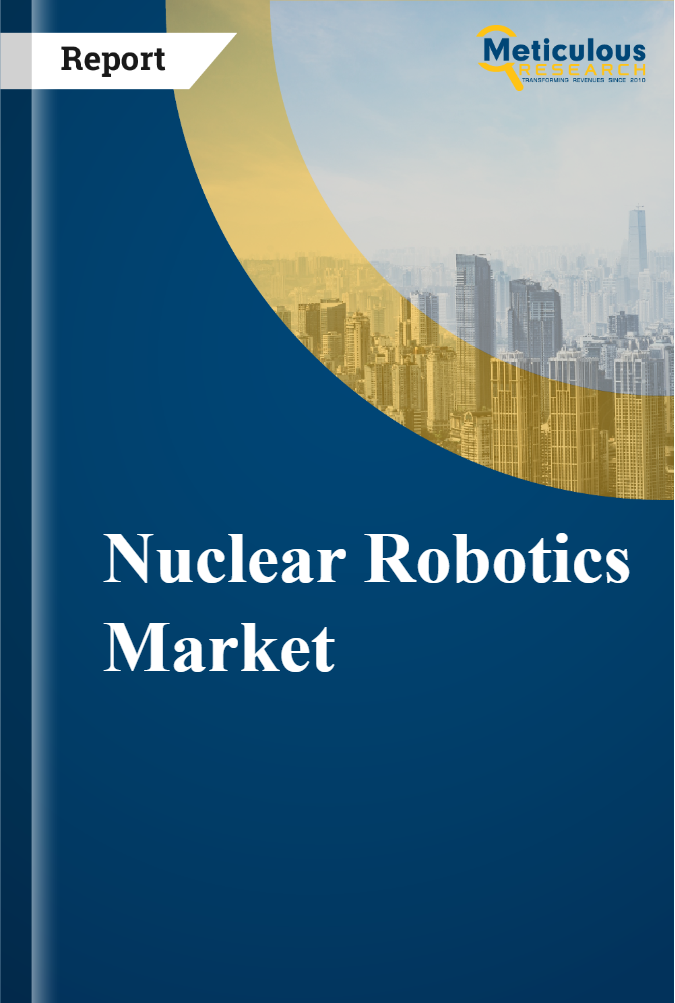
Nuclear Robotics Market by Product (Inspection Robots, Remote Handling Robots, Mobile Robots, Aerial Robots, Underwater Robots), Operation Mode, Application, End User, Reactor Type, and Geography - Global Forecast to 2036
Report ID: MREP - 1042128 Pages: 288 Aug-2026 Formats*: PDF Category: Energy and Power Delivery: 24 to 72 Hours Download Free Sample Report
Nuclear Robotics Market Size
The global Nuclear Robotics Market was valued at USD 2.3 billion in 2025 and is projected to reach USD 2.6 billion in 2026. The market is expected to reach USD 9.4 billion by 2036, registering a CAGR of 13.7% during the forecast period (2026-2036).
Key Highlights
Market Overview
The Nuclear Robotics Market comprises robotic systems, remote manipulators, and autonomous platforms designed to perform inspection, maintenance, decommissioning, and waste-handling tasks in radioactive and hazardous nuclear environments where direct human access is limited or unsafe. These systems include inspection robots, remote handling robots, mobile robots, aerial robots (UAVs), underwater robots, robotic arms and manipulators, and associated software and control platforms, deployed across nuclear power plants, fuel cycle facilities, waste management sites, research laboratories, and fusion facilities to reduce radiation exposure to personnel and improve operational efficiency.
The market is witnessing steady growth as the global nuclear fleet continues to age. According to the World Nuclear Industry Status Report 2025, the world's 413 operating nuclear reactors have an average age of around 32 years, and IAEA data indicates that more than two-thirds of reactors currently in service are over 30 years old. As reactors approach the end of their operating licenses, utilities are increasingly relying on robotic inspection and remote handling systems to support life-extension programs, in-service inspection, and eventual decommissioning without exposing workers to radiological hazards.
Nuclear decommissioning is emerging as a major growth avenue for the market. As of February 2026, 220 nuclear reactors had been permanently shut down worldwide, and the IAEA projects that between 12% and 25% of 2020-level nuclear generating capacity could be retired by 2030. At the same time, the industry is expanding: 74 reactors were under construction globally as of February 2026, led by China with 37 units, alongside growing momentum behind Small Modular Reactors (SMRs), with the IAEA cataloguing more than 80 active SMR designs and over 125 SMR projects in planning or construction worldwide. Global investment in nuclear energy reached approximately USD 65 billion in 2023, nearly double the level of a decade earlier, according to the IEA, underscoring the scale of capital flowing into new build, modernization, and decommissioning programs that collectively expand the addressable base for nuclear robotics.
Market Drivers
Aging Global Nuclear Reactor Fleet
The advancing age of the global nuclear reactor fleet is one of the primary factors driving demand for nuclear robotics. With an average reactor age of approximately 32 years and a large share of the fleet exceeding 30 years of service, utilities are increasingly deploying robotic inspection and remote handling systems to assess structural integrity, detect corrosion and material degradation, and support license renewal and life-extension programs without exposing personnel to radiation.
Rising Nuclear Plant Modernization Investments
Growing capital investment in nuclear plant modernization is expanding demand for advanced robotic systems. Global investment in nuclear energy rose to approximately USD 65 billion in 2023, nearly double the level of a decade earlier, according to the IEA, as utilities and governments prioritize upgrading instrumentation, control systems, and safety infrastructure. Robotic platforms are increasingly used for non-intrusive inspection and maintenance activities that minimize plant downtime during modernization projects.
Growing Nuclear Decommissioning Activities
The rising pace of nuclear decommissioning is a significant growth driver for the market. As of February 2026, 220 nuclear reactors had been permanently shut down worldwide, and the IAEA projects that between 12% and 25% of 2020-level nuclear generating capacity could be retired by 2030. Decommissioning work, including dismantling, remote cutting, and decontamination, requires extensive use of remote handling robots and teleoperated systems to safely manage highly radioactive components and waste streams.
Increasing Focus on Worker Safety in Radioactive Environments
Nuclear operators and regulators are placing growing emphasis on minimizing worker exposure to radiation and hazardous conditions. Robotic systems allow inspection, maintenance, and material handling tasks in high-radiation zones to be performed remotely, supporting compliance with occupational radiation exposure limits set by national regulators and the IAEA while improving overall operational safety across nuclear facilities.
Expansion of Small Modular Reactor (SMR) Programs
The rapid global expansion of Small Modular Reactor programs is creating new demand for nuclear robotics. The IAEA catalogues more than 80 active SMR designs under development worldwide, with over 125 SMR projects currently in the planning or construction stage across countries including the United States, Canada, the United Kingdom, China, and Russia. As SMR fleets scale toward commercial deployment, factory-based manufacturing, modular assembly, and distributed operations are expected to increase reliance on standardized robotic inspection and maintenance solutions.
Market Restraints
High Development and Qualification Costs
Nuclear robotic systems must be engineered and qualified to withstand high radiation doses, extreme temperatures, and contamination while maintaining precise control and reliability. The specialized materials, radiation-hardened electronics, and extensive qualification testing required before deployment result in high development costs, which can limit adoption among smaller operators and facilities with constrained capital budgets.
Limited Standardization Across Nuclear Facilities
Nuclear facilities vary significantly in reactor design, containment geometry, and operational protocols, limiting the standardization of robotic platforms across sites. This variation often requires customized robotic solutions for individual facilities, increasing engineering complexity, extending deployment timelines, and raising overall project costs for robotics suppliers and nuclear operators alike.
Complex Regulatory Approval Processes
The deployment of robotic systems within nuclear facilities is subject to rigorous regulatory oversight, including compliance with IAEA safety guidelines, national nuclear regulatory requirements, and facility-specific safety cases. These approval processes can be lengthy and resource-intensive, slowing the pace at which new robotic technologies are qualified and introduced into operational nuclear environments.
Market Opportunities
AI-Enabled Autonomous Nuclear Inspection
The integration of artificial intelligence and machine learning into inspection robots is creating significant opportunities for the market. AI-enabled systems can autonomously navigate complex plant environments, perform defect detection and anomaly recognition, and generate predictive maintenance insights, reducing the need for continuous human oversight and improving inspection consistency across large nuclear facilities.
Robotics for Fusion Energy Facilities
The growing global investment in fusion energy research is opening new opportunities for nuclear robotics providers. Fusion facilities, including large international projects and a growing number of privately funded fusion ventures, require highly specialized remote handling systems to manage in-vessel components, tritium handling, and maintenance operations in environments that combine high radiation with extreme thermal and magnetic conditions.
Robotic Nuclear Waste Handling
Rising volumes of radioactive waste from operating reactors, decommissioning projects, and fuel cycle facilities are creating sustained demand for robotic waste sorting, packaging, and storage solutions. Robotic systems enable safer and more efficient handling of high-level and low-level waste streams, supporting regulatory compliance and reducing long-term liability for nuclear operators and waste management organizations.
Remote Operations Using Digital Twins
The growing adoption of digital twin technology is enabling nuclear operators to simulate, plan, and monitor robotic operations in virtual environments before deployment in the field. Digital twins improve the precision of remote handling tasks, support predictive maintenance planning, and enhance operator training, creating new opportunities for robotics providers to integrate digital twin capabilities into their platforms.
Market Challenges
Radiation-Hardened Electronics
Designing electronics and sensors capable of withstanding prolonged exposure to high radiation doses without degradation remains a significant technical challenge for nuclear robotics manufacturers. Conventional electronic components are highly susceptible to radiation-induced failures, requiring specialized shielding, radiation-tolerant materials, and redundant system architectures that add cost and complexity to robotic platform design.
Reliable Operation in Extreme Environments
Nuclear robots must operate reliably in environments characterized by high radiation, elevated temperatures, humidity, and confined or obstructed spaces. Ensuring consistent performance, communication reliability, and mechanical durability under these extreme conditions continues to pose engineering challenges, particularly for long-duration missions such as decommissioning and waste retrieval operations.
Market Trends
Growing Shift Toward AI-Enabled and Autonomous Robotics
One of the most significant trends shaping the Nuclear Robotics Market is the gradual transition from teleoperated systems toward semi-autonomous and fully autonomous robotic platforms. Advances in machine vision, autonomous navigation, and AI-based decision-making are enabling robots to perform routine inspection and monitoring tasks with reduced operator intervention, improving efficiency while maintaining strict safety oversight.
Increasing Integration of Digital Twins and Edge Computing
Nuclear operators are increasingly integrating digital twin platforms and edge computing capabilities into robotic operations to enable real-time data processing, remote monitoring, and predictive maintenance. This integration allows operators to plan complex remote handling and decommissioning tasks virtually, reducing risk and improving the precision and efficiency of robotic deployments across nuclear facilities.
Segment Analysis
Market Analysis by Product
Based on product, the global Nuclear Robotics Market is segmented into Inspection Robots, Remote Handling Robots, Mobile Robots, Aerial Robots (UAVs), Underwater Robots, Robotic Arms & Manipulators, Software & Control Platforms, and Services.
In 2026, the Remote Handling Robots segment is expected to account for the largest share of the global Nuclear Robotics Market, supported by their extensive use in precision handling of radioactive materials and components across maintenance, refueling, and decommissioning operations. However, the Inspection Robots segment is projected to register the fastest growth during the forecast period, driven by increasing adoption of AI-enabled autonomous inspection systems for reactor vessels, piping, and containment structures.
Market Analysis by Operation Mode
Based on operation mode, the market is segmented into Teleoperated Robotics, Semi-Autonomous Robotics, and Fully Autonomous Robotics.
In 2026, Semi-Autonomous Robotics is expected to account for the largest market share, reflecting nuclear operators' preference for combining automated task execution with direct operator oversight for safety-critical operations. However, Fully Autonomous Robotics is projected to register the highest CAGR during the forecast period, owing to advances in AI, machine vision, and autonomous navigation technologies that are steadily expanding the scope of unsupervised robotic operation in nuclear environments.
Market Analysis by Application
Based on application, the market is segmented into Nuclear Plant Inspection, Nuclear Maintenance & Repair, Radioactive Waste Management, Nuclear Decommissioning, Fuel Handling, Emergency Response, Nuclear Research Facilities, and Fusion Energy Facilities.
In 2026, Nuclear Plant Inspection is expected to account for the largest market share, driven by routine in-service inspection requirements across the world's operating reactor fleet. However, Nuclear Decommissioning is projected to register the highest CAGR during the forecast period, supported by the rising number of reactors reaching end-of-life and the growing global backlog of decommissioning projects.
Market Analysis by End User
Based on end user, the market is segmented into Nuclear Power Plants, Nuclear Fuel Cycle Facilities, Radioactive Waste Management Facilities, Nuclear Research Laboratories, Defense Nuclear Facilities, and Fusion Research Facilities.
In 2026, Nuclear Power Plants are expected to account for the largest market share, given the scale of the world's operating and under-construction reactor fleet. However, Fusion Research Facilities are projected to register the highest CAGR during the forecast period, driven by rising global investment in public and privately funded fusion energy programs requiring specialized remote handling capabilities.
Market Analysis by Reactor Type
Based on reactor type, the market is segmented into Pressurized Water Reactors (PWRs), Boiling Water Reactors (BWRs), Pressurized Heavy Water Reactors (PHWRs), Gas-Cooled Reactors, Fast Reactors, Small Modular Reactors (SMRs), and Fusion Reactors.
In 2026, Pressurized Water Reactors (PWRs) are expected to account for the largest market share, reflecting their position as the most widely deployed reactor technology in the global nuclear fleet. However, Small Modular Reactors (SMRs) are projected to register the highest CAGR during the forecast period, supported by the more than 80 active SMR designs under development and the growing number of SMR projects advancing toward construction and commercial deployment worldwide.
Geographic Analysis
Based on geography, the global Nuclear Robotics Market is segmented into North America, Europe, Asia-Pacific, Latin America, and the Middle East & Africa.
In 2026, North America is expected to account for the largest share of the global Nuclear Robotics Market. The region's leadership is supported by its long-established nuclear infrastructure, with the U.S. Department of Energy reporting 93 operating nuclear reactors in the United States, alongside an active pipeline of decommissioning projects and growing government investment in nuclear robotics research and worker safety programs. Well-established robotics suppliers headquartered in the region further reinforce North America's position in the market.
However, Asia-Pacific is projected to register the highest CAGR during the forecast period. Growth in the region is driven by an expanding pipeline of new reactor construction, with 74 reactors under construction worldwide as of February 2026, of which China alone accounted for 37 units and India for 6, according to IAEA data. India's Shanti Act, passed in 2025, further supports this momentum by targeting an expansion of the country's nuclear capacity to 100 GW by 2047, up from approximately 7.5 GW currently. Rising investment in reactor inspection, maintenance automation, and emerging SMR programs across China, Japan, South Korea, and India is expected to sustain rapid growth in demand for nuclear robotics across the region.
Competitive Landscape
The global Nuclear Robotics Market is moderately fragmented, with competition among established industrial robotics manufacturers, specialized nuclear remote handling providers, nuclear equipment OEMs, and engineering, procurement, and construction (EPC) contractors. Companies compete primarily on radiation tolerance, precision handling capability, autonomy, system reliability, regulatory qualification, and integration with digital twin and AI-based control platforms.
Leading market participants are investing in AI-enabled autonomous inspection systems, radiation-hardened robotic platforms, and digital twin integration to support nuclear plant life extension, decommissioning, and emerging SMR and fusion energy applications. Strategic partnerships with nuclear utilities and research organizations, capacity expansion, and continued R&D investment in remote handling and machine vision technologies remain key strategies adopted by major vendors. Companies are also expanding service offerings, including integration, maintenance, and training support, to address the growing complexity of nuclear robotics deployments.
The report provides a comprehensive competitive assessment of the leading companies operating in the global Nuclear Robotics Market. The key players profiled in the report include Westinghouse Electric Company, GE Vernova, Framatome, AtkinsRéalis, Toshiba Energy Systems & Solutions Corporation, Hitachi, Ltd., FANUC Corporation, KUKA AG, ABB Ltd., Boston Dynamics, OC Robotics Ltd., QinetiQ Group plc, Veolia Nuclear Solutions, Kurion (Veolia), and Oxford Technologies Ltd.
Nuclear Robotics Market Research Summary:
|
Particulars |
Details |
|
Forecast Period |
2026-2036 |
|
Base Year |
2025 |
|
Estimated Year |
2026 |
|
CAGR (Value) |
13.7% |
|
Market Size (Value) in 2026 |
USD 2.6 Billion |
|
Market Size (Value) in 2036 |
USD 9.4 Billion |
|
Segments Covered |
By Product: Inspection Robots, Remote Handling Robots, Mobile Robots, Aerial Robots (UAVs), Underwater Robots, Robotic Arms & Manipulators, Software & Control Platforms, Services. By Operation Mode: Teleoperated Robotics, Semi-Autonomous Robotics, Fully Autonomous Robotics. By Application: Nuclear Plant Inspection, Nuclear Maintenance & Repair, Radioactive Waste Management, Nuclear Decommissioning, Fuel Handling, Emergency Response, Nuclear Research Facilities, Fusion Energy Facilities. By End User: Nuclear Power Plants, Nuclear Fuel Cycle Facilities, Radioactive Waste Management Facilities, Nuclear Research Laboratories, Defense Nuclear Facilities, Fusion Research Facilities. By Reactor Type: Pressurized Water Reactors (PWRs), Boiling Water Reactors (BWRs), Pressurized Heavy Water Reactors (PHWRs), Gas-Cooled Reactors, Fast Reactors, Small Modular Reactors (SMRs), Fusion Reactors. |
|
Countries Covered |
North America: U.S., Canada. Europe: France, U.K., Germany, Sweden, Finland, Rest of Europe. Asia-Pacific: China, Japan, South Korea, India, Australia, Rest of Asia-Pacific. Latin America: Brazil, Mexico, Argentina, Rest of Latin America. Middle East & Africa: UAE, Saudi Arabia, South Africa, Rest of Middle East & Africa. |
|
Key Companies |
Westinghouse Electric Company, GE Vernova, Framatome, AtkinsRéalis, Toshiba Energy Systems & Solutions Corporation, Hitachi Ltd., FANUC Corporation, KUKA AG, ABB Ltd., Boston Dynamics, OC Robotics Ltd., QinetiQ Group plc, Veolia Nuclear Solutions, Kurion (Veolia), and Oxford Technologies Ltd. |
Key Questions Answered
The global Nuclear Robotics Market is estimated at USD 2.6 billion in 2026.
The market is projected to reach USD 9.4 billion by 2036.
The market is expected to grow at a CAGR of 13.7% during 2026-2036.
The market is driven by the aging global nuclear reactor fleet, rising nuclear plant modernization investment, growing nuclear decommissioning activity, increasing focus on worker safety in radioactive environments, and the expansion of Small Modular Reactor (SMR) programs.
Remote Handling Robots are expected to account for the largest market share in 2026.
Nuclear Plant Inspection is expected to account for the largest market share due to routine in-service inspection requirements across the global reactor fleet.
Nuclear Power Plants are expected to account for the largest market share given the scale of the world's operating and under-construction reactor fleet.
North America is expected to remain the largest regional market, supported by its established nuclear infrastructure and active decommissioning pipeline.
Asia-Pacific is expected to witness the fastest growth, driven by an expanding new-build reactor pipeline and emerging SMR programs in China and India.
Leading companies include Westinghouse Electric Company, GE Vernova, Framatome, AtkinsRéalis, Toshiba Energy Systems & Solutions, Hitachi, FANUC, KUKA, ABB, Boston Dynamics, OC Robotics, QinetiQ Group, Veolia Nuclear Solutions, Kurion (Veolia), and Oxford Technologies.




















Published Date: Aug-2026
Published Date: Aug-2026
Published Date: May-2026
Published Date: May-2026
Published Date: May-2026
Please enter your corporate email id here to view sample report.
Subscribe to get the latest industry updates


