Resources
About Us
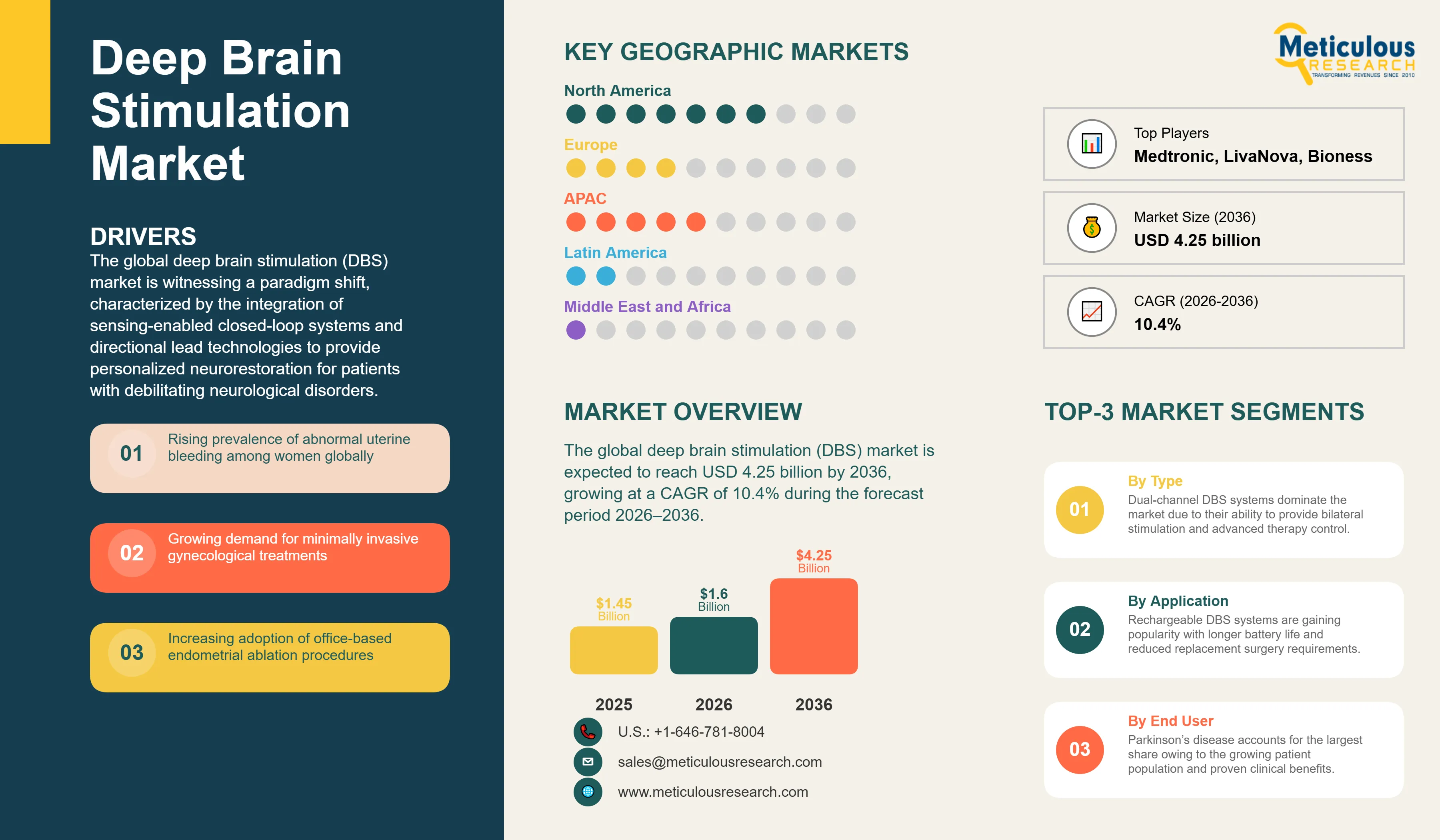
The global deep brain stimulation (DBS) market is estimated to be USD 1.60 billion in 2026. This market is expected to reach USD 4.25 billion by 2036, growing at a CAGR of 10.4% during the forecast period 2026–2036.
Click here to: Get Free Sample Pages of this Report
The global deep brain stimulation (DBS) market is witnessing a paradigm shift, characterized by the integration of sensing-enabled closed-loop systems and directional lead technologies to provide personalized neurorestoration for patients with debilitating neurological disorders. As the global burden of Parkinson's disease, essential tremor, and epilepsy continues to rise, the demand for long-term neuromodulation solutions that can provide sustained symptom relief has reached an all-time high. The market is primarily driven by the increasing adoption of dual-channel stimulators, which allow for bilateral brain stimulation through a single implanted device, significantly improving the quality of life for patients with advanced movement disorders. Clinical guidelines from the Movement Disorder Society (MDS) and the International Neuromodulation Society (INS) emphasize the importance of early intervention and the use of substantiated neurostimulation protocols to optimize motor and non-motor outcomes. The market is also benefiting from advancements in robotic-assisted placement and remote programming technologies, which are simplifying the surgical procedure and enhancing long-term patient management. Furthermore, the expansion of DBS indications to include drug-resistant epilepsy and obsessive-compulsive disorder (OCD) is broadening the clinical utility of these devices. As the industry focuses on developing smaller, more durable, and rechargeable systems, the integration of artificial intelligence for automated programming and real-time brain sensing is expected to further drive market growth, ensuring sustained expansion through 2036.
The growth of the global deep brain stimulation market is primarily driven by the increasing global burden of neurological conditions and the rapid evolution of adaptive neurostimulation technologies.
Increasing Global Burden of Parkinson's Disease and Other Debilitating Movement Disorders
A major driver for the market is the rising global prevalence of Parkinson's disease, essential tremor, and dystonia, particularly among the aging population. According to the World Health Organization, more than 8.5 million people worldwide were living with Parkinson's disease in 2019, and the prevalence of the disease has more than doubled over the past 25 years. Furthermore, Parkinson's disease resulted in approximately 5.8 million disability-adjusted life years (DALYs) and over 329,000 deaths globally in 2019, highlighting its growing clinical and socioeconomic burden. The rising incidence of movement disorders, combined with increasing life expectancy, is driving demand for effective long-term treatment options when pharmacological therapies become less effective. According to the United Nations, the global population aged 65 years and older is projected to reach nearly 1.6 billion by 2050, significantly expanding the patient population at risk for neurodegenerative disorders. The proven clinical effectiveness of deep brain stimulation (DBS) in improving motor function, reducing tremors, and enhancing quality of life is accelerating adoption among neurologists and neurosurgeons. Additionally, increasing awareness of neuromodulation therapies and expanding access to advanced neurosurgical care are supporting sustained growth in DBS procedure volumes worldwide.
Rapid Advancement in Adaptive Neurostimulation and Sensing-Enabled Closed-Loop Technologies
The market is significantly driven by the rapid advancement in adaptive neurostimulation and sensing-enabled closed-loop technologies. These innovations allow the stimulator to monitor real-time brain activity and adjust stimulation parameters automatically, providing more precise and personalized symptom control while minimizing side effects. The development of directional leads, which allow neurosurgeons to steer the electrical field toward specific brain targets, is further enhancing the efficacy and safety of DBS procedures. Continuous research into brain-computer interfaces and the integration of advanced data analytics for long-term patient programming are further accelerating market adoption across diverse neurological indications.
Despite its clinical benefits, the deep brain stimulation market faces challenges related to the significant costs of the systems and the specialized neurosurgical expertise required for the procedure.
Significant Cost of Deep Brain Stimulation Systems and Long-Term Maintenance Requirements
A major restraint for the market is the high cost associated with deep brain stimulation systems, including the implantable pulse generator, leads, and specialized programming equipment. These costs, combined with the expenses related to the neurosurgical procedure and long-term follow-up care, can be a significant barrier for patients, particularly in regions with limited insurance coverage. The need for periodic battery replacements or the higher upfront cost of rechargeable systems also impacts market adoption. As highlighted by various neurological societies, the financial burden of DBS therapy remains a challenge for achieving universal patient access, especially in emerging healthcare markets.
Complexity of the Neurosurgical Procedure and the Need for Specialized Multidisciplinary Teams
The market is also impacted by the inherent complexity of the DBS surgical procedure, which requires precise electrode placement in deep brain structures. This necessitates highly specialized neurosurgical expertise and the presence of multidisciplinary teams, including neurologists and neuropsychologists. The limited availability of specialized neurosurgical centers in certain regions can restrain market growth. Furthermore, the risks associated with intracranial surgery, such as infection or hemorrhage, although rare, can influence patient and physician decision-making. The need for extensive post-operative programming and long-term clinical monitoring also adds to the complexity of managing DBS patients, impacting its broader adoption.
Future growth opportunities in the deep brain stimulation market are centered on the expansion of clinical indications and the integration of advanced surgical assistance technologies.
Expanding Clinical Indications for Deep Brain Stimulation in Psychiatric and Drug-Resistant Neurological Conditions
There is a significant opportunity for market growth driven by the expansion of DBS indications to include psychiatric disorders such as obsessive-compulsive disorder (OCD) and treatment-resistant depression. Increasing clinical research and regulatory approvals for these indications are broadening the clinical utility of DBS beyond movement disorders. Furthermore, the growing use of DBS for managing drug-resistant epilepsy represents a high-growth opportunity. Manufacturers that can provide clinical evidence for the long-term efficacy and safety of DBS in these new indications are well-positioned to capitalize on these emerging market segments, significantly expanding the overall patient population.
Rising Adoption of Robotic-Assisted Neurosurgery and Advanced Intraoperative Imaging for Precise Lead Placement
The rising adoption of robotic-assisted neurosurgery and advanced intraoperative imaging (such as intraoperative MRI and CT) represents a major opportunity. These technologies allow for more precise and efficient electrode placement, reducing surgical time and improving patient outcomes. The development of 'asleep' DBS procedures, which can be performed without the need for patient wakefulness during surgery, is further enhancing patient comfort and expanding the eligibility for DBS. Manufacturers that can integrate their stimulation systems with advanced surgical navigation and robotic platforms are likely to lead the next phase of market expansion, driving further demand for specialized neurostimulation solutions.
Increasing Integration of Sensing-Enabled Adaptive Stimulation and Real-Time Brain Activity Monitoring
A prominent trend in 2026 is the increasing integration of sensing-enabled adaptive stimulation, where the DBS system can monitor local field potentials (LFPs) from the brain and adjust stimulation in real-time. This 'closed-loop' approach is designed to provide more consistent symptom control and reduce stimulation-induced side effects. This trend is driven by advancements in digital signal processing and the development of intelligent algorithms that can identify brain-state biomarkers. Manufacturers are increasingly focusing on providing sensing-enabled stimulators that can capture long-term brain activity data, providing clinicians with valuable insights for optimizing patient therapy.
Rising Clinical Adoption of Remote Patient Programming and Tele-Neuromodulation Services
The market is witnessing an increasing trend toward the clinical adoption of remote patient programming and tele-neuromodulation services. This allows neurologists to adjust stimulation parameters for patients from a distance, reducing the need for frequent in-person clinic visits. This trend is particularly beneficial for patients living in remote areas and has been accelerated by the development of secure, cloud-based programming platforms. The integration of remote monitoring capabilities into DBS systems is aligning with the broader goal of improving patient convenience and long-term therapy adherence, marking a significant step toward the digitalization of neurosurgical care.
Analysis by Product Type
Based on product type, the dual-channel deep brain stimulators segment is expected to hold the largest share of the global deep brain stimulation market in 2026. This leadership is substantiated by its ability to provide bilateral brain stimulation through a single implanted device, which is essential for managing bilateral symptoms of Parkinson's disease and essential tremor. However, the single-channel deep brain stimulators segment is projected to register the highest CAGR during the forecast period. The increasing demand for cost-effective and targeted unilateral stimulation in emerging markets, combined with advancements in miniaturized and rechargeable single-channel systems, is driving its rapid and sustained growth.
Analysis by Application
By application, the Parkinson's disease segment is expected to hold the largest share in 2026, supported by the high global prevalence of the condition and the well-established clinical efficacy of DBS in managing motor symptoms. However, the **epilepsy segment** is projected to register the highest CAGR during the forecast period. The increasing regulatory approvals for DBS in treating drug-resistant focal seizures and the integration of sensing-enabled closed-loop stimulation systems are significantly accelerating adoption in this segment.
Analysis by End User
By end user, the hospitals & neurological centers segment is expected to hold the largest share in 2026, as these facilities possess the multidisciplinary teams and advanced imaging infrastructure required for precise DBS procedures. However, the specialty clinics & ambulatory surgical centers (ASCs) segment is projected to register the highest CAGR during the forecast period. The ongoing shift toward robotic-assisted placement and the increasing availability of remote programming technologies are facilitating the migration of DBS procedures to specialized outpatient settings.
Largest Share: North America
North America is expected to dominate the global deep brain stimulation market in 2026, holding a market share of approximately 50-55%. This leading position is attributed to its advanced neurosurgical infrastructure, high healthcare spending, and favorable reimbursement policies for neuromodulation procedures. The region has a high adoption rate of innovative sensing-enabled and directional lead technologies. Data from the International Neuromodulation Society (INS) indicate a high volume of DBS implants in the U.S. and Canada, supported by established clinical pathways and high patient awareness.
Fastest Growing: Asia-Pacific
The Asia-Pacific region is projected to witness the fastest growth in the global deep brain stimulation market, with a CAGR of 10-12% during the forecast period. This rapid expansion is driven by the rapidly aging population in countries like China and Japan, increasing awareness of neurological disorders, and significant investments in healthcare infrastructure. Government initiatives to expand access to advanced neurosurgical treatments and the growing middle class with higher disposable income are accelerating the adoption of DBS therapies. According to the World Federation of Neurology (WFN), the burden of neurological disorders in the APAC region is rising, directly correlating with the increased demand for long-term neuromodulation solutions.
The global deep brain stimulation market is characterized by intense competition between established medical technology giants and specialized neuromodulation firms. Competition is primarily focused on enhancing the sensing capabilities and clinical safety of stimulation systems and improving the patient experience through remote programming and miniaturized designs. Key players are investing heavily in R&D to develop adaptive closed-loop systems and directional leads to capture the growing specialized and outpatient markets. Strategic developments often involve acquisitions of innovative neurotech firms and partnerships with leading neurological centers to validate new stimulation protocols. Furthermore, there is a growing focus on providing integrated neurosurgical solutions that combine stimulation systems with advanced surgical navigation and robotic platforms. Manufacturers are also increasingly focusing on comprehensive clinical training programs and robust long-term patient support to ensure the successful implementation and consistent performance of their neurostimulation systems in diverse healthcare settings, which is critical for maintaining market leadership in this rapidly evolving brain stimulation field.
Medtronic plc (Ireland/US), Abbott Laboratories (US), Boston Scientific Corporation (US), Aleva Neurotherapeutics SA (Switzerland), Functional Neuromodulation Ltd. (Canada), Beijing Pingsheng Medical Technology Co., Ltd. (China), SceneRay Corporation (China), Nevro Corp. (US), LivaNova PLC (UK), NeuroPace, Inc. (US), Cyberonics, Inc. (US), St. Jude Medical, LLC (US), Synapse Biomedical Inc. (US), Sapiens Steering Brain Stimulation (Netherlands), Functional Neuromodulation, Inc. (US), Pixium Vision SA (France), Second Sight Medical Products, Inc. (US), Retina Implant AG (Germany), Bioness Inc. (US), and Mainstay Medical Limited (Ireland).
The global market is estimated at USD 1.60 billion in 2026, with a projected growth to USD 4.25 billion by 2036, at a CAGR of 10.4%.
Primary drivers include the rising prevalence of neurological disorders and the evolution of closed-loop neurostimulation systems.
Major restraints include the high cost of the systems and the complexity of the neurosurgical procedure requiring specialized teams.
Opportunities lie in the expansion of DBS indications to psychiatric disorders and the rise of robotic-assisted neurosurgery.
Dual-channel deep brain stimulators are expected to hold the largest share due to their ability to provide bilateral symptom control.
The epilepsy segment is projected to grow at the fastest CAGR, driven by recent regulatory approvals and sensing-enabled systems.
Hospitals & neurological centers are expected to hold the largest share, as they possess the specialized expertise for DBS procedures.
North America is expected to dominate the market due to its advanced neurosurgical infrastructure and high healthcare spending.
Asia-Pacific is projected to witness the fastest growth, fueled by a rapidly aging population and increasing awareness of neurological disorders.
Key trends include the integration of sensing-enabled adaptive stimulation and the growth of remote patient programming.
1. Introduction
1.1. Market Definition
1.2. Market Scope
1.3. Currency & Limitations
1.4. Key Stakeholders
2. Research Methodology
2.1. Research Approach
2.2. Data Sources
2.2.1. Secondary Research
2.2.2. Primary Research
2.3. Market Size Estimation
2.3.1. Bottom-up Approach
2.3.2. Top-down Approach
2.4. Assumptions
3. Executive Summary
3.1. Market Snapshot
3.2. Segmental Summary
3.3. Regional Summary
3.4. Competitive Snapshot
4. Market Overview
4.1. Introduction
4.2. Market Dynamics
4.2.1. Drivers
4.2.1.1. Increasing Global Burden of Parkinson's Disease and Other Debilitating Movement Disorders
4.2.1.2. Rapid Advancement in Adaptive Neurostimulation and Sensing-Enabled Closed-Loop Technologies
4.2.2. Restraints
4.2.2.1. Significant Cost of Deep Brain Stimulation Systems and Long-Term Maintenance Requirements
4.2.2.2. Complexity of the Neurosurgical Procedure and the Need for Specialized Multidisciplinary Teams
4.2.3. Opportunities
4.2.3.1. Expanding Clinical Indications for Deep Brain Stimulation in Psychiatric and Drug-Resistant Neurological Conditions
4.2.3.2. Rising Adoption of Robotic-Assisted Neurosurgery and Advanced Intraoperative Imaging for Precise Lead Placement
4.2.4. Trends
4.2.4.1. Increasing Integration of Sensing-Enabled Adaptive Stimulation and Real-Time Brain Activity Monitoring
4.2.4.2. Rising Clinical Adoption of Remote Patient Programming and Tele-Neuromodulation Services
4.3. Porter's Five Forces Analysis
4.4. Regulatory Outlook and Reimbursement Landscape
4.5. Value Chain Analysis
5. Global Deep Brain Stimulation Market, by Product Type
5.1. Dual-Channel Deep Brain Stimulators
5.1.1. Rechargeable Dual-Channel DBS Systems
5.1.2. Non-Rechargeable Dual-Channel DBS Systems
5.2. Single-Channel Deep Brain Stimulators
5.2.1. Rechargeable Single-Channel DBS Systems
5.2.2. Non-Rechargeable Single-Channel DBS Systems
6. Global Deep Brain Stimulation Market, by Application
6.1. Parkinson's Disease
6.2. Essential Tremor
6.3. Dystonia
6.4. Epilepsy
6.5. Obsessive-Compulsive Disorder (OCD)
6.6. Others
7. Global Deep Brain Stimulation Market, by End User
7.1. Hospitals & Neurological Centers
7.2. Specialty Clinics & Ambulatory Surgical Centers (ASCs)
8. Global Deep Brain Stimulation Market, by Geography
8.1. North America
8.1.1. U.S.
8.1.2. Canada
8.2. Europe
8.2.1. Germany
8.2.2. U.K.
8.2.3. France
8.2.4. Italy
8.2.5. Spain
8.2.6. Rest of Europe
8.3. Asia Pacific
8.3.1. China
8.3.2. Japan
8.3.3. India
8.3.4. South Korea
8.3.5. Rest of Asia Pacific
8.4. Latin America
8.4.1. Brazil
8.4.2. Argentina
8.4.3. Mexico
8.4.4. Rest of Latin America
8.5. Middle East & Africa
8.5.1. UAE
8.5.2. Saudi Arabia
8.5.3. Rest of Middle East & Africa
9. Competitive Landscape
9.1. Overview
9.2. Key Growth Strategies
9.3. Competitive Benchmarking
9.4. Competitive Dashboard
9.4.1. Industry Leaders
9.4.2. Market Differentiators
9.4.3. Vanguards
9.4.4. Emerging Companies
9.5. Market Share/Ranking Analysis, By Key Player (2025)
10. Company Profiles (Business Overview, Financial Overview, Product Portfolio, Strategic Developments, SWOT Analysis)
10.1. Medtronic plc
10.2. Abbott Laboratories
10.3. Boston Scientific Corporation
10.4. Aleva Neurotherapeutics SA
10.5. Functional Neuromodulation Ltd.
10.6. Beijing Pingsheng Medical Technology Co., Ltd.
10.7. SceneRay Corporation
10.8. Nevro Corp.
10.9. LivaNova PLC
10.10. NeuroPace, Inc.
10.11. Cyberonics, Inc.
10.12. St. Jude Medical, LLC
10.13. Synapse Biomedical Inc.
10.14. Sapiens Steering Brain Stimulation
10.15. Functional Neuromodulation, Inc.
10.16. Pixium Vision SA
10.17. Second Sight Medical Products, Inc.
10.18. Retina Implant AG
10.19. Bioness Inc.
10.20. Mainstay Medical Limited
11. Appendix
11.1. Disclaimer
12. Key Questions Answered





















Published Date: Aug-2026
Published Date: Jul-2014
Published Date: Dec-2017
Published Date: Jan-2025
Subscribe to get the latest industry updates