Resources
About Us
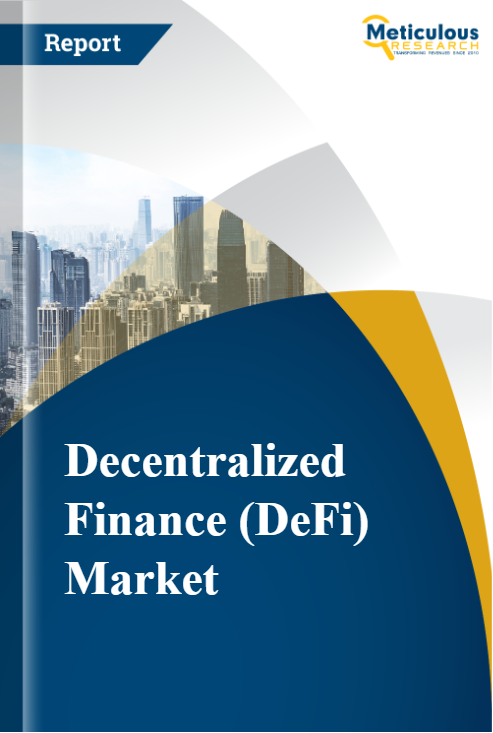
The global decentralized finance (DeFi) market was valued at USD 20.2 billion in 2025. The market is expected to reach approximately USD 174.7 billion by 2036 from USD 24.2 billion in 2026, growing at a CAGR of 21.8% from 2026 to 2036. The growth of the overall DeFi market is driven by the intensifying global focus on financial inclusion and the rapid expansion of tokenized real-world assets and institutional adoption sectors. As financial institutions seek to integrate more functionality into digital settlement systems and reduce operational friction for complex transactions, blockchain-driven protocols have become essential for maintaining high-speed capital flow and regulatory compatibility. The rapid expansion of the Layer-2 infrastructure and the increasing need for high-reliability settlement solutions in cross-border payments and advanced institutional custody systems continue to fuel significant growth of this market across all major geographic regions.
-market.webp) Click here to: Get Free Sample Pages of this Report
Click here to: Get Free Sample Pages of this Report
Decentralized Finance (DeFi) refers to critical blockchain-based systems used to provide peer-to-peer financial services while allowing for automated settlement and trustless intermediation throughout the capital allocation and liquidity management process. These systems include protocol infrastructure, oracle networks, and custody services, which are designed to withstand high-frequency transaction processing and fit into non-custodial interactive environments. The market is defined by high-efficiency technologies such as automated market makers (AMMs) and smart contract execution engines, which significantly enhance capital efficiency and settlement performance in high-liquidity applications. These systems are indispensable for institutions seeking to optimize their treasury operations and meet aggressive compliance delivery targets.
The market includes a diverse range of configurations, ranging from simple swap mechanisms for basic token exchange to complex multi-collateral lending systems for high-performance institutional credit and algorithmic stablecoins. These systems are increasingly integrated with advanced components such as Layer-2 rollups and ultra-fast bridge protocols to provide services such as real-time cross-chain settlement and improved transaction finality through optimistic verification. The ability to provide stable, high-precision liquidity while minimizing custodial dependency has made advanced DeFi protocols the technology of choice for industries where capital efficiency and transparency are paramount.
The global financial sector is pushing hard to modernize settlement capabilities, aiming to meet blockchain-driven interoperability and programmability targets. This drive has increased the adoption of high-density liquidity pools, with advanced automated routing techniques helping to stabilize execution quality for ultra-fine price discovery. At the same time, the rapid growth in the tokenized real-world assets and institutional custody markets is increasing the need for high-reliability, low-slippage DeFi solutions.
Proliferation of Tokenized Real-World Assets and Institutional Integration
Financial institutions across the banking industry are rapidly shifting to blockchain-optimized settlement rails, moving well beyond traditional centralized clearing toward high-speed, low-cost tokenization setups. Centrifuge's latest asset tokenization infrastructure delivers significantly higher liquidity depth for private credit, while Ondo Finance's recent Treasury product deployments have slashed settlement times in institutional fixed-income portfolios. The real game-changer comes with regulated issuance frameworks featuring integrated compliance modules and custody solutions that maintain peak performance even in complex, multi-jurisdiction workflows. These advancements make high-precision tokenization practical and cost-effective for everyone from family offices to global asset managers chasing yield optimization and lower operational weight.
Innovation in Layer-2 Scaling and Cross-Chain Infrastructure
Innovation in Layer-2 scaling and cross-chain infrastructure is rapidly driving the DeFi market, as transaction volumes become more expansive and multi-functional. Protocol developers are now designing solutions that combine the security guarantees of Layer-1 settlement with the versatility of optimistic rollups in a single architecture, saving valuable block space and simplifying bridging logistics. These systems often involve advanced zero-knowledge proofs and state verification capable of handling ultra-high throughput without compromising security strength or settlement reliability.
At the same time, growing focus on regulatory compliance is pushing developers to build DeFi solutions tailored to institutional reporting principles. These systems help reduce operational risk through real-time audit trail generation and the use of automated compliance substrates. By combining high-density transaction batching with robust liquidity performance, these new designs support both technological advancement and regulatory sustainability, strengthening the resilience of the broader financial value chain.
|
Parameter |
Details |
|
Market Size by 2036 |
USD 174.7 Billion |
|
Market Size in 2026 |
USD 24.2 Billion |
|
Market Size in 2025 |
USD 20.2 Billion |
|
Market Growth Rate (2026-2036) |
CAGR of 21.8% |
|
Dominating Region |
North America |
|
Fastest Growing Region |
Asia-Pacific |
|
Base Year |
2025 |
|
Forecast Period |
2026 to 2036 |
|
Segments Covered |
Protocol Type, Application, Deployment, End-User, and Region |
|
Regions Covered |
North America, Europe, Asia-Pacific, Latin America, and Middle East & Africa |
Drivers: Demand for Financial Sovereignty and Rise of Institutional DeFi
A key driver of the DeFi market is the rapid movement of the global financial industry toward more transparent, accessible, and programmable capital markets. Global investor demand for permissionless access, composable protocols, and yield-generating instruments has created significant incentives for the adoption of blockchain technologies. The trend toward tokenized settlements and the integration of smart contracts into treasury management and liquidity provision drive institutions toward scalable solutions that DeFi can uniquely provide. It is estimated that as institutional adoption of blockchain-enabled finance rises and custody solutions become more decentralized through 2036, the need for robust, auditable systems increases significantly; therefore, automated market makers and algorithmic lending, with their ability to ensure high-density liquidity delivery, are considered a crucial enabler of modern financial infrastructure strategies.
Opportunity: Tokenized Real-World Assets and Cross-Border Payments Expansion
The rapid growth of the tokenized RWA market and blockchain-based payment systems provides great opportunities for the DeFi market. Indeed, the global surge in asset digitization has created a compelling demand for systems that can replace traditional custody arrangements and integrate seamlessly into decentralized settlement ecosystems. These applications require high reliability, transparent pricing, and the ability to handle multi-asset collateral environments, all attributes that are met with advanced DeFi solutions. The RWA tokenization market is set to expand significantly through 2036, with DeFi poised for an expanding share as issuers seek to maximize capital efficiency and minimize intermediary costs. Furthermore, the increasing demand for stablecoin-powered cross-border payments and automated treasury operations is stimulating demand for modular protocol solutions that provide high-speed transaction execution and regulatory flexibility.
Why Do Decentralized Exchanges Lead the Market?
The decentralized exchanges (DEXs) segment accounts for a significant portion of the overall DeFi market in 2026. This is mainly attributed to the versatile use of this technology in supporting automated market making and orderbook functionality within extremely tight execution budgets, such as in spot trading and perpetual derivatives markets. These systems offer the most comprehensive way to ensure liquidity integrity across diverse high-frequency applications. The Ethereum and Layer-2 sectors alone consume a large share of DEX protocol activity, with major implementations in North America and Asia Pacific demonstrating the technology's capability to handle high-density trading requirements. However, the tokenized RWA platforms segment is expected to grow at a rapid CAGR during the forecast period, driven by the growing need for compliant asset issuance in institutional credit, real estate tokenization, and regulated securities platforms.
How Does the Trading & Investment Segment Dominate?
Based on application, the trading and investment segment holds the largest share of the overall market in 2026. This is primarily due to the massive volume of speculative trading activity and the rigorous execution standards required for modern capital markets interaction. Current large-scale trading platforms are increasingly specifying high-density liquidity pools to ensure compliance with global performance standards and trader expectations for more efficient, transparent price discovery.
The payments and remittances segment is expected to witness the fastest growth during the forecast period. The shift toward stablecoin-powered settlements and the complexity of cross-border treasury operations are pushing the requirement for advanced DeFi systems that can handle varied regulatory jurisdictions and settlement speeds while ensuring absolute reliability for payment-critical infrastructure.
Why Does Layer-2 Lead Future Growth?
The Layer-2 deployment segment is poised for the fastest growth through 2036, fueled by expanding applications in high-throughput trading and cost-optimized transaction execution. Developers face mounting pressure to reduce fees for high-volume, retail-facing applications, where Layer-2 solutions provide a cost-effective alternative for scalable settlement connectivity. Major Layer-2 networks like Arbitrum, Optimism, and Base have demonstrated the capability to process thousands of transactions per second while maintaining Ethereum-level security, making them the deployment of choice for next-generation DeFi protocols.
However, the Layer-1 segment commands a substantial share of the global DeFi market in 2026. This position stems from its superior security guarantees, decentralization properties, and excellent settlement finality, making it the platform of choice for high-value institutional operations. Large-scale deployments in lending protocols and custody-critical applications drive demand, with advanced consensus mechanisms from networks like Ethereum and Solana enabling reliable performance in mission-critical environments.
How Does the Retail Users Segment Maintain Market Leadership?
The retail users segment holds the largest share of the global DeFi market in 2026. This dominance stems from the massive global participation in yield farming, token trading, and liquidity provision activities. The permissionless nature of DeFi protocols allows individuals to access financial services without intermediaries, driving sustained adoption across diverse demographics and geographic regions.
However, the institutional investors and asset managers segment is experiencing the fastest growth during the forecast period. Major financial institutions are increasingly exploring tokenized asset strategies, regulated lending pools, and treasury-grade stablecoin operations. The availability of compliant custody solutions, audit-ready smart contracts, and regulatory clarity in key jurisdictions is accelerating institutional capital deployment into DeFi ecosystems, fundamentally reshaping the market's composition and scale.
How is North America Maintaining Dominance in the Global Decentralized Finance (DeFi) Market?
North America holds the largest share of the global DeFi market in 2026. The largest share of this region is primarily attributed to the massive concentration of protocol development activity and the presence of the world's largest venture capital ecosystem, particularly in the United States. The U.S. alone accounts for a significant portion of global DeFi protocol deployment, with its position as a leading hub for blockchain innovation driving sustained growth. The presence of leading protocol developers like Uniswap Labs, Compound Labs, and Aave and a well-developed technology infrastructure provides a robust market for both standard and high-complexity DeFi solutions.
Which Factors Support Asia-Pacific and Europe Market Growth?
Asia-Pacific and Europe together account for a substantial share of the global DeFi market. The growth of these markets is mainly driven by the need for financial inclusion in the retail trading and cross-border remittance sectors. The demand for advanced DeFi systems in Asia-Pacific is mainly due to its large-scale retail participation and the presence of major exchanges and protocol innovators operating across multiple jurisdictions.
In Europe, the leadership in blockchain regulation and the push for digital asset innovation are driving the adoption of high-reliability DeFi solutions. Countries like the UK, France, and Germany are at the forefront, with significant focus on integrating compliant DeFi protocols into institutional treasury operations and regulated tokenization platforms to ensure the highest levels of transparency and operational reliability.
The companies such as Uniswap Labs, Aave, MakerDAO (Sky), and Compound Labs lead the global DeFi market with a comprehensive range of protocol and infrastructure solutions, particularly for large-scale trading and high-liquidity applications. Meanwhile, players including Lido Finance, Curve Finance, Synthetix, and PancakeSwap focus on specialized liquidity provision and derivatives targeting the staking, stablecoin, and cross-chain sectors. Emerging protocol developers and integrated platforms such as Ondo Finance, Centrifuge, Balancer, dYdX, SushiSwap, and Yearn Finance are strengthening the market through innovations in tokenized assets and automated yield optimization strategies.
The global DeFi market is expected to grow from USD 24.2 billion in 2026 to USD 174.7 billion by 2036.
The global DeFi market is projected to grow at a CAGR of 21.8% from 2026 to 2036.
Decentralized exchanges (DEXs) are expected to dominate the market in 2026 due to their superior ability to support automated market making and high-frequency trading. However, tokenized RWA platforms are projected to be the fastest-growing segment owing to their increasing adoption in institutional credit and compliant asset issuance where regulatory alignment is required.
Tokenized RWAs and Layer-2 Solutions are transforming the DeFi landscape by demanding higher capital efficiency, lower transaction costs, and improved settlement reliability. These technologies drive the adoption of advanced infrastructures like compliant custody frameworks and rollup architectures, enabling protocols to support the complex routing and high-frequency requirements of next-generation financial applications.
North America holds the largest share of the global DeFi market in 2026. The largest share of this region is primarily attributed to the massive concentration of protocol development and the presence of the world's largest venture capital ecosystem in the U.S. Asia-Pacific is expected to witness the fastest growth, driven by high-volume applications in retail trading and cross-border payment platforms.
The leading companies include Uniswap Labs, Aave, MakerDAO (Sky), Compound Labs, and Lido Finance.
1. Introduction
1.1. Market Definition
1.2. Market Scope
1.3. Research Methodology
1.4. Assumptions & Limitations
2. Executive Summary
3. Market Overview
3.1. Introduction
3.2. Market Dynamics
3.2.1. Drivers
3.2.2. Restraints
3.2.3. Opportunities
3.2.4. Challenges
3.3. Impact of Tokenized RWAs and Institutional Adoption on the Financial Industry
3.4. Regulatory Landscape & Compliance (MiCA, SEC Guidelines, AML/KYC)
3.5. Porter's Five Forces Analysis
4. Global Decentralized Finance (DeFi) Market, by Protocol Type
4.1. Introduction
4.2. Decentralized Exchanges (DEXs)
4.2.1. Automated Market Makers (AMMs)
4.2.2. Orderbook-Based DEXs
4.2.3. Aggregators & DEX Routers
4.3. Lending & Borrowing Protocols
4.3.1. Overcollateralized Lending
4.3.2. Undercollateralized & Credit Protocols
4.3.3. Flash Loans
4.4. Stablecoin Issuance Platforms
4.4.1. Algorithmic Stablecoins
4.4.2. Collateral-Backed Stablecoins
4.4.3. Fiat-Backed Stablecoins
4.5. Tokenized RWA Platforms
4.5.1. Private Credit Tokenization
4.5.2. Real Estate Tokenization
4.5.3. Treasury & Fixed Income Tokenization
4.6. Derivatives Protocols
4.6.1. Perpetual Futures
4.6.2. Options Protocols
4.6.3. Synthetic Assets
4.7. Payment & Settlement Solutions
4.8. Liquid Staking Protocols
4.9. Yield Aggregators & Vaults
5. Global Decentralized Finance (DeFi) Market, by Application
5.1. Introduction
5.2. Trading & Investment
5.2.1. Spot Trading
5.2.2. Derivatives Trading
5.2.3. Portfolio Management
5.3. Lending & Borrowing
5.3.1. Peer-to-Peer Lending
5.3.2. Institutional Credit
5.4. Payments & Remittances
5.4.1. Cross-Border Payments
5.4.2. Merchant Settlements
5.4.3. Treasury Management
5.5. Asset Management
5.5.1. Automated Yield Optimization
5.5.2. Index Products
5.6. Savings & Yield Farming
5.7. Insurance & Risk Management
5.8. Others
6. Global Decentralized Finance (DeFi) Market, by Deployment
6.1. Introduction
6.2. Layer-1 Blockchains
6.2.1. Ethereum
6.2.2. Solana
6.2.3. Others
6.3. Layer-2 Solutions
6.3.1. Optimistic Rollups (Arbitrum, Optimism, Base)
6.3.2. ZK-Rollups (zkSync, StarkNet)
6.3.3. Sidechains
6.4. Hybrid & Multi-Chain
7. Global Decentralized Finance (DeFi) Market, by End-User
7.1. Introduction
7.2. Retail Users
7.3. Small & Medium Enterprises (SMEs)
7.4. Large Enterprises
7.5. Institutional Investors & Asset Managers
8. Global Decentralized Finance (DeFi) Market, by Region
8.1. Introduction
8.2. North America
8.2.1. U.S.
8.2.2. Canada
8.3. Europe
8.3.1. Germany
8.3.2. France
8.3.3. U.K.
8.3.4. Italy
8.3.5. Spain
8.3.6. Netherlands
8.3.7. Rest of Europe
8.4. Asia-Pacific
8.4.1. China
8.4.2. Japan
8.4.3. South Korea
8.4.4. India
8.4.5. Singapore
8.4.6. Australia
8.4.7. Rest of Asia-Pacific
8.5. Latin America
8.5.1. Brazil
8.5.2. Mexico
8.5.3. Argentina
8.5.4. Rest of Latin America
8.6. Middle East & Africa
8.6.1. UAE
8.6.2. Saudi Arabia
8.6.3. South Africa
8.6.4. Rest of Middle East & Africa
9. Competitive Landscape
9.1. Overview
9.2. Key Growth Strategies
9.3. Competitive Benchmarking
9.4. Competitive Dashboard
9.4.1. Industry Leaders
9.4.2. Market Differentiators
9.4.3. Vanguards
9.4.4. Emerging Protocols
9.5. Market Ranking/Positioning Analysis of Key Players, 2025
10. Company Profiles (Protocol Developers & Providers)
10.1. Uniswap Labs
10.2. Aave
10.3. MakerDAO (Sky)
10.4. Compound Labs, Inc.
10.5. Lido Finance
10.6. Curve Finance
10.7. Synthetix
10.8. PancakeSwap
10.9. Ondo Finance
10.10. Centrifuge
10.11. Balancer
10.12. dYdX
10.13. SushiSwap
10.14. Yearn Finance
10.15. Chainlink Labs
11. Appendix
11.1. Questionnaire
11.2. Related Reports


















Published Date: Jun-2019
Published Date: Jan-2025
Published Date: Sep-2025
Published Date: Aug-2025
Subscribe to get the latest industry updates