Resources
About Us
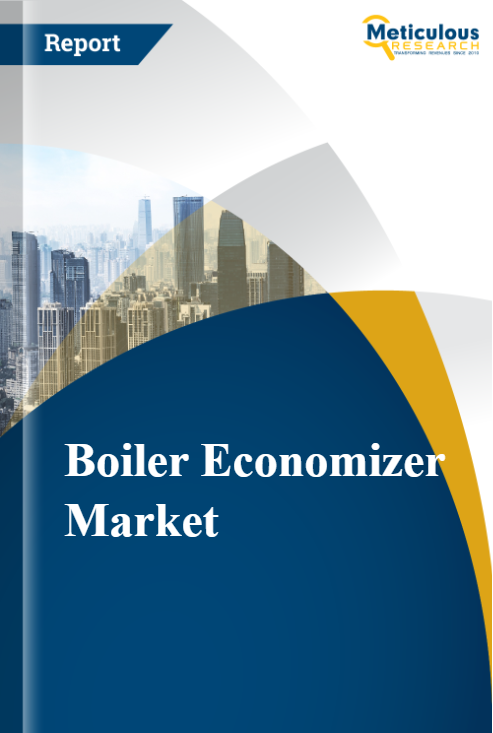
Boiler Economizer Market Size, Share, & Forecast by Type (Condensing, Non-Condensing), Boiler Type (Fire-Tube, Water-Tube), End-Use Industry, and Geography – Global Forecast to 2036
Report ID: MREP - 1041665 Pages: 243 Jan-2026 Formats*: PDF Category: Energy and Power Delivery: 24 to 72 Hours Download Free Sample Report
What is the Boiler Economizer Market Size?
The global boiler economizer market was valued at USD 1.43 billion in 2025. This market is expected to reach USD 2.5 billion by 2036 from USD 1.51 billion in 2026, at a CAGR of 5.2% from 2026 to 2036. The growth of the overall boiler economizer market is driven by the rising global focus on energy efficiency and the rapid expansion of the industrial manufacturing sector. As industrial and utility entities seek to optimize their fuel consumption and reduce operational costs, economizer technologies have become essential for achieving high thermal efficiency and minimizing environmental impact. The rapid expansion of the power generation and chemical processing sectors, coupled with the increasing need for waste heat recovery in commercial buildings and district heating projects, continues to fuel significant growth of this market across all major geographic regions.
|
Metric |
Value |
Data Context |
|
Estimated Market Value (2025) |
USD 1.43 Billion |
Based on segmental revenue analysis of leading economizer manufacturers across global markets. |
|
CAGR (2026-2036) |
5.2% |
Growth driven by stricter energy efficiency regulations, rising fuel costs, and increasing industrial heat recovery adoption in emerging markets. |
|
Largest Product Segment |
Non-Condensing Economizers (60-65% share) |
Standard for high-temperature industrial and utility boilers. |
|
Fastest Growing Product |
Condensing Economizers |
Driven by low-temperature heat recovery and efficiency mandates. |
|
Leading Application |
Power Generation (45-50% share) |
Major use in utility-scale coal and gas plants. |
|
Fastest Growing Application |
Industrial Manufacturing |
Driven by decarbonization and energy cost optimization. |
|
Fastest Growth Region |
Asia-Pacific |
Supported by rapid industrialization and coal-to-gas transitions. |
|
Top Country by Growth |
China |
World leader in industrial boiler capacity and efficiency upgrades. |
|
Key Market Drivers |
Energy Efficiency Mandates, Fuel Cost Optimization, Decarbonization |
Aligned with global net-zero and energy security policies. |
|
Key Technology Trends |
Digitalization (IoT), Advanced Materials, Modular Designs |
Focus on predictive maintenance and corrosion resistance. |
 Click here to: Get Free Sample Pages of this Report
Boiler economizers are advanced heat exchange devices used to recover waste heat from boiler flue gases and use it to preheat the boiler feedwater or other process fluids. By reducing the temperature of the exhaust gases and transferring that energy back into the system, these devices significantly lower fuel consumption and greenhouse gas emissions. The market is increasingly defined by high-efficiency technologies such as Condensing and Non-Condensing economizers, which offer a versatile combination of high thermal performance, exceptional reliability, and modular designs, making them indispensable for large-scale industrial and utility facilities.
The market includes a diverse range of equipment configurations, ranging from compact, rectangular units for commercial boilers to massive, custom-engineered finned-tube banks for utility-scale power plants. These systems are integrated with advanced materials and corrosion-resistant coatings to provide services such as high-pressure operation and extended service life in harsh flue gas environments. The ability to provide stable, continuous heat recovery while minimizing pressure drops and maintenance requirements has made modern economizers the technology of choice for plant operators and energy managers seeking to enhance their operational economy and sustainability profile.
The overall boiler economizer market is expected to witness robust growth during the forecast period, driven by several factors. The global energy sector is pushing hard to integrate higher proportions of waste heat recovery, aiming to meet net-zero emission targets. This drive has increased the adoption of advanced economizers, with high-performance systems helping to stabilize boiler operations by recovering excess thermal energy for reuse.
|
Metric |
Value |
|
Estimated Market Value (2025) |
USD 1.43 Billion |
|
CAGR (2026-2036) |
5.2% |
|
Largest Product Segment |
Non-Condensing Economizers (60-65% share) |
|
Fastest Growing Product |
Condensing Economizers |
|
Leading Application |
Power Generation (45-50% share) |
|
Fastest Growing Application |
Industrial Manufacturing |
|
Fastest Growth Region |
Asia-Pacific |
|
Top Country by Growth |
China |
|
Key Market Drivers |
Energy Efficiency Mandates, Fuel Cost Optimization, Decarbonization |
|
Key Technology Trends |
Digitalization (IoT), Advanced Materials, Modular Designs |
Proliferation of Two-Stage and Condensing Economizer Technology
Manufacturers are increasingly moving beyond traditional non-condensing designs to advanced systems that can recover both sensible and latent heat from flue gases. Leading companies are deploying systems that can provide efficiency gains of up to 10-15%, serving as a cost-effective solution for both industrial and commercial users. The recent introduction of high-capacity, stainless steel condensing economizers marks a key milestone in this transition. These advanced designs allow for significant reductions in fuel consumption and carbon footprint, making condensing units increasingly competitive for a wider range of boiler applications.
Innovation in Digital Monitoring and Predictive Fouling Analysis
Since the performance of economizers can degrade over time due to ash buildup and corrosion, manufacturers are creating smart platforms that allow for real-time performance tracking and automated cleaning cycles. This approach significantly lowers the operational risk and supports proactive maintenance strategies, as potential issues can be identified before they lead to system failure. Furthermore, manufacturers are investing in advanced IoT-enabled sensors and cloud-based analytics to provide "Efficiency-as-a-Service," where thermal performance is optimized by the vendor, further enhancing the value proposition for end-users.
Drivers: Energy Efficiency Mandates and Fuel Cost Optimization
Global regulations requiring the decarbonization of thermal processes have created significant incentives for the adoption of heat recovery technologies that can reduce fuel intake. The EU Energy Efficiency Directive, the U.S. Industrial Decarbonization Roadmap, and China’s Green Manufacturing initiatives drive manufacturers toward scalable solutions that advanced economizers can uniquely provide. It is estimated that as fuel prices remain volatile and emission standards tighten through 2036, the need for efficient waste heat recovery increases exponentially; therefore, boiler economizers, with their ability to reduce fuel consumption by up to 5-10%, are considered a crucial enabler of modern industrial strategies.
Opportunity: Decarbonization of District Heating and Industrial Microgrids
The rapid growth of sustainable district heating and industrial microgrids provides great opportunities for the boiler economizer market. The global surge in urban district heating capacity has created a compelling demand for high-efficiency, condensing heat recovery systems. These applications require high reliability, long operational life, and the ability to perform frequent thermal cycling, all attributes that are met with advanced economizers. The district heating market is set to expand significantly through 2036, with specialized economizers poised for an expanding share as operators seek to maximize the thermal output of their boiler plants. Furthermore, the increasing demand for industrial microgrids that power manufacturing facilities and remote communities is driving demand for modular economizer systems that provide energy independence and resilience.
Why Do Non-Condensing Economizers Dominate the Market?
The non-condensing economizers segment accounts for around 60-65% of the overall boiler economizer market in 2026. These systems, often utilizing finned-tube or bare-tube designs, offer the most reliable way to manage bulk heat recovery in power plants and heavy industrial facilities where flue gas temperatures remain above the dew point. The utility sector alone consumes the vast majority of non-condensing production, with major projects in Asia Pacific and North America demonstrating the technology's capability to enhance the efficiency of large-scale steam generators.
However, the condensing economizers segment is expected to grow at the fastest CAGR during the forecast period, driven by expanding applications in commercial buildings, food & beverage plants, and district heating systems. The superior thermal efficiency, ability to recover latent heat, and compact design of condensing units make them highly attractive for users who require maximum efficiency gains from their boiler systems.
Application Insights
How Do Power Generation Facilities Lead the Market?
Based on application, the power generation segment holds the largest share of the overall boiler economizer market in 2026, accounting for around 45-50% of total consumption. From utility-scale coal and gas-fired plants to biomass and waste-to-energy facilities, the use of economizers in the power sector is central to modernizing energy infrastructure. Current large-scale projects are increasingly specifying advanced finned-tube economizers for their ability to reduce fuel costs and support grid stability through enhanced boiler performance.
The industrial manufacturing segment would see the fastest growth during the forecast period, owing to the growing focus on corporate sustainability, rising fuel costs, and the need for process steam efficiency. Boiler economizers are finding critical applications in the chemical, pharmaceutical, and food & beverage sectors, where specialized systems are required to handle diverse boiler loads and provide reliable heat recovery. The modularity of new economizer designs starts pushing up the requirement for standardized systems that allow businesses to scale their thermal capacity as their production grows.
Regional Insights
How is Asia Pacific Maintaining Dominance in the Global Boiler Economizer Market?
Asia Pacific holds the largest share of the global boiler economizer market in 2026. The largest share of this region is primarily attributed to the massive government-led investments in power and industrial infrastructure, particularly in China and India. China alone accounts for more than 45% of global economizer deployments, with its position as a leading hub for boiler manufacturing and industrial production driving sustained growth. The presence of leading manufacturers and a well-developed supply chain serving regional and global customers further strengthens this position.
Which Factors Support North America and Europe Market Growth?
Together, North America and Europe account for around 30 to 35% of the global boiler economizer market. The growth of these markets is mainly driven by the need for energy efficiency to support high-penetration renewable grids and the stringent environmental requirements for industrial installations. The demand for economizers in North America is mainly due to its large-scale industrial projects and the presence of innovators in thermal technology.
In Europe, the leadership in sustainable energy policies and the push for energy independence are driving the adoption of advanced condensing economizers. Countries like Germany, France, and the UK are at the forefront, with significant projects aimed at integrating waste heat recovery and providing district heating services. The European market also benefits from a strong focus on circular economy models and the development of local high-efficiency supply chains.
Leading companies within the boiler economizer market are developing different strategies to capture increasing demand from the industrial, utility, and commercial markets. Companies such as Alfa Laval and Babcock & Wilcox have comprehensive thermal technology solutions that offer complete heat recovery systems. These companies rely on their established reliability and extensive experience in major industrial projects, with operational references for installations on all continents.
Cleaver-Brooks and Victory Energy are leading the way in integrated boiler-economizer packages and digital solutions that can be quickly deployed for a variety of applications. Thermax and Superior Boiler Works are both actively working on advanced heat recovery systems which maximize efficiency with a focus on sustainability and ease of operation. On the specialized equipment side, Cain Industries is a leader in custom-engineered economizer solutions for challenging industrial applications.
The boiler economizer market is expected to grow from USD 1.51 billion in 2026 to USD 2.5 billion by 2036.
The boiler economizer market is expected to grow at a CAGR of 5.2% from 2026 to 2036.
The major players include Alfa Laval, Cleaver-Brooks, Babcock & Wilcox, Thermax Ltd., and Cochran Ltd., among others.
The main factors include energy efficiency mandates, fuel cost optimization, and the expansion of the power generation and industrial manufacturing sectors.
Asia Pacific will lead the global boiler economizer market in terms of market share and is also expected to witness the fastest growth during the forecast period 2026 to 2036.




















Published Date: Jan-2026
Published Date: Aug-2026
Please enter your corporate email id here to view sample report.
Subscribe to get the latest industry updates


