Drug-Device Combination Products Market (2026-2036)
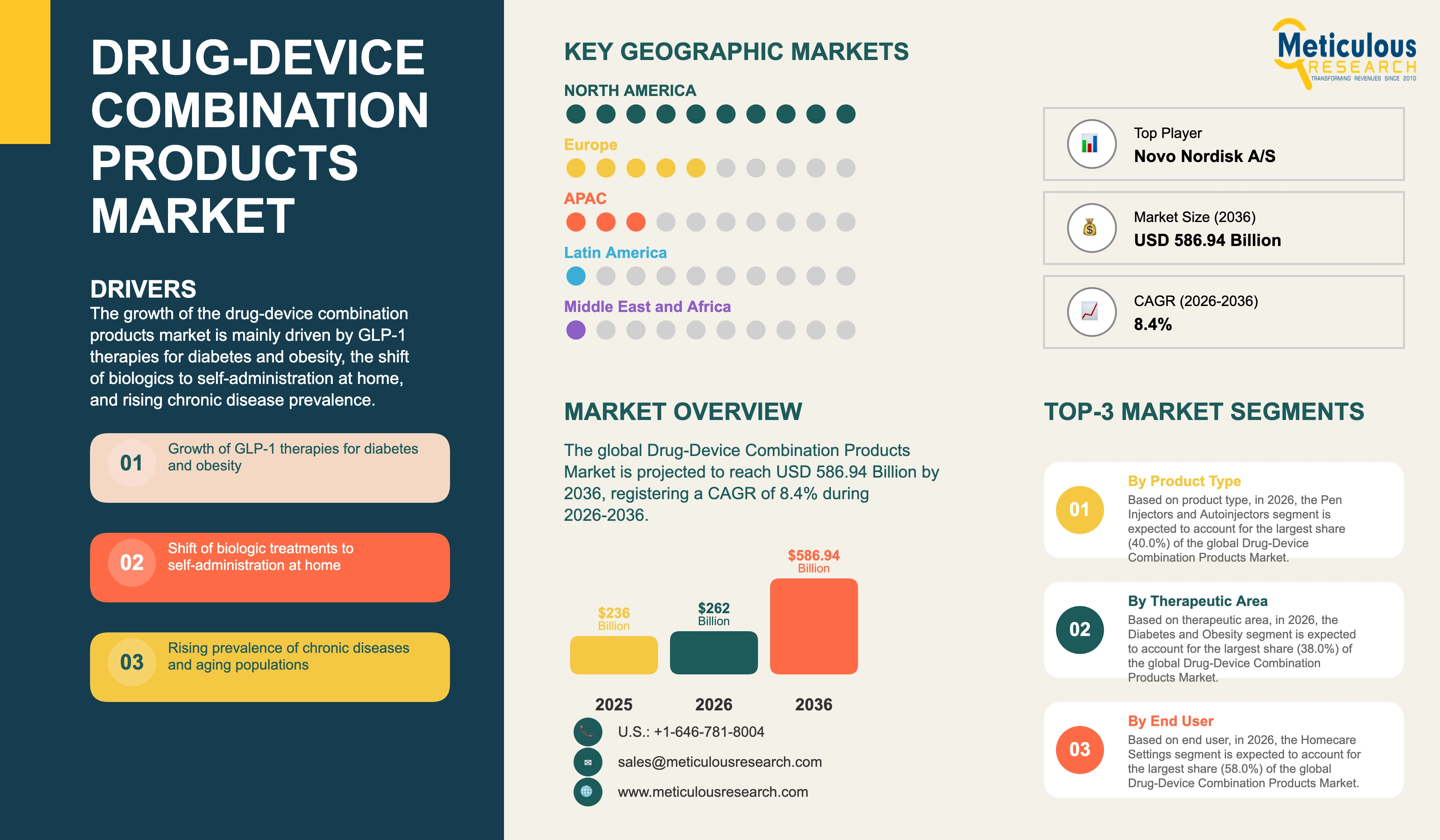
The global drug-device combination products market was valued at USD 236.00 billion in 2025. This market is expected to reach USD 586.94 billion by 2036 from an estimated USD 262.00 billion in 2026, registering a CAGR of 8.4% during the forecast period (2026-2036).
- Published
- Nov 2026
- Pages
- 288
- Format
- PDF + Excel
- Report ID
- MRHC - 1042545
- Base year
- 2025
- 2025 · BASELINE
- $236.0B
- 2036
- $586.9B
- CAGR 2026–2036
- 8.4%
2025 baseline · 2026–2036 forecast at 8.4% CAGR · hover a bar for the value
Key highlights
The U.S. Food and Drug Administration's Office of Combination Products coordinates the review of drug-device, device-biologic, and other combination products, and combination products are subject to the FDA's current good manufacturing practice requirements under 21 CFR Part 4, which apply both drug and device quality requirements to the finished product.
In the European Union, Article 117 of the Medical Device Regulation requires that marketing authorization applications for medicinal products with an integral device include a notified body opinion on the conformity of the device part, which has added a new step to the approval of products such as prefilled pens and autoinjectors.
GLP-1 receptor agonists, such as semaglutide and tirzepatide, which are delivered in prefilled pens, became some of the world's best-selling medicines in 2024 and 2025, and their makers, Novo Nordisk and Eli Lilly, have invested tens of billions of dollars in new capacity for drug substance and pen filling and assembly.
Semaglutide patents began to expire in several markets, including India, Canada, China, and Brazil, from 2026, and generic and biosimilar manufacturers are launching their own pen-based versions, which is expected to expand access and increase volumes of combination products in emerging markets.
The FDA issued draft guidance on essential drug delivery outputs for devices intended to deliver drugs and biological products in 2024, which sets out the performance characteristics that sponsors should define and test for injectors and other delivery devices.
Wearable on-body injectors, such as those used with Amgen's Neulasta Onpro and newer large-volume systems from Ypsomed, West Pharmaceutical Services, and BD, are expanding the range of biologics that patients can take at home instead of in infusion centers.
Biosimilars of major immunology biologics, such as adalimumab and ustekinumab, have been launched by many companies in prefilled syringe and autoinjector formats in the U.S. and Europe, increasing the number of combination products on the market and expanding patient access through lower prices.
By product type, pen injectors and autoinjectors account for the largest share of 40.0% in 2026, while wearable and on-body injectors register the highest CAGR.
By therapeutic area, diabetes and obesity account for the largest share in 2026, while oncology registers the highest CAGR.
By end user, homecare settings account for the largest share of 58.0% in 2026 and register the highest CAGR.
By geography, North America accounts for the largest share of 52.0% in 2026, while Asia-Pacific registers the highest CAGR of 11.3%.
Report summary
| Particulars | Details |
|---|---|
| Forecast Period | 2026-2036 |
| Base Year | 2025 |
| Estimated Year | 2026 |
| CAGR (Value) | 8.4% |
| Format | PDF, Excel & Cloud Portal · 288 pages |
| Market Size (Value) in 2025 | USD 236.00 billion |
| Market Size (Value) in 2026 | USD 262.00 billion |
| Market Size (Value) in 2036 | USD 586.94 billion |
| Segments Covered | Product Type, Therapeutic Area, End User, and Geography |
| Countries Covered | North America, Europe, Asia-Pacific, Latin America, and Middle East and Africa |
| Key Companies | Novo Nordisk, Eli Lilly, Sanofi, AbbVie, Amgen, AstraZeneca, GSK, Teva, Medtronic, Boston Scientific, Abbott, BD, Ypsomed, SHL Medical, and West Pharmaceutical Services |
| Largest Segment by Product Type (2026) | Pen Injectors and Autoinjectors (40.0%) |
| Largest Segment by End User (2026) | Homecare Settings (58.0%) |
| Largest Region (2026) | North America (52.0%) |
| Fastest-Growing Region | Asia-Pacific (CAGR 11.3%) |
Report overview
Segments covered: product type, therapeutic area, end user.
The growth of this market is mainly driven by the rapid growth of injectable GLP-1 therapies for diabetes and obesity delivered in prefilled pens, the shift of biologic treatments for autoimmune, inflammatory, and other chronic diseases from hospital infusion to self-injection at home, the rising prevalence of diabetes, respiratory, cardiovascular, and other chronic diseases, the development of new delivery platforms such as wearable on-body injectors for large-volume biologics, and the growing focus on patient convenience, adherence, and lower total cost of care. However, factors such as complex and lengthy regulatory pathways that require both drug and device evidence, high development and manufacturing costs, supply constraints for primary containers and devices, pricing pressure on high-cost drugs, and the risk of device-related recalls are expected to restrain the growth of this market to some extent.
Drug-device combination products are therapeutic products that combine a drug or biological product with a medical device in a single product or package, where the device is used to deliver, administer, or release the drug, or where the drug enhances the function of the device. Common examples include prefilled syringes, pen injectors, and autoinjectors containing biologics, insulin, or GLP-1 therapies; metered-dose and dry powder inhalers for asthma and chronic obstructive pulmonary disease; transdermal and microneedle patches; drug-eluting coronary stents, balloons, and ophthalmic implants; antimicrobial catheters, wound dressings, and bone cements; and wearable on-body injectors that deliver large volumes of biologics under the skin.
This market covers the global sales of drug-device combination products, measured in value at manufacturers' selling prices of the finished products. It is segmented by product type, therapeutic area, end user, and geography. Stand-alone drugs supplied in vials or ampoules and administered with separate syringes, stand-alone medical devices without a drug component, empty delivery devices and primary containers sold to drug manufacturers, and contract manufacturing services are not included.
Combination products have become central to modern medicine and to the commercial strategies of pharmaceutical companies. Many of the fastest-growing drugs, including GLP-1 therapies for diabetes and obesity and biologics for autoimmune and inflammatory diseases, are delivered by patients themselves at home using prefilled pens and autoinjectors, which allows treatment outside hospitals and improves convenience and adherence. Inhalers remain the main way to treat asthma and chronic obstructive pulmonary disease, and drug-eluting stents are the standard of care in coronary interventions. As more drugs are designed for self-administration, the device has become an important part of a drug's commercial success and patient experience.
The value of combination products is concentrated in a small number of very large therapeutic franchises. GLP-1 therapies and insulin in pens, biologics for immunology in autoinjectors and prefilled syringes, and maintenance inhalers for respiratory diseases together account for most of the market. At the same time, the device-led part of the market, including drug-eluting stents, balloons, ophthalmic implants, and antimicrobial devices, is important for cardiovascular and surgical care. Growth in the market is therefore closely linked to the success of leading drug classes and to the adoption of new delivery formats.
Combination products are regulated differently from stand-alone drugs or devices, which adds complexity for developers. In the U.S., the FDA assigns each combination product to a lead center based on its primary mode of action, and the Office of Combination Products coordinates reviews between the drug, biologics, and device centers. Manufacturers must comply with both drug and device quality requirements under 21 CFR Part 4, conduct human factors studies to show that patients can use the device safely, and manage device design controls and risk management. In Europe, the Medical Device Regulation requires a notified body opinion for integral drug-device combinations, while drug-eluting devices are regulated as medical devices with consultation of medicines regulators.
Regulators have issued extensive guidance on combination products, covering topics such as human factors engineering, bridging studies when device changes are made, postmarketing safety reporting, and the essential performance outputs of delivery devices. These requirements increase the importance of device expertise within pharmaceutical companies and of partnerships with specialist device developers.
The market includes pharmaceutical and biotechnology companies that develop and sell drug-led combination products, and medical device companies that develop and sell device-led products such as drug-eluting stents. Leading drug-led companies include Novo Nordisk, Eli Lilly, Sanofi, AbbVie, Amgen, AstraZeneca, GSK, and Teva, while leading device-led companies include Medtronic, Boston Scientific, and Abbott. Specialist device developers and component suppliers, such as Ypsomed, SHL Medical, BD, and West Pharmaceutical Services, design and supply pens, autoinjectors, prefilled syringe systems, and wearable injectors used in combination products.
The supply chain for combination products involves many specialized partners across components, devices, and filling. Glass and polymer primary containers are supplied by companies such as BD, West Pharmaceutical Services, Gerresheimer, Schott, and Stevanato, device platforms by Ypsomed, SHL Medical, and others, and aseptic filling and device assembly are performed in-house by pharmaceutical companies or by contract manufacturers. Capacity across this supply chain has become a strategic issue as demand for GLP-1 therapies and biologics has grown.
Over the forecast period, the drug-device combination products market is expected to grow strongly, driven by GLP-1 therapies, biologics, the shift to home care, and new delivery technologies. North America is expected to remain the largest market, while Asia-Pacific is expected to grow fastest as access to biologics and GLP-1 therapies expands and generic versions become available.
Our next antibody needs a 5-milliliter dose. An on-body injector lets patients take it at home instead of coming in for an infusion.
This explains why on-body injectors and oncology are growing fastest.
For biotechnology companies developing large-dose biologics, on-body injectors open the possibility of home treatment that standard autoinjectors cannot provide.
This also shows why device developers are investing in large-volume platforms that can be used across multiple drugs and therapeutic areas.
Respiratory Physician - university hospital, U.K.
Inhaler technique is still the biggest problem we see. Simpler devices and connected sensors help patients use their inhalers correctly.
This explains why inhalers remain a large product type and why connected and easier-to-use devices are a key opportunity for respiratory companies.
When semaglutide comes off patent, we will launch in pens. The device has to be as good as the originator's, at a much lower cost.
This explains why Asia-Pacific is the fastest-growing region and why device platforms for generic and biosimilar manufacturers are a major opportunity.
Diabetes and obesity are expected to account for the largest share of the market in 2026, driven by GLP-1 therapies and insulin delivered in pens, while oncology is projected to register the highest CAGR.
In the U.S., the FDA's Office of Combination Products assigns each product to a lead center based on its primary mode of action, and manufacturers must meet both drug and device requirements under 21 CFR Part 4. In the EU, integral drug-device products require a notified body opinion on the device part under Article 117 of the Medical Device Regulation.
Wearable and on-body injectors are projected to register the highest CAGR, driven by large-volume biologics, subcutaneous versions of infused drugs, and the shift of treatment from hospitals to homes and community settings.
Wearable on-body injectors are devices attached to the skin that deliver larger volumes of drugs, typically several milliliters, over minutes or hours, allowing patients to take biologics at home that would otherwise require infusion.
Semaglutide patents began to expire in markets such as India, Canada, China, and Brazil from 2026, and generic pens are expected to expand access and volumes, particularly in emerging markets, while increasing price competition.
Report infographic
Market dynamics
16 factors across 5 forcesGrowth of GLP-1 therapies for diabetes and obesity
Injectable GLP-1 receptor agonists, such as semaglutide and tirzepatide, have transformed the treatment of type 2 diabetes and obesity and have become some of the best-selling medicines in the world. These drugs are delivered in prefilled pens and single-dose autoinjector pens, which patients use at home once a week. Demand has grown so rapidly that manufacturers faced shortages in 2023 and 2024, and Novo Nordisk and Eli Lilly have invested tens of billions of dollars in new manufacturing capacity, including pen filling and assembly lines. GLP-1 therapies are also being studied and approved for additional conditions, such as cardiovascular disease, sleep apnea, and kidney disease, which further expands demand.
The prevalence of diabetes and obesity continues to rise in almost every region of the world. According to the International Diabetes Federation, about 589 million adults were living with diabetes in 2024, and the World Health Organization estimates that more than a billion people live with obesity. As semaglutide patents expire in markets such as India, Canada, China, and Brazil from 2026, generic versions in pens are expected to expand access. Diabetes and obesity account for the largest share of the market by therapeutic area, and pen injectors and autoinjectors account for the largest share by product type.
Oral versions of GLP-1 therapies, such as oral semaglutide and orforglipron, may capture part of future demand, but injectable pens are expected to remain the main delivery format for most patients over the forecast period because of their efficacy, weekly dosing, and established use. Higher-dose and combination injectables, such as amylin and GLP-1 combinations, are also in development and will be delivered in pens.
Shift of biologic treatments to self-administration at home
Biologics for autoimmune and inflammatory diseases, such as rheumatoid arthritis, psoriasis, Crohn's disease, atopic dermatitis, and asthma, are increasingly delivered by patients at home using prefilled syringes and autoinjectors rather than by intravenous infusion in hospitals. Self-administration reduces the cost of care, frees hospital capacity, and improves convenience for patients, and payers and health systems encourage it. Pharmaceutical companies are also developing subcutaneous versions of drugs previously given by infusion, including in oncology, which creates demand for new delivery devices.
Homecare settings account for the largest share of the market by end user and also register the highest growth, reflecting the shift of treatment from hospitals to homes. Device features such as connectivity, dose tracking, and reminders are also being added to support adherence and remote monitoring.
The launch of biosimilars for major biologics, such as adalimumab and ustekinumab, has also increased the number of products sold in prefilled syringes and autoinjectors, since biosimilar makers compete partly on device usability and convenience, often offering citrate-free formulations and improved autoinjectors.
Rising prevalence of chronic diseases and aging populations
Chronic diseases, such as diabetes, cardiovascular disease, asthma, chronic obstructive pulmonary disease, and autoimmune diseases, are rising worldwide, driven by aging populations, lifestyle changes, and better diagnosis. Many of these diseases require long-term treatment with injectable or inhaled drugs, which supports demand for combination products. Older patients and those with conditions such as rheumatoid arthritis often have limited dexterity, which increases demand for easy-to-use autoinjectors and pens.
Cardiovascular disease remains the leading cause of death worldwide, and drug-eluting stents and balloons are widely used in coronary and peripheral interventions. Chronic respiratory diseases affect hundreds of millions of people and are treated mainly with inhalers.
Inhalers are used by hundreds of millions of patients with asthma and chronic obstructive pulmonary disease, and new inhaled therapies, including triple combination inhalers and inhaled biologics in development, continue to support demand.
Innovation in delivery platforms
New delivery technologies are expanding the range of drugs and patients that combination products can serve. Wearable on-body injectors allow patients to self-administer large volumes of biologics, such as oncology and immunology drugs, that cannot be delivered with standard autoinjectors. Connected pens and inhalers record doses and share data with patients and doctors. Long-acting drug-eluting implants deliver drugs over months, and microneedle patches are being developed for vaccines and other drugs. Inhaler manufacturers are also moving to propellants with lower global warming potential.
Wearable and on-body injectors form the fastest-growing product type in this market, supported by the growth of high-volume and high-viscosity biologics.
Device developers are also working on autoinjectors that can deliver higher viscosity formulations and larger volumes, which allows pharmaceutical companies to reduce dosing frequency, for example from every two weeks to once a month.
Table of contents
11 chapters · 125 sections · 288 pages · click to expandSegmental analysis
| Segment | Largest share (2026) | Fastest growth (2026–2036) |
|---|---|---|
| By Product Type | Pen injectors and autoinjectors | Wearable and on-body injectors |
| By Therapeutic Area | Diabetes and obesity | Oncology |
| By End User | Homecare settings | Homecare settings |
By Product Type
- Drug-Device Combination Products Market Analysis by Product Type
- The pen injectors and autoinjectors segment is expected to account for the largest share of 40.0% of the market.
- The large share of this segment is mainly due to the very large sales of GLP-1 therapies and insulin delivered in prefilled pens, the wide use of autoinjectors for biologics in autoimmune and inflammatory diseases, and the preference of patients and physicians for easy-to-use self-injection devices.
- Pen injectors include disposable prefilled pens and reusable pens with cartridges, while autoinjectors automatically insert the needle and deliver the dose when activated.
- Novo Nordisk and Eli Lilly are the largest sellers of pen-based products through their GLP-1 and insulin franchises, while AbbVie, Amgen, Sanofi, and others sell biologics in autoinjectors.
- Device developers such as Ypsomed and SHL Medical supply many of the autoinjector platforms used by pharmaceutical companies.
- Pen injectors and autoinjectors are expected to remain the largest product type over the forecast period.
- The segment benefits from the rapid growth of GLP-1 therapies, which are delivered in prefilled pens and are used by tens of millions of patients worldwide, and from the large installed base of insulin pens.
- Autoinjectors are the preferred format for many biologics because they hide the needle, deliver the dose automatically, and are easy to use for patients with limited dexterity.
- Manufacturers are investing in very large capacity for pen and autoinjector assembly, and device developers such as Ypsomed and SHL Medical have expanded their production capacity to meet demand.
- Generic GLP-1 pens launched after patent expiries in several markets are expected to add further volumes.
- Pens and autoinjectors are also becoming more sophisticated and patient-friendly, with features such as dose memory, connectivity, audible and visual feedback, and hidden needles, which improve usability and adherence.
- Reusable pen designs with replaceable cartridges are being promoted as a more sustainable alternative to disposable pens, particularly in Europe.
- The segment is expected to grow faster than the overall market, supported by GLP-1 therapies, biosimilar launches, and the conversion of prefilled syringe products to autoinjectors.
- However, the wearable and on-body injectors segment is projected to register the highest CAGR during the forecast period.
- The rapid growth of this segment is driven by large-volume biologics and the shift of infusions to home care.
- Prefilled syringes, inhalers, transdermal and microneedle patches, drug-eluting stents and implants, drug-coated and antimicrobial devices, and other products make up the rest of the market.
- Prefilled syringes are widely used for biologics, vaccines, anticoagulants, and other injectables, and are often the first format launched for new biologics.
- Inhalers include metered-dose inhalers, dry powder inhalers, and soft mist inhalers for respiratory diseases.
- Transdermal and microneedle patches deliver drugs through the skin for pain, hormone therapy, nicotine replacement, and neurological conditions.
- Drug-eluting stents and implants include coronary stents, balloons, and ophthalmic implants, while drug-coated and antimicrobial devices include catheters, wound dressings, and bone cements.
- Prefilled syringes account for a large share of the market and are expected to grow steadily over the forecast period, supported by new biologics and biosimilars and the shift of vaccines from vials to prefilled formats.
- Inhalers are a mature segment with slower growth over the forecast period, as generic competition and pricing pressure offset new product launches, while drug-eluting stents and implants grow steadily with the volume of coronary and peripheral interventions.
- Transdermal and microneedle patches and drug-coated devices are smaller segments with niche growth opportunities, including microneedle patches for vaccines and long-acting drugs.
By Therapeutic Area
- Drug-Device Combination Products Market Analysis by Therapeutic Area
- The diabetes and obesity segment is expected to account for the largest share of the market, due to the large sales of GLP-1 therapies and insulin delivered in pens.
- However, the oncology segment is projected to register the highest CAGR during the forecast period, driven by subcutaneous cancer drugs and on-body injectors.
- Autoimmune and inflammatory diseases, respiratory diseases, cardiovascular diseases, neurological disorders, and other therapeutic areas make up the rest of the market.
- Diabetes and obesity products include GLP-1 therapies, insulin, and other injectables delivered in pens.
- Autoimmune and inflammatory disease products include biologics for rheumatoid arthritis, psoriasis, inflammatory bowel disease, and atopic dermatitis delivered in autoinjectors and prefilled syringes.
- Respiratory products are mainly inhalers, while cardiovascular products include drug-eluting stents and balloons and injectable lipid-lowering drugs such as PCSK9 inhibitors.
- Oncology products include on-body injectors for supportive care, such as white blood cell boosters, and subcutaneous cancer therapies, and neurological products include patches and autoinjectors for migraine, multiple sclerosis, and Parkinson's disease.
- Diabetes and obesity are expected to remain the largest therapeutic area throughout the forecast period, despite price competition from generics, supported by the expansion of GLP-1 therapies into cardiovascular, kidney, and other indications and by generic launches in emerging markets.
- Autoimmune and inflammatory diseases form the second-largest area, driven by biologics and biosimilars in autoinjectors and prefilled syringes, while respiratory diseases remain a large but slower-growing area because of generic inhaler competition.
By End User
- Drug-Device Combination Products Market Analysis by End User
- The homecare settings segment is expected to account for the largest share of 58.0% of the market.
- The large share of this segment is mainly due to the large number of patients who self-administer GLP-1 therapies, insulin, and biologics at home using pens, autoinjectors, and prefilled syringes, and the use of inhalers and patches at home.
- Health systems and payers encourage home administration because it reduces costs and frees hospital capacity, and patients value the convenience.
- Homecare settings are expected to remain the largest end user and also to register the highest CAGR during the forecast period.
- Hospitals and clinics and ambulatory care centers make up the rest of the market, using drug-eluting stents, antimicrobial devices, and products administered by healthcare professionals, such as some vaccines, anticoagulants, and subcutaneous oncology drugs.
- Home administration is supported by patient training programs, nurse support services, and digital tools provided by pharmaceutical companies, and by specialty pharmacies that deliver products to patients' homes.
- Hospitals and clinics use drug-eluting stents, antimicrobial devices, and some injectables administered by healthcare professionals, while ambulatory care centers increasingly administer subcutaneous biologics that were previously given by infusion in hospitals.
- The shift to home care is also supported by policies in many countries that encourage treatment outside hospitals to reduce costs and waiting times.
Geographic analysis
North America
Largest shareIn 2026, North America is expected to account for the largest share of 52.0% of the global drug-device combination products market. The large share of this region is mainly due to high spending on biologics and GLP-1 therapies, the high prevalence of diabetes, obesity, and chronic diseases, wide use of self-administered injectables, and the presence of leading pharmaceutical and device companies. The U.S. is the largest market in the world for combination products, accounting for a large share of global sales of GLP-1 therapies and biologics. North America is expected to remain the largest region throughout the forecast period. The U.S. accounts for a large share of global sales of GLP-1 therapies and biologics because of high drug prices, broad insurance coverage for many therapies, and high prevalence of diabetes and obesity. The FDA's Office of Combination Products and established regulatory pathways support innovation, and many leading pharmaceutical and device companies are based in the region. Canada is also a significant market and one of the first major markets where generic semaglutide is expected.
Asia-Pacific
Fastest growthAsia-Pacific is projected to register the highest CAGR of 11.3% during the forecast period. Growth is driven by the rising prevalence of diabetes and obesity in China and India, expanding access to biologics, and the launch of generic GLP-1 pens. China and India have the largest numbers of people with diabetes in the world, and access to GLP-1 therapies and biologics is expanding through national reimbursement and local manufacturing. Generic semaglutide pens from Indian and Chinese manufacturers are expected to be launched in many markets after patent expiry. Japan and South Korea have mature markets for biologics and inhalers, and Australia has high adoption of self-administered therapies supported by its national pharmaceutical benefits scheme. This explains why Asia-Pacific is expected to account for a rising share of the market by 2036.
Europe
Europe holds a large share, while Latin America and the Middle East and Africa are growing markets. Europe has a large market for biologics, biosimilars, and inhalers, and is home to Novo Nordisk, Sanofi, AstraZeneca, GSK, Ypsomed, and SHL Medical. Biosimilar adoption is high in Europe, which supports demand for prefilled syringes and autoinjectors.
Latin America
In Latin America, Brazil and Mexico are the largest markets, and in the Middle East, the GCC countries have high rates of diabetes and obesity and growing use of GLP-1 therapies.
Competitive landscape
The drug-device combination products market is concentrated in some product categories, such as GLP-1 pens, and fragmented in others. Leading companies include Novo Nordisk, Eli Lilly, Sanofi, AbbVie, Amgen, AstraZeneca, GSK, Teva, Medtronic, Boston Scientific, Abbott, BD, Ypsomed, SHL Medical, and West Pharmaceutical Services.
Companies compete on therapeutic efficacy, device usability, reliability, manufacturing capacity, and price.
Novo Nordisk and Eli Lilly lead the market through their GLP-1 and insulin franchises delivered in pens, and both have invested heavily in manufacturing capacity. Sanofi, AbbVie, Amgen, and other biopharmaceutical companies sell major biologics in autoinjectors and prefilled syringes, while AstraZeneca, GSK, and Teva are leading inhaler manufacturers. Medtronic, Boston Scientific, and Abbott lead in drug-eluting stents and balloons. BD and West Pharmaceutical Services supply prefilled syringe systems, wearable injectors, and components, while Ypsomed and SHL Medical are leading developers and manufacturers of pens and autoinjectors used in many combination products.
The competitive landscape differs considerably by product type, therapeutic area, and region. GLP-1 pens are dominated by Novo Nordisk and Eli Lilly, while immunology autoinjectors are shared among many biologic and biosimilar manufacturers. Inhalers are led by a few large respiratory companies facing generic competition, and drug-eluting stents are led by a few large device companies. Device developers and component suppliers compete to supply pharmaceutical companies.
The top five players are estimated to account for 45.0% of the drug-device combination products market in 2025.
Players use several strategies to grow in this market, including capacity investment, new device platforms, and partnerships.
For example, Novo Nordisk's parent foundation acquired Catalent to expand fill-finish capacity, Eli Lilly has announced several new manufacturing sites, and device developers have expanded their autoinjector production. Pharmaceutical companies are partnering with device developers to create next-generation autoinjectors and on-body injectors, and biosimilar manufacturers are licensing device platforms to launch their products quickly.
Competition is expected to center on capacity and patient experience.
Companies with secure manufacturing capacity, strong device platforms, and products that patients find easy to use are expected to gain share. Generic and biosimilar entry will increase competition in some categories, particularly GLP-1 therapies in emerging markets and immunology biologics in Europe and the U.S.
Some of the key players operating in the drug-device combination products market are Novo Nordisk A/S, Eli Lilly and Company, Sanofi S.A., AbbVie Inc., Amgen Inc., AstraZeneca PLC, GSK plc, Teva Pharmaceutical Industries Ltd., Medtronic plc, Boston Scientific Corporation, Abbott Laboratories, Becton, Dickinson and Company, Ypsomed Holding AG, SHL Medical AG, and West Pharmaceutical Services, Inc.
- —
Novo Nordisk and Eli Lilly invested heavily in GLP-1 pen capacity, semaglutide patents began expiring in several markets in 2026, and the FDA issued draft guidance on essential drug delivery outputs.
- Novo Nordisk
- Eli Lilly
- Sanofi
- AbbVie
- Amgen
- AstraZeneca
- GSK
- Teva
- Medtronic
- Boston Scientific
- Abbott
- BD
- Ypsomed
- SHL Medical
- West Pharmaceutical Services
Expert perspectives
Drug-device combination products have become central to modern pharmaceutical markets, driven by GLP-1 therapies, biologics, and the shift to home care.
The market is shaped by a small number of very large therapeutic franchises, especially GLP-1 therapies for diabetes and obesity, which have grown faster than almost any drug class in history. The success of these drugs depends heavily on their delivery devices, and manufacturing capacity for pens and autoinjectors has become a strategic priority. At the same time, the long-term shift of biologics from infusion to self-injection is increasing the number of combination products in immunology, oncology, and other areas.
Device design and manufacturing have become strategic capabilities for pharmaceutical companies, and the companies that can secure capacity and deliver user-friendly devices have a competitive advantage.
Over the forecast period, the market is expected to grow at about 8.4% per year, supported by obesity treatment, biologics, and new delivery technologies.
Growth will be shaped by the expansion of GLP-1 therapies to new indications and markets, the launch of generic and biosimilar versions, pricing reforms in the U.S. and other markets, and new delivery technologies. Wearable on-body injectors are expected to grow fastest, while pens and autoinjectors remain the largest product type.
Pens and autoinjectors are the largest product type, while on-body injectors grow fastest. Homecare settings are the largest end user.
Diabetes and obesity are expected to remain the largest therapeutic area, while oncology is expected to grow fastest as subcutaneous cancer therapies and on-body injectors are adopted. Homecare settings are expected to account for a growing share as more treatments move to self-administration.
North America remains the largest region, while Asia-Pacific is the fastest-growing region at a CAGR of 11.3%.
The main swing factors are the pace of GLP-1 adoption and pricing, the impact of generic entry, the role of oral alternatives, and the speed at which on-body and subcutaneous delivery replace infusions. Supply capacity for pens, autoinjectors, and prefilled syringes will also influence how quickly demand can be met.
For manufacturers, the key priorities are capacity, usability, sustainability, and regulatory readiness.
For pharmaceutical companies, the delivery device should be considered early in drug development, with a focus on usability, reliability, sustainability, and scalable supply. For device developers, the key opportunities are platform devices, large-volume injectors, and partnerships with biosimilar and generic manufacturers. Overall, combination products are expected to account for a growing share of pharmaceutical sales over the forecast period, as more drugs are designed from the start for convenient self-administration.
Customer perspectives
Endocrinologist - hospital diabetes center, U.S.
Weekly pens have made GLP-1 treatment simple for patients. The device matters as much as the drug for adherence.
This explains why pen injectors and autoinjectors account for 40.0% of the market and homecare settings 58.0%.
For physicians treating diabetes and obesity, a simple, reliable device is essential for long-term adherence, and supply interruptions during past shortages showed how much patients depend on consistent access to their pens.
Frequently asked questions
Measured at manufacturers' selling prices of finished products, the market was valued at USD 236.00 billion in 2025 and USD 206.00 billion in 2024, and is estimated at USD 262.00 billion in 2026.
Cite this report
Meticulous Research. (2026). Drug-Device Combination Products Market - Global Opportunity Analysis and Industry Forecast (2026-2036) (Report No. MRHC - 1042545). Meticulous Market Research Pvt. Ltd. https://www.meticulousresearch.com/product/drug-device-combination-products-market-7228