Astaxanthin Market (2025-2032)
The Astaxanthin Market is projected to reach $1.34 billion by 2032, at a CAGR of 8.2% during the forecast period of 2025–2032.
- Published
- Jan 2025
- Pages
- 175
- Format
- PDF + Excel
- Report ID
- MR-758
- Base year
- 2024
- 2032 · FORECAST
- $1.34B
- 2032
- $1.34B
- CAGR 2025–2032
- 8.2%
2024 baseline · 2025–2032 forecast at 8.2% CAGR · hover a bar for the value
Key highlights
The Astaxanthin Market is projected to reach $1.34 billion by 2032, at a CAGR of 8.2% during the forecast period of 2025–2032.
The natural segment is expected to account for the larger share of the astaxanthin market.
The Dry Form Segment is Expected to Dominate the Astaxanthin Market
The chemical synthesis segment is expected to account for the largest share of the astaxanthin market.
However, the market in Asia-Pacific is slated to record the fastest growth rate during the forecast period. The growth of this regional market is driven by the growing consumer preference for natural ingredients, increasing production and consumption of nutraceuticals, rising consumer awareness regarding the negative effects of synthetic astaxanthin coupled with the growth in spending abilities of the consumers, strong growth in the food & beverage industry, and increased animal feed demand.
The large share of Europe is attributed to the growing food & beverage industry, rising health & wellness trends, increasing feed production, and growing demand for chemical-free cosmetics.
Report summary
| Particulars | Details |
|---|---|
| Base Year | 2024 |
| Estimated Year | 2025 |
| Forecast Period | 2025–2032 |
| Market Size (2032) | USD 1.34 billion |
| CAGR (2025–2032) | 8.2% |
| Format | PDF, Excel & Cloud Portal · 175 pages |
| Segments Covered | By Source: Natural, Synthetic · By Form: Dry, Liquid · By Method of Production: Chemical Synthesis, Microalgae Cultivation, Fermentation, Extraction · By Application: Food & Beverages, Nutraceuticals, Animal Feed, Pharmaceuticals, Personal Care & Cosmetics, Other Applications |
| Countries Covered | Europe (RoE), Asia-Pacific (RoAPAC), Latin America (RoLATAM) |
| Key Companies | Algatechnologies Ltd., BASF SE, Cardax, Inc., Cyanotech Corporation, Divi's Laboratories Limited, Koninklijke DSM N.V., Fuji Chemical Industries Co., Ltd., Otsuka Holdings Co., Ltd., Piveg, Inc., Wellgreen Technology Co., Ltd. |
Report overview
Segments covered: source, form, method of production, application. Regions: Europe, Asia-Pacific, Latin America.
The growing awareness about the benefits of natural food colors and clean-label products and the increasing demand for natural cosmetics products and dietary supplements are the key factors driving the growth of the astaxanthin market. Furthermore, emerging economies in Asia-Pacific, Latin America, and the Middle East & Africa and government initiatives to support aquaculture are expected to provide significant opportunities for the players operating in this market.
The COVID-19 outbreak created a severe public health emergency globally, with its quick spread in more than 150 countries. Numerous countries worldwide declared emergencies and announced complete nationwide, statewide, or citywide lockdowns to combat & control the spread of this disease, halting all travel, transport, manufacturing, educational institutions, and non-essential trade. This impacted many industries globally, including animal feed, food & beverage, dietary supplements, and cosmetics.
Governments enforced restrictions on operating capacities to ensure social distancing and curb the spread of the virus. Supply chains were disrupted, resulting in production limitations, complications in raw materials sourcing, and higher delivery costs, impacting the global astaxanthin market. Moreover, governments announced a temporary ban on foreign air travel. These factors affected the sales of astaxanthin products. In addition, restrictions on the export and import of non-essential products due to temporary border closures in some countries further hindered the growth of this market.
However, according to an article published by Nutrition Outlook, the sales of dietary supplements increased during the pandemic due to their ability to strengthen the immune system against COVID-19. During the last week of March 2020, the sales of dietary supplements in the U.S. sharply increased by more than 35%. Thus, the growing demand for dietary supplements propelled the growth of the astaxanthin market.
The preference for natural food colors over synthetic food colors is increasing due to growing consumer awareness regarding organic products, the health hazards of synthetic colors, and the health benefits of natural food colors. The use of artificial ingredients to enhance food production has led to various health hazards. Nowadays, consumers’ rising health consciousness and growing inclination towards environment-friendly products are driving the demand for naturally grown food products across the globe. Thus, to cater to the growing demand for natural food products, food manufacturers widely use natural food colors to restore the attractiveness of food & beverage products after processing.
Natural food colors or dyes are mainly obtained from plants, animals, fruits, insects, and minerals, making them safe to use as a food additive. They are free from harmful side effects. The use of natural colors is also increasing due to their non-toxic/less toxic nature and fewer side effects compared to artificial colors. Furthermore, governments of various countries are supporting the use of natural food colors as they are biodegradable and do not cause pollution after disposal. Several regulations promoting the use of natural food colors have been passed in many regions, which is further expected to drive the demand for natural food colors across the globe.
The demand for organic foods is constantly increasing, mainly due to consumers’ perception that they are healthier and safer than conventional foods. Organic food is produced without synthetic fertilizers, pesticides, growth hormones, antibiotics, genetically modified organisms (GMOs), colors, flavors, and ingredients. Natural food colors are widely used in organic foods to make them more attractive. Furthermore, the expansion of the food & beverage industry has positively impacted the global natural food colors market, as the consumption of natural food is increasing across the globe, which, in turn, is expected to drive the demand for astaxanthin in the next few years.
Astaxanthin is considered one of the greatest antioxidants in nature due to its benefits in cognition and heart function. For this reason, astaxanthin produced by microalgae is added to capsules and foods for direct human consumption. Recently, natural astaxanthin has gained much traction in the food & beverage industry as a substitute for synthetic astaxanthin that negatively impacts human health upon consumption. Additionally, the preventive effects of natural astaxanthin on chronic diseases have boosted its adoption in the food & beverage industry. Therefore, the growing demand for organic foods and the expanding food & beverage industry fuel the demand for natural food colorants such as natural astaxanthin, which is expected to boost the growth of the astaxanthin market.
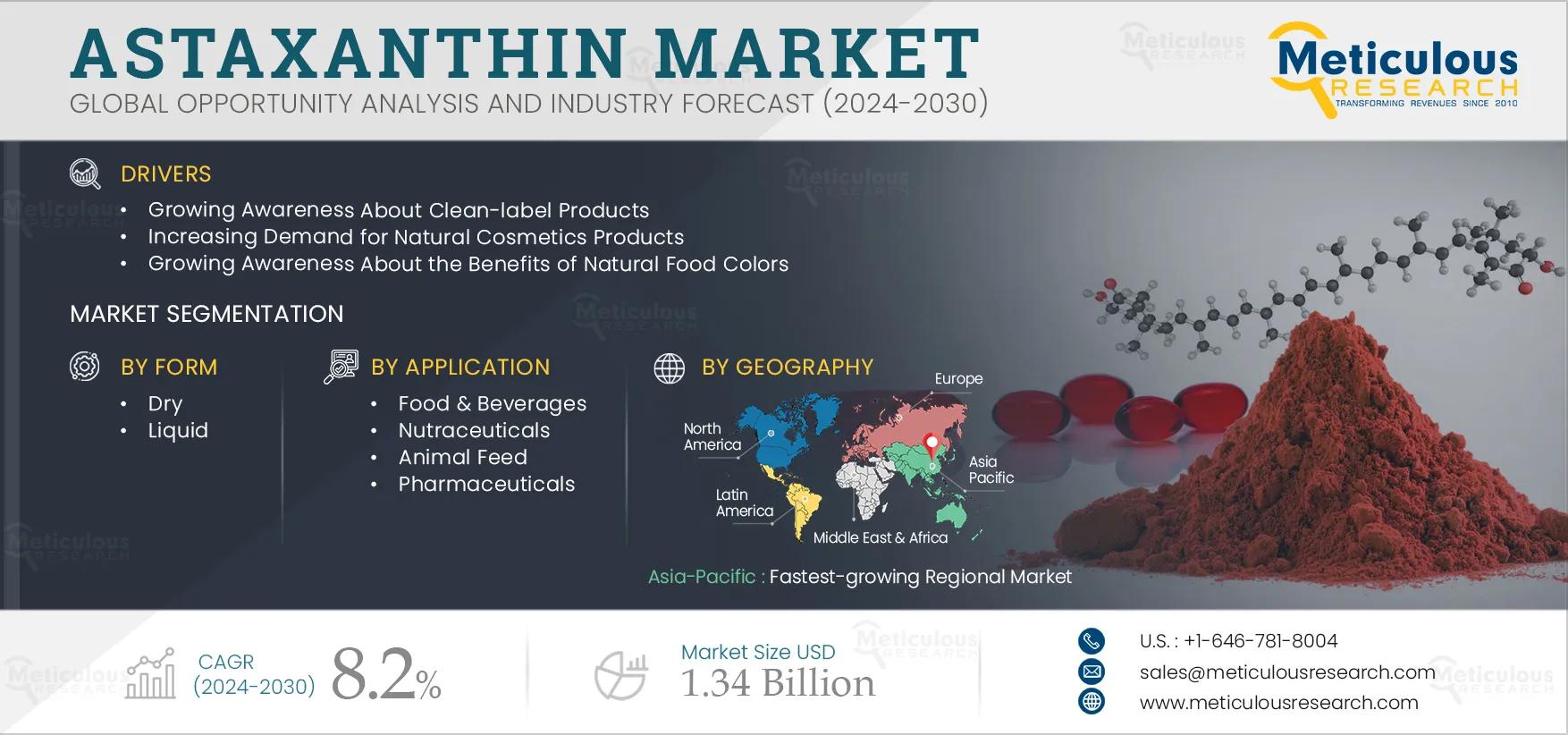
Table of contents
12 chapters · 100 sections · 175 pages · click to expandSegmental analysis
| Segment | Largest share (2025) | Fastest growth (2025–2032) |
|---|---|---|
| By Source | Natural | — |
| By Form | Dry Form | — |
| By Method of Production | Chemical Synthesis | — |
By Source
- The natural segment is expected to account for the larger share of the astaxanthin market.
- The large market share of this segment is attributed to its strong antioxidant activity and health benefits, such as immune system support, inflammation reduction, sunburn prevention, and cognitive health support.
- In addition, factors such as high demand for natural astaxanthin in nutraceutical applications, wide-scale availability of natural astaxanthin, rising demand for astaxanthin for cancer treatment, growing health-conscious population, and higher efficacy compared to synthetic products are expected to fuel the growth of this segment.
By Form
- The Dry Form Segment is Expected to Dominate the Astaxanthin Market
- The dry segment is expected to account for the larger share of the astaxanthin market.
- The large market share of this segment is attributed to the advantages of dry astaxanthin, such as ease in handling, transport, and use; longer shelf life of ingredients due to the absence of water; and better ingredient functionality and stability.
- These advantages have increased the utilization of astaxanthin in dry form in the food and beverages, pharmaceuticals, and cosmetics industries.
By Method of Production
- The chemical synthesis segment is expected to account for the largest share of the astaxanthin market.
- The large market share of this segment is attributed to the low cost of production, easy application, and good stability against low pH.
Geographic analysis
Asia-Pacific
Fastest growthHowever, the market in Asia-Pacific is slated to record the fastest growth rate during the forecast period. The growth of this regional market is driven by the growing consumer preference for natural ingredients, increasing production and consumption of nutraceuticals, rising consumer awareness regarding the negative effects of synthetic astaxanthin coupled with the growth in spending abilities of the consumers, strong growth in the food & beverage industry, and increased animal feed demand. Asia-Pacific: Fastest-growing Regional Market
Europe
The large share of Europe is attributed to the growing food & beverage industry, rising health & wellness trends, increasing feed production, and growing demand for chemical-free cosmetics. Furthermore, the increase in the aging population in the region has led to a surge in demand for astaxanthin to reduce the risk of diabetes, cancer, and other heart-related issues.
Competitive landscape
- Algatechnologies Ltd.
- BASF SE
- Cardax, Inc.
- Cyanotech Corporation
- Divi's Laboratories Limited
- Koninklijke DSM N.V.
- Fuji Chemical Industries Co., Ltd.
- Otsuka Holdings Co., Ltd.
- Piveg, Inc.
- Wellgreen Technology Co., Ltd.
Frequently asked questions
This report covers the market sizes & forecasts of the astaxanthin market based on source, form, method of production, application, and geography. This report also provides the value analysis of various segments and subsegments of the astaxanthin market at the regional and country levels.
Cite this report
Meticulous Research. (2025). Astaxanthin Market - Global Opportunity Analysis And Industry Forecast (2025-2032) (Report No. MR-758). Meticulous Market Research Pvt. Ltd. https://www.meticulousresearch.com/reports/astaxanthin-market-5442