Veterinary Oncology Market (2026-2036)
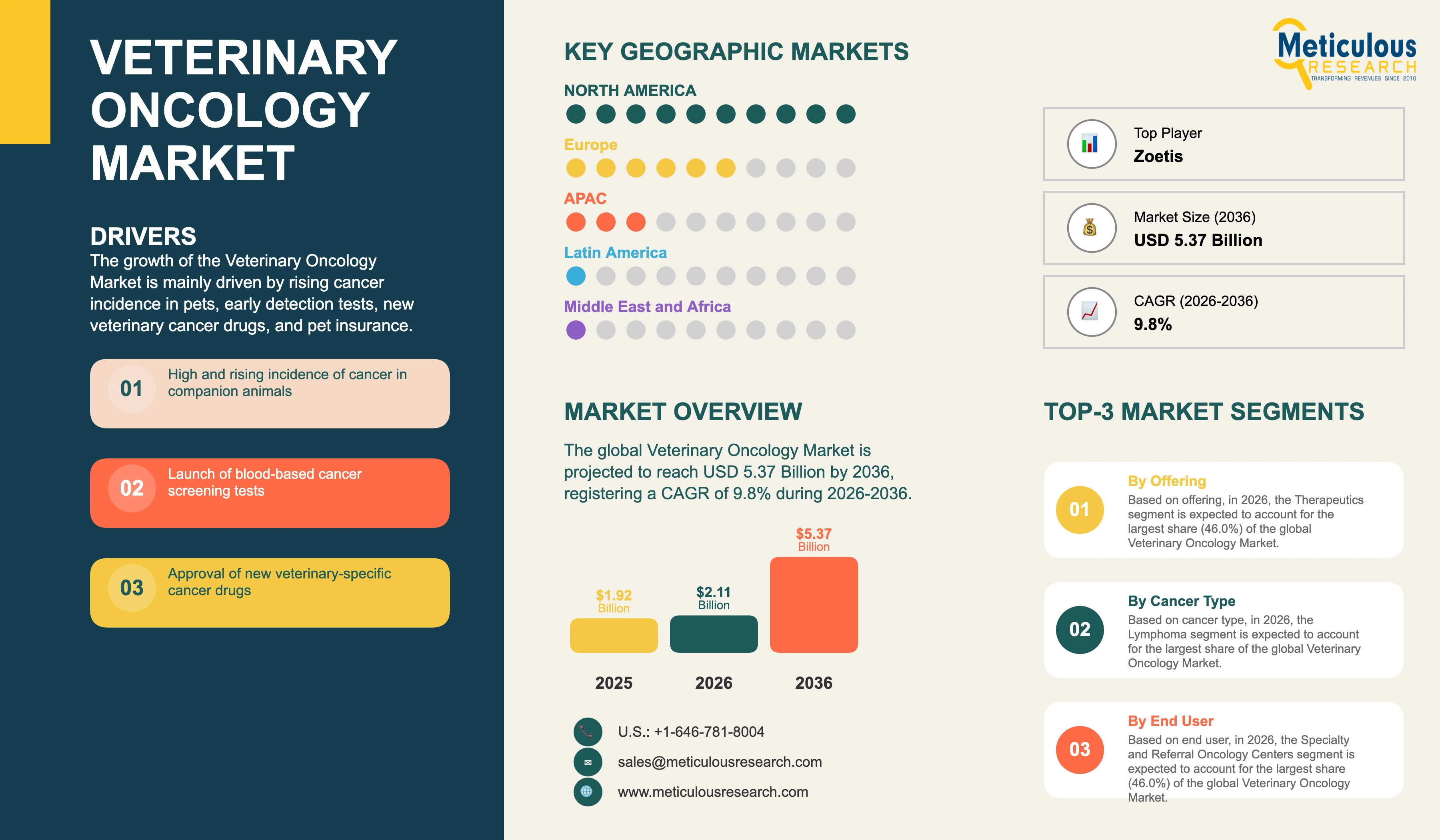
The global veterinary oncology market was valued at USD 1.92 billion in 2025. This market is expected to reach USD 5.37 billion by 2036 from an estimated USD 2.11 billion in 2026, registering a CAGR of 9.8% during the forecast period (2026-2036).
- Published
- Nov 2026
- Pages
- 260
- Format
- PDF + Excel
- Report ID
- MRHC - 1042622
- Base year
- 2025
- 2025 · BASELINE
- $1.92B
- 2036
- $5.37B
- CAGR 2026–2036
- 9.8%
2025 baseline · 2026–2036 forecast at 9.8% CAGR · hover a bar for the value
Key highlights
In January 2026, the U.S. Food and Drug Administration granted full approval to Anivive Lifesciences' Laverdia (verdinexor tablets) for the treatment of lymphoma in dogs, after the drug received conditional approval through the Minor Use and Minor Species pathway in January 2021; the FDA noted that canine lymphoma affects fewer than 80,000 dogs in the U.S. each year, according to the FDA and Fox News reports.
In January 2026, IDEXX Laboratories announced that it would add canine mast cell tumor detection to its Cancer Dx Panel at its reference laboratories in the U.S. and Canada from mid-2026, which the company said would allow the panel to address more than one-third of all canine cancer cases, and it began a controlled rollout of fine needle aspirate cytology on its inVue Dx analyzer, according to IDEXX.
IDEXX launched its Cancer Dx Panel for early detection of canine lymphoma in North America in March 2025 at a price of as low as USD 15, targeting about 20 million at-risk dogs in North America, and the panel was used by more than 5,500 veterinary practices before IDEXX launched it in the U.K. in April 2026, according to IDEXX and Canine Chronicle.
IDEXX has said that it plans to expand the Cancer Dx Panel over three years to cover the majority of canine cancer cases, and the company has noted that one in four dogs is expected to be diagnosed with cancer in their lifetime, with lymphoma accounting for nearly a quarter of new cancer diagnoses in dogs, according to IDEXX.
Zoetis, which markets Palladia for the treatment of canine mast cell tumors, has said that it has two oncology products in its pipeline and that pet owners are already testing their pets for cancer even when no treatment is available, which suggests that demand could increase as more therapies reach the market, according to Global Pet Industry.
Elanco's Tanovea (rabacfosadine) became the first conditionally approved new animal drug for dogs to receive full FDA approval under the Minor Use and Minor Species program in 2021, which created a model for the development of new veterinary cancer drugs, according to Elanco.
By offering, therapeutics account for the largest share of 46.0% in 2026, while diagnostics register the highest CAGR.
By cancer type, lymphoma accounts for the largest share in 2026, while mast cell tumors register the highest CAGR.
By animal type, dogs account for the largest share in 2026, while cats register the highest CAGR.
By end user, specialty and referral oncology centers account for the largest share of 46.0% in 2026, while general veterinary practices register the highest CAGR.
By geography, North America accounts for the largest share of 48.0% in 2026, while Asia-Pacific registers the highest CAGR of 12.2%.
Report summary
| Particulars | Details |
|---|---|
| Base Year | 2025 |
| Estimated Year | 2026 |
| Forecast Period | 2026-2036 |
| Market Size in 2025 | USD 1.92 billion |
| Market Size in 2026 | USD 2.11 billion |
| Market Size by 2036 | USD 5.37 billion |
| CAGR (2026-2036) | 9.8% |
| Format | PDF, Excel & Cloud Portal · 260 pages |
| Largest Segment by Offering (2026) | Therapeutics (46.0%) |
| Largest Segment by End User (2026) | Specialty and Referral Oncology Centers (46.0%) |
| Largest Region (2026) | North America (48.0%) |
| Fastest-Growing Region | Asia-Pacific (CAGR 12.2%) |
| Companies Profiled | 14 companies and other companies |
| Segments Covered | Offering, Cancer Type, Animal Type, End User, Geography |
| Countries Covered | U.S., Canada, Germany, U.K., France, Italy, Spain, Netherlands, Switzerland, Belgium, Sweden, Denmark, Norway, Finland, Austria, Poland, Ireland, Rest of Europe, China, Japan, India, South Korea, Australia, Indonesia, Thailand, Singapore, Malaysia, Vietnam, Philippines, Taiwan, New Zealand, Rest of Asia-Pacific, Brazil, Mexico, Argentina, Colombia, Chile, Peru, Rest of Latin America, Saudi Arabia, U.A.E., Israel, South Africa, Turkey, Egypt, Rest of Middle East & Africa |
Report overview
Segments covered: offering, cancer type, animal type, end user.
The growth of this market is mainly driven by the high and rising incidence of cancer in aging dogs and cats, the humanization of pets and the growing willingness of owners to pursue advanced cancer care, the launch of new blood-based cancer screening tests that allow earlier detection, the approval of new veterinary-specific cancer drugs, the growth of specialty and referral oncology centers, and the rising penetration of pet insurance, which helps owners afford treatment. However, factors such as the high cost of cancer treatment, the limited number of drugs approved specifically for animals, the shortage of board-certified veterinary oncologists, and the limited access to radiation therapy outside major cities are expected to restrain the growth of this market to some extent. Nevertheless, the large number of cancer cases that are still diagnosed late or left untreated offers significant room for growth.
Veterinary oncology is the branch of veterinary medicine that focuses on the diagnosis and treatment of cancer in animals. Cancer is one of the leading causes of death in older dogs and cats, and the most common types include lymphoma, mast cell tumors, osteosarcoma, soft tissue sarcomas, melanoma, hemangiosarcoma, and mammary tumors. Treatment options include surgery, chemotherapy, targeted therapy, immunotherapy, and radiation therapy, often used in combination. The goal of treatment in veterinary oncology is usually to extend the animal's life while maintaining a good quality of life, rather than achieving a cure at any cost.
This report covers the global veterinary oncology market, including therapeutics, such as chemotherapy drugs, targeted therapies, immunotherapies, and cancer vaccines used in animals, diagnostics, such as blood-based cancer screening tests, liquid biopsy tests, cytology, histopathology, and molecular tests, and radiation therapy and other oncology services provided by veterinary hospitals and specialty centers. The market is analyzed by offering, cancer type, animal type, end user, and geography. The market is measured on a revenue basis at manufacturer and service provider prices. General diagnostic imaging equipment and general surgical procedures are not included.
Cancer is very common in companion animals, particularly in older dogs and cats and in certain breeds. One in four dogs is expected to be diagnosed with cancer in their lifetime, according to Elanco and IDEXX, and the risk increases significantly with age. As pets live longer due to better nutrition and veterinary care, the number of cancer cases is increasing. Lymphoma accounts for nearly a quarter of new cancer diagnoses in dogs, according to IDEXX, while mast cell tumors are among the most common skin cancers in dogs.
For many years, veterinary oncology relied mainly on human cancer drugs used off-label, as very few drugs were approved specifically for animals. This has started to change. Zoetis's Palladia was approved for canine mast cell tumors, Elanco's Tanovea received full FDA approval for canine lymphoma in 2021, and Anivive's Laverdia, the first oral treatment for canine lymphoma, received full FDA approval in January 2026. The FDA's Minor Use and Minor Species conditional approval pathway has helped bring these products to market.
Diagnostics are one of the most important growth areas in the veterinary oncology market. IDEXX launched its Cancer Dx Panel for early detection of canine lymphoma in 2025, priced as low as USD 15, and it is adding mast cell tumor detection in 2026. Other blood-based screening and liquid biopsy tests, such as VolitionRx's Nu.Q Vet Cancer Test and PetDx's OncoK9, are also available. Early detection allows veterinarians to begin treatment sooner and helps more pets enter the treatment pathway.
The growing number of specialty and referral hospitals with board-certified oncologists, radiation therapy equipment, and advanced imaging is also supporting the market. Corporate veterinary groups, such as Mars's BluePearl and VCA, and specialty radiation providers, such as PetCure Oncology, have expanded access to advanced cancer care in major cities. Pet insurance, which covers cancer treatment under most accident and illness policies, is helping more owners afford treatment.
In 2026, therapeutics account for the largest share of the market by offering, while diagnostics are the fastest-growing offering. Lymphoma is the largest cancer type, while mast cell tumors are the fastest-growing cancer type. Dogs are the largest animal type, while cats are the fastest-growing animal type. Specialty and referral oncology centers are the largest end user, while general veterinary practices are the fastest-growing end user. North America accounts for the largest share of the market, while Asia-Pacific is the fastest-growing region.
Over the forecast period, the veterinary oncology market is expected to grow strongly, supported by aging pet populations, early detection through blood-based screening, new veterinary-specific drugs and immunotherapies, the expansion of specialty care, and rising pet insurance coverage. The shift of cancer screening and initial treatment into general practice is expected to bring more patients into care. Cancer care is also becoming more data-driven, as veterinarians use cytology, histopathology, immunohistochemistry, and molecular tests to classify tumors more precisely and select the most appropriate treatment. Digital pathology and AI-assisted cytology tools are helping reference laboratories and clinics deliver faster results, which shortens the time from diagnosis to treatment.
North America is expected to account for the largest share of 48.0% of the market in 2026, mainly due to large pet populations, high spending on pet health care, many specialty hospitals and oncologists, and the early availability of new drugs and diagnostics.
Asia-Pacific is projected to register the highest CAGR of 12.2% during the forecast period, driven by rising pet ownership, increasing spending on pet health care, growing veterinary specialty sectors, and the growth of pet insurance.
The report profiles 14 companies, including Zoetis, Elanco, Boehringer Ingelheim Animal Health, Anivive Lifesciences, IDEXX, Antech (Mars), VolitionRx, PetDx, FidoCure, ELIAS Animal Health, Torigen, Morphogenesis, PetCure Oncology, and Siemens Healthineers (Varian).
One in four dogs is expected to be diagnosed with cancer in their lifetime, according to Elanco and IDEXX, and the risk increases with age. Lymphoma accounts for nearly a quarter of new cancer diagnoses in dogs, and mast cell tumors are among the most common skin cancers.
Blood-based screening tests, such as IDEXX's Cancer Dx Panel, can be added to routine wellness bloodwork for older dogs and can detect cancers such as lymphoma before clinical signs appear. This brings more pets into diagnosis and treatment earlier and increases demand for confirmatory tests and specialist care.
Report infographic
Market dynamics
18 factors across 5 forcesHigh and rising incidence of cancer in companion animals
Cancer is one of the most common diseases in older dogs and cats. One in four dogs is expected to be diagnosed with cancer in their lifetime, according to Elanco and IDEXX, and the risk of cancer increases significantly with age. Certain breeds, such as golden retrievers, boxers, Bernese mountain dogs, and Rottweilers, have particularly high rates of cancer. Cats also develop cancer, including lymphoma, squamous cell carcinoma, and injection-site sarcomas.
As pets live longer due to improved nutrition, preventive care, and veterinary medicine, the number of older pets and the number of cancer cases are increasing. IDEXX estimates that there are about 20 million dogs at higher risk for cancer in North America, including dogs aged seven years and older and high-risk breeds aged four years and older. This large and growing patient population is a key driver of demand for cancer diagnostics and treatment.
Humanization of pets and willingness to pursue advanced care
Pet owners increasingly view their pets as members of the family and are willing to pursue advanced medical care, including cancer treatment, to extend their pets' lives. Owners are more aware of treatment options through veterinarians, online resources, and social media, and many expect treatment options similar to those available in human medicine. Zoetis has noted that owners are already testing their pets for cancer even when no treatment is available, which shows strong demand.
Cancer treatment in animals is generally well tolerated, as veterinary oncologists use lower doses than in human oncology to maintain quality of life, which makes treatment more acceptable to owners. As awareness of treatment options and outcomes grows, more owners are expected to choose treatment rather than palliative care alone. Veterinary schools and continuing education programs are also training more general practitioners to discuss cancer treatment options with owners.
Launch of blood-based cancer screening and early detection tests
New blood-based cancer screening tests are making early detection more affordable and accessible. IDEXX launched its Cancer Dx Panel for canine lymphoma in March 2025 at a price as low as USD 15, and the panel was used by more than 5,500 veterinary practices before its U.K. launch in April 2026. IDEXX is adding mast cell tumor detection in mid-2026 and plans to cover the majority of canine cancers within three years. Other tests, such as Nu.Q Vet and OncoK9, are also available.
Early detection allows veterinarians to diagnose cancer before clinical signs appear, when treatment is often more effective, and brings more patients into the treatment pathway. Screening tests can be added to routine wellness blood panels for older dogs, which significantly increases the number of pets tested. Diagnostics are the fastest-growing offering in the veterinary oncology market.
Approval of new veterinary-specific cancer drugs
Regulators have approved several new drugs developed specifically for cancer in animals, which gives veterinarians more options and supports market growth. The FDA granted full approval to Anivive's Laverdia, the first oral treatment for canine lymphoma, in January 2026, after Elanco's Tanovea became the first conditionally approved new animal drug for dogs to receive full approval in 2021. Zoetis has two oncology products in its pipeline, according to the company.
The FDA's Minor Use and Minor Species conditional approval pathway allows promising drugs to reach the market earlier while companies complete effectiveness studies, which encourages investment in veterinary cancer drug development. New drugs approved for animals offer clearer dosing and safety information than human drugs used off-label, which supports their use by general practitioners as well as specialists.
Rising pet insurance coverage
Pet insurance helps owners afford the cost of cancer diagnosis and treatment, which can reach several thousand U.S. dollars. Most accident and illness policies cover cancer treatment, including chemotherapy, radiation therapy, and surgery. In North America, the number of insured pets reached 7.6 million at the end of 2025, according to the North American Pet Health Insurance Association, and pet insurance is well established in the U.K., Sweden, and Japan. As insurance penetration increases, more owners are expected to pursue cancer treatment for their pets. Insured owners are also more likely to agree to advanced diagnostics and specialist referrals. Insurers also increasingly cover advanced diagnostics, specialist consultations, and newer treatments such as immunotherapies. This trend is strongest in the U.S., the U.K., and Japan, where pet insurance is most established.
Table of contents
12 chapters · 166 sections · 260 pages · click to expandSegmental analysis
| Segment | Largest share (2026) | Fastest growth (2026–2036) |
|---|---|---|
| By Offering | Specialty and referral oncology centers | General veterinary practices |
By Offering
- The specialty and referral oncology centers segment is expected to account for the largest share of 46.0% of the veterinary oncology market, while the general veterinary practices segment is projected to register the highest CAGR during the forecast period.
- The dogs segment is expected to account for the largest share of the veterinary oncology market, while the cats segment is projected to register the highest CAGR during the forecast period.
Geographic analysis
North America
Largest shareIn 2026, North America is expected to account for the largest share of 48.0% of the global veterinary oncology market. The large share of this region is mainly due to the large population of pet dogs and cats in the U.S. and Canada, high spending on pet health care, the large number of board-certified veterinary oncologists and specialty hospitals, the early availability of new drugs and diagnostics, such as Laverdia, approved by the FDA in January 2026, and IDEXX's Cancer Dx Panel, and the growing penetration of pet insurance. The presence of major companies, such as Zoetis, Elanco, IDEXX, and Mars's Antech, BluePearl, and VCA, and leading academic veterinary oncology programs also supports the region's large share.
Asia-Pacific
Fastest growthAsia-Pacific is projected to register the highest CAGR of 12.2% during the forecast period. The rapid growth of this region is mainly driven by rising pet ownership in China, Japan, South Korea, Australia, and other countries, increasing spending on pet health care, the humanization of pets among younger urban consumers, the growing number of veterinary hospitals and specialty centers, and the growth of pet insurance in Japan, Australia, and other markets. Japan has an aging pet population and a well-developed veterinary sector, while China's large and growing pet population represents a major long-term opportunity for veterinary cancer diagnostics and treatment. Australia also has a strong specialty veterinary sector and high spending on companion animal care.
Europe
Europe accounts for a significant share of the market, supported by high pet ownership in the U.K., Germany, France, Italy, and the Nordic countries, well-established specialty and referral veterinary hospitals, high pet insurance penetration in the U.K. and Sweden, and the availability of veterinary cancer drugs approved by the European Medicines Agency. IDEXX launched its Cancer Dx Panel in the U.K. in April 2026, which is expected to support the adoption of cancer screening in Europe. Corporate veterinary groups have also expanded specialty oncology services in the region.
Latin America
Latin America and the Middle East & Africa account for smaller shares of the market but offer growth potential. In Latin America, Brazil, Mexico, Argentina, and Chile have large pet populations and growing veterinary specialty sectors, and veterinary oncology services are expanding in major cities.
Middle East & Africa
In the Middle East & Africa, rising pet ownership in the U.A.E., Saudi Arabia, Israel, and South Africa is creating demand for advanced veterinary care, although access to specialty oncology services remains limited. Rising incomes, the expansion of veterinary hospitals, and growing awareness of cancer treatment options are expected to support growth in these regions. Regional differences in pet ownership, spending on pet health care, pet insurance penetration, the availability of specialists and radiation therapy, and regulatory approvals for veterinary cancer drugs shape the demand for veterinary oncology around the world. Markets with rising pet ownership and growing specialty veterinary sectors are expected to grow fastest over the forecast period, while mature markets grow steadily.
Competitive landscape
The global veterinary oncology market is moderately fragmented, with animal health companies, veterinary diagnostics companies, specialty veterinary service providers, and smaller biotechnology companies competing across therapeutics, diagnostics, and services. The top five players are estimated to account for about 40% of the market in 2025.
Zoetis markets Palladia for canine mast cell tumors and has two oncology products in its pipeline, Elanco markets Tanovea for canine lymphoma, Anivive Lifesciences markets Laverdia, the first oral treatment for canine lymphoma, and Boehringer Ingelheim markets the Oncept melanoma vaccine. In diagnostics, IDEXX offers the Cancer Dx Panel and in-clinic cytology, Mars's Antech offers reference laboratory and oncology diagnostic services, VolitionRx offers the Nu.Q Vet Cancer Test, and PetDx offers the OncoK9 liquid biopsy test. FidoCure offers precision medicine services, ELIAS Animal Health, Torigen Pharmaceuticals, and Morphogenesis are developing immunotherapies, PetCure Oncology operates radiation therapy centers, and Siemens Healthineers' Varian supplies radiation therapy systems used in veterinary centers.
Companies in this market compete on clinical efficacy, safety, ease of administration, regulatory approvals, diagnostic accuracy and price, integration with veterinary workflows, specialist support, and relationships with veterinary practices and corporate groups. Key strategies include obtaining approvals for new veterinary-specific drugs, expanding cancer screening panels, developing immunotherapies and targeted therapies, expanding specialty and radiation services, and educating general practitioners about cancer detection and treatment.
Recent competitive activity in the veterinary oncology market has focused mainly on new drug approvals and cancer diagnostics. The FDA granted full approval to Laverdia in January 2026, IDEXX announced the expansion of its Cancer Dx Panel to mast cell tumors and launched the panel in the U.K. in April 2026, and Zoetis has highlighted its oncology pipeline. These developments are expected to increase the number of pets diagnosed and treated for cancer.
We expect competition to increase in cancer screening and diagnostics as more companies develop blood-based tests, and in therapeutics as animal health companies and biotechnology firms bring immunotherapies and targeted therapies to market. Partnerships between drug and diagnostic companies may also increase.
Some of the key players operating in the veterinary oncology market are Zoetis Inc., Elanco Animal Health Incorporated, Boehringer Ingelheim Animal Health, Anivive Lifesciences, Inc., IDEXX Laboratories, Inc., Antech Diagnostics (Mars, Incorporated), VolitionRx Limited, PetDx, Inc., FidoCure (One Health Company), ELIAS Animal Health, Torigen Pharmaceuticals, Inc., Morphogenesis, Inc., PetCure Oncology, LLC, and Siemens Healthineers AG (Varian), among others. Corporate veterinary groups will also remain important customers and partners for suppliers of drugs and diagnostics.
- —
The FDA granted full approval to Anivive's Laverdia, the first oral treatment for canine lymphoma, in January 2026, and IDEXX announced the addition of mast cell tumor detection to its Cancer Dx Panel and launched the panel in the U.K. in 2026.
- Zoetis Inc.
- Elanco Animal Health Incorporated
- Boehringer Ingelheim Animal Health
- Anivive Lifesciences, Inc.
- IDEXX Laboratories, Inc.
- Antech Diagnostics (Mars, Incorporated)
- VolitionRx Limited
- PetDx, Inc.
- FidoCure (One Health Company)
- ELIAS Animal Health
- Torigen Pharmaceuticals, Inc.
- Morphogenesis, Inc.
Expert perspectives
The veterinary oncology market is at an important stage of development as early detection tests, new veterinary-specific drugs, and specialty care networks make cancer care more accessible for pets. For many years, cancer in pets was often diagnosed late and treated with human drugs used off-label, but this is changing with the launch of affordable screening tests and the approval of drugs such as Tanovea and Laverdia.
Over the forecast period, the market is expected to grow at a CAGR of 9.8%, from USD 2.11 billion in 2026 to USD 5.37 billion in 2036. Growth will be supported by aging pet populations, the humanization of pets, early detection, new drugs and immunotherapies, the expansion of specialty and radiation services, and rising pet insurance coverage.
Among the market segments, therapeutics are the largest offering, while diagnostics grow fastest. Lymphoma is the largest cancer type, while mast cell tumors grow fastest, and specialty and referral oncology centers are the largest end user, while general veterinary practices grow fastest. Dogs are the largest animal type, while cats grow fastest. North America is the largest region, and Asia-Pacific is the fastest-growing region at a CAGR of 12.2%.
In our view, the most important factor for the market over the forecast period will be the integration of cancer screening into routine care for older dogs. If blood-based screening becomes standard in wellness visits, the number of cancers diagnosed early could increase significantly, which would drive demand for confirmatory diagnostics, specialist referrals, and treatment. The success of this shift will depend on the accuracy, affordability, and clinical utility of screening tests.
We also expect the therapeutics segment to benefit from new approvals, particularly oral drugs and immunotherapies that general practitioners can use safely. However, the cost of treatment and the limited number of specialists will remain key constraints, and pet insurance and lower-cost treatment options will be important for expanding access. Companies that combine diagnostics and therapeutics, or that partner across these areas, will be well positioned.
Overall, we believe the veterinary oncology market will grow strongly over the forecast period, with diagnostics, mast cell tumors, cats, general practices, and Asia-Pacific providing the fastest growth. Companies that bring affordable, safe, and easy-to-use solutions to general practitioners will be best positioned to capture this growth. We also expect Asia-Pacific to become an increasingly important market for veterinary oncology, as pet ownership and spending on pet health care continue to rise in China, Japan, and other countries, and as specialty veterinary hospitals and pet insurance expand across the region. Local manufacturers and distributors will also play a growing role.
Customer perspectives
Customers in the veterinary oncology market include general veterinary practices, specialty and referral oncology centers, academic veterinary hospitals, and the pet owners who make treatment decisions. Veterinarians choose diagnostics and treatments based on clinical evidence, accuracy, safety, ease of use, cost, regulatory approval status, and support from manufacturers. Specialty centers focus on advanced treatment options, clinical outcomes, and access to radiation therapy and new therapies, while general practices focus on simple screening tests, oral treatments, and specialist support. Pet owners focus on their pet's quality of life, treatment outcomes, cost, and the number of visits required, and many rely on their veterinarian's recommendation when deciding whether to pursue treatment. Owners with pet insurance are more likely to agree to advanced diagnostics and specialist referrals. Owners also value clear communication about expected outcomes.
Veterinary Oncologist - U.S.
Most of our patients are dogs with lymphoma or mast cell tumors, and owners want treatment that keeps their dog happy. New approved drugs give us more options beyond human chemotherapy protocols.
This comment explains why specialty and referral oncology centers account for 46.0% of the market, why therapeutics account for 46.0% of the market, and why North America accounts for 48.0% of the market.
General Practice Veterinarian - U.K.
We now add a cancer screening test to wellness bloodwork for older dogs, and we are finding cases earlier and referring them sooner.
This comment explains why diagnostics are the fastest-growing offering and why general veterinary practices are the fastest-growing end user.
This comment explains why Asia-Pacific is the fastest-growing region and why cats are the fastest-growing animal type.
“Pet owners here are increasingly willing to pay for cancer treatment, especially for older dogs and cats, and pet insurance makes it easier for them to decide.”
Frequently asked questions
The global veterinary oncology market was valued at USD 1.92 billion in 2025, up from USD 1.74 billion in 2024, and is estimated at USD 2.11 billion in 2026. The market includes therapeutics, diagnostics, and radiation therapy and other oncology services for animals.
Cite this report
Meticulous Research. (2026). Veterinary Oncology Market - Global Opportunity Analysis and Industry Forecast (2026-2036) (Report No. MRHC - 1042622). Meticulous Market Research Pvt. Ltd. https://www.meticulousresearch.com/product/veterinary-oncology-market-7305