Specialty Pharmacy Market (2026-2036)
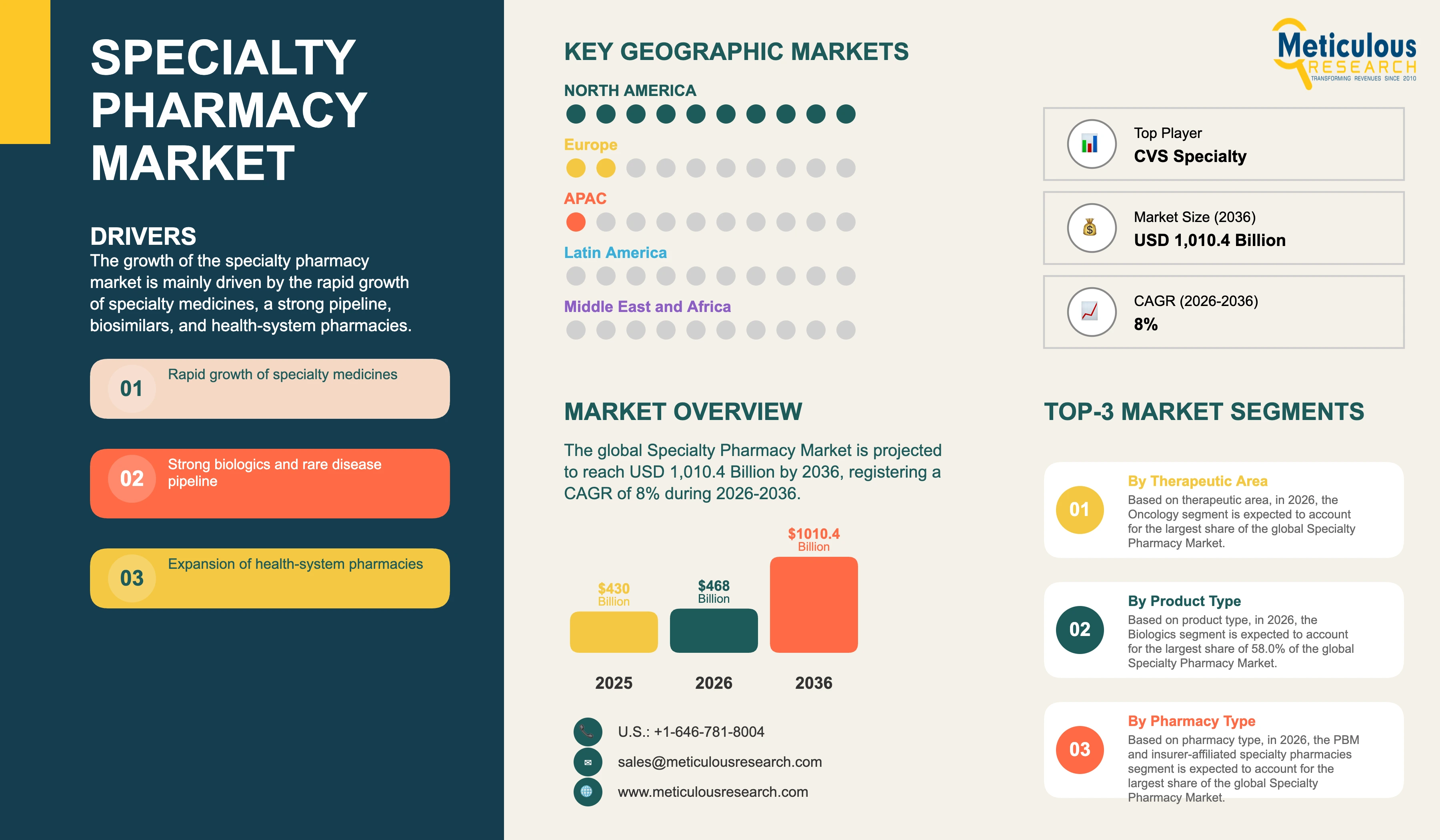
The global specialty pharmacy market was valued at USD 430.0 billion in 2025. This market is expected to reach USD 1,010.4 billion by 2036 from an estimated USD 468.0 billion in 2026, registering a CAGR of 8.0% during the forecast period (2026-2036).
- Published
- Nov 2026
- Pages
- 254
- Format
- PDF + Excel
- Report ID
- MRHC - 1042629
- Base year
- 2025
- 2025 · BASELINE
- $430.0B
- 2036
- $1.01T
- CAGR 2026–2036
- 8.0%
2025 baseline · 2026–2036 forecast at 8.0% CAGR · hover a bar for the value
Key highlights
According to IQVIA, specialty medicines accounted for USD 262 billion, or 53% of estimated net sales in the U.S. branded pharmaceutical market, in 2024, while Pharmaceutical Strategies Group projected in May 2026 that specialty drugs would account for more than 60% of total pharmacy spending in 2026 despite representing fewer than 5% of prescriptions, according to Drug Topics.
Drug Channels Institute reported that, for 2025, the three largest specialty pharmacies accounted for two-thirds of prescription revenues from pharmacy-dispensed specialty drugs, and that all three are owned by vertically integrated organizations that also own a pharmacy benefit manager.
U.S. prescription drug spending reached USD 915.2 billion in 2025, up 12.7%, with utilization growth accounting for 9.3 percentage points of the increase and price for only 1.2%, according to the American Journal of Health-System Pharmacy's annual projections, which also identified specialty, endocrine, and cancer drugs as the dominant cost categories.
Pharmaceutical Strategies Group's 2026 State of Specialty Spend and Trend Report found that biosimilars for Humira climbed from 0.3% market share in 2023 to 82.4% in 2025, while Stelara biosimilars reached 18% market share in their first year, and that inflammatory conditions remained the top specialty drug category by spend, according to HR Executive.
Specialty drug spending trend remained high at 10.8% on a gross cost basis in Pharmaceutical Strategies Group's 2026 report, slightly below 11.2% in the prior year, highlighting continued pressure on payers and employers to manage specialty costs while maintaining patient access.
Specialty drugs typically require special handling, such as cold-chain storage and shipping, as well as intensive patient support, and many manufacturers use limited distribution networks that restrict dispensing to a small number of specialty pharmacies with the capabilities to collect data, monitor safety, and support patients, according to industry sources. This model has made specialty pharmacies central partners for manufacturers launching new specialty medicines. Medicare Part D changes that cap annual out-of-pocket costs for beneficiaries are also expected to improve access to specialty medications for older patients.
By therapeutic area, oncology accounts for the largest share in 2026, while rare and orphan diseases register the highest CAGR.
By product type, biologics account for the largest share of 58.0% in 2026, while biosimilars register the highest CAGR.
By payer type, commercial insurance accounts for the largest share of 52.0% in 2026, while Medicare registers the highest CAGR.
By pharmacy type, PBM and insurer-affiliated Specialty pharmacies account for the largest share in 2026, while health-system Specialty pharmacies register the highest CAGR.
By geography, North America accounts for the largest share of 70.0% in 2026, while Asia-Pacific registers the highest CAGR of 11.1%.
Report summary
| Particulars | Details |
|---|---|
| Forecast Period | 2026-2036 |
| Base Year | 2025 |
| Estimated Year | 2026 |
| CAGR (2026-2036) | 8.0% |
| Format | PDF, Excel & Cloud Portal · 254 pages |
| Market Size in 2025 | USD 430.0 billion |
| Market Size in 2026 | USD 468.0 billion |
| Market Size by 2036 | USD 1,010.4 billion |
| Largest Segment by Product Type (2026) | Biologics (58.0%) |
| Largest Segment by Payer Type (2026) | Commercial Insurance (52.0%) |
| Largest Region (2026) | North America (70.0%) |
| Fastest-Growing Region | Asia-Pacific (CAGR 11.1%) |
| Segments Covered | Therapeutic Area, Product Type, Payer Type, Pharmacy Type, Geography |
| Countries Covered | U.S., Canada, Rest of North America, Germany, U.K., France, Italy, Spain, Netherlands, Switzerland, Belgium, Sweden, Denmark, Norway, Finland, Austria, Poland, Ireland, Rest of Europe, China, Japan, South Korea, Australia, India, Singapore, Indonesia, Thailand, Malaysia, Vietnam, Philippines, Taiwan, New Zealand, Rest of Asia-Pacific, Brazil, Mexico, Colombia, Argentina, Chile, Peru, Rest of Latin America, Saudi Arabia, U.A.E., Israel, South Africa, Turkey, Egypt, Rest of Middle East & Africa |
| Key Companies | 13 companies and other companies |
Report overview
Segments covered: therapeutic area, product type, pharmacy type.
The growth of this market is mainly driven by the rapid growth of specialty medicines, which now account for the majority of pharmacy drug spending in the U.S., the strong pipeline of biologics, targeted oncology therapies, and rare disease treatments, the rising prevalence of chronic and complex conditions such as cancer, autoimmune diseases, and multiple sclerosis, the growing adoption of biosimilars, which are dispensed through specialty channels, the expansion of health-system specialty pharmacies, and the increasing need for patient support services, such as adherence monitoring, benefits investigation, and side-effect management, that specialty pharmacies provide. However, factors such as pricing and reimbursement pressures, regulatory and legislative scrutiny of pharmacy benefit managers, limited distribution networks that restrict access for some pharmacies, and the high cost of accreditation and specialized infrastructure are expected to restrain the growth of this market to some extent.
Specialty pharmacies dispense and manage specialty medications, which are high-cost drugs used to treat complex, chronic, or rare conditions, such as cancer, rheumatoid arthritis, psoriasis, inflammatory bowel disease, multiple sclerosis, HIV, hepatitis C, cystic fibrosis, and rare genetic diseases. Specialty medications often require special handling, such as cold-chain storage and shipping, complex administration, such as self-injection, close monitoring for side effects, and extensive patient education and support. Many are biologics, and some are subject to risk evaluation and mitigation strategies or limited distribution by manufacturers.
This report covers the global specialty pharmacy market, measured as the prescription revenue of specialty pharmacies from dispensing specialty medications, including revenue from associated patient management services. The market is analyzed by therapeutic area, product type, pharmacy type, and geography. Specialty drugs administered in physician offices and hospital outpatient departments and billed under the medical benefit, without dispensing by a specialty pharmacy, as well as the wholesale distribution of specialty drugs to providers, are analyzed in separate reports. The market is measured on a sales basis in each country.
Specialty pharmacies provide a broad range of clinical and administrative services that go well beyond dispensing medications. These include benefits investigation and prior authorization support, financial assistance coordination, patient onboarding and education, adherence monitoring, side-effect management, clinical support from pharmacists and nurses, home delivery with cold-chain logistics, and data reporting to manufacturers and payers. These services help patients start and stay on therapy, which improves outcomes and supports the value of high-cost medications. Accreditation by organizations such as URAC and ACHC is required by many payers and manufacturers.
The U.S. is by far the largest specialty pharmacy market, accounting for a dominant share of global revenue. Specialty medicines have grown rapidly as a share of U.S. drug spending. According to IQVIA, specialty medicines accounted for 53% of estimated net sales in the U.S. branded market in 2024, and Pharmaceutical Strategies Group projected that specialty drugs would account for more than 60% of pharmacy spending in 2026, despite representing fewer than 5% of prescriptions. The specialty pharmacy industry in the U.S. is highly concentrated, with pharmacies owned by the largest pharmacy benefit managers and insurers dominating revenue.
Oncology accounts for the largest share of the market by therapeutic area, while rare and orphan diseases are the fastest-growing therapeutic area. Biologics account for the largest share by product type, while biosimilars are the fastest-growing product type. PBM and insurer-affiliated specialty pharmacies account for the largest share by pharmacy type, while health-system specialty pharmacies are the fastest-growing pharmacy type. Commercial insurance is the largest payer type, while Medicare is the fastest-growing payer type. North America accounts for the largest share of the market, while Asia-Pacific is the fastest-growing region.
Health-system specialty pharmacies, which are owned by hospitals and health systems, have grown rapidly in the U.S. These pharmacies integrate specialty pharmacy services with the care provided by health-system physicians, which can improve coordination, speed time to therapy, and support adherence. Many health systems work with partners such as Shields Health Solutions to build and operate their specialty pharmacies. Independent specialty pharmacies, including those focused on oncology and rare diseases, also play an important role, particularly for drugs with limited distribution networks.
Outside the U.S., specialty medicines are typically dispensed through hospital pharmacies, retail pharmacies, or homecare providers, depending on the country's health system. In Europe, homecare providers such as Sciensus deliver specialty medications and nursing services to patients at home on behalf of health systems and manufacturers. In Asia-Pacific, specialty pharmacy models are emerging in China, Japan, and other countries, often linked to hospitals and direct-to-patient pharmacies for innovative drugs. These models are expected to evolve as access to innovative specialty drugs expands in the region.
Over the forecast period, the specialty pharmacy market is expected to grow strongly, supported by new specialty drug approvals, the growth of biologics and biosimilars, the expansion of health-system specialty pharmacies, and the development of specialty pharmacy models outside the U.S. The pace of growth will depend on drug pricing policies, PBM reform, biosimilar adoption, and payer efforts to manage specialty drug costs. Payer type also shapes specialty pharmacy economics, as commercial plans, Medicare, and Medicaid apply different coverage rules, reimbursement rates, and network requirements.
PBM and insurer-affiliated specialty pharmacies are expected to account for the largest share of the market in 2026, while health-system specialty pharmacies are projected to register the highest CAGR.
North America is expected to account for the largest share of 70.0% of the market in 2026, mainly due to high U.S. specialty drug spending, a well-established specialty pharmacy industry, and high drug prices.
Asia-Pacific is projected to register the highest CAGR of 11.1% during the forecast period, driven by expanding access to innovative specialty drugs, reimbursement expansion in China, and rising cancer and autoimmune disease prevalence.
The report profiles 13 companies, including CVS Specialty, Accredo, Optum Specialty Pharmacy, Walgreens Specialty Pharmacy, CarelonRx, AcariaHealth, CenterWell Specialty Pharmacy, Biologics by McKesson, Onco360, Shields Health Solutions, Orsini, PANTHERx Rare, and Sciensus.
Drug Channels Institute reported that, for 2025, the three largest specialty pharmacies accounted for two-thirds of prescription revenues from pharmacy-dispensed specialty drugs, and all three are owned by organizations that also own a PBM.
Pharmaceutical Strategies Group reported that Humira biosimilars grew from 0.3% market share in 2023 to 82.4% in 2025, driven in part by PBM private-label programs. Biosimilars lower prices per prescription but expand access and create new revenue opportunities for specialty pharmacies.
Pharmaceutical Strategies Group projected that specialty drugs would account for more than 60% of total pharmacy spending in 2026 despite representing fewer than 5% of prescriptions, according to Drug Topics.
Report infographic
Market dynamics
17 factors across 5 forcesRapid growth of Specialty medicines
Specialty medicines are the fastest-growing segment of pharmaceutical spending in the U.S. and in many other developed markets. A large and increasing share of new drug approvals are specialty drugs, including biologics, targeted cancer therapies, and treatments for rare diseases. In the U.S., specialty medicines accounted for USD 262 billion, or 53% of estimated net sales in the branded market, in 2024, according to IQVIA, and Pharmaceutical Strategies Group projected that specialty drugs would exceed 60% of pharmacy spending in 2026.
The growth of specialty medicines directly increases the revenue of specialty pharmacies, which dispense a large share of these drugs. As new specialty drugs are launched and existing drugs gain new indications, specialty pharmacy revenue is expected to continue to grow strongly over the forecast period.
U.S. prescription drug spending reached USD 915.2 billion in 2025, with utilization growth accounting for most of the increase, according to the American Journal of Health-System Pharmacy, which highlights the role of growing patient volumes on specialty and other high-cost drugs. Specialty drug launches also tend to be concentrated in therapeutic areas, such as oncology and immunology, where specialty pharmacies already have strong capabilities, which allows them to quickly support new products.
Strong pipeline of biologics, oncology, and rare disease treatments
The pharmaceutical pipeline is dominated by specialty drugs, including biologics for autoimmune and inflammatory diseases, targeted oral oncology drugs, antibody-drug conjugates, and treatments for rare genetic diseases. Many oral oncology drugs are dispensed through specialty pharmacies, and the number of oral cancer treatments has grown significantly. Rare disease treatments are often very high-cost and require intensive patient support, which makes specialty pharmacies essential partners for manufacturers.
The continued flow of new specialty drug approvals and new indications for existing drugs is expected to be a major driver of specialty pharmacy revenue over the forecast period. Antibody-drug conjugates, bispecific antibodies, and other new drug classes are expanding treatment options in oncology, while new oral therapies for autoimmune and neurological diseases are increasing the number of self-administered specialty drugs dispensed through specialty pharmacies. Many of these drugs also require companion diagnostics and close monitoring, which adds to the value of specialty pharmacy services.
Rising prevalence of chronic and complex conditions
The prevalence of chronic and complex conditions treated with specialty drugs, such as cancer, rheumatoid arthritis, psoriasis, inflammatory bowel disease, atopic dermatitis, multiple sclerosis, and asthma, is increasing due to population aging, improved diagnosis, and expanding treatment options. More patients are being treated with advanced therapies earlier in the course of their disease, which increases the number of patients receiving specialty medications.
As patients live longer with chronic diseases, they often remain on specialty therapies for many years, which provides specialty pharmacies with recurring revenue and opportunities to deliver ongoing patient management services. Specialty pharmacies that help patients stay on therapy also generate higher lifetime revenue per patient.
Growing adoption of biosimilars
Biosimilars are increasingly dispensed through specialty pharmacies as reference biologics lose exclusivity. Pharmaceutical Strategies Group reported that biosimilars for Humira climbed from 0.3% market share in 2023 to 82.4% in 2025, and that Stelara biosimilars reached 18% market share in their first year, according to HR Executive. PBMs and specialty pharmacies have played a central role in shifting patients to biosimilars, including through private-label biosimilar programs.
Biosimilars lower the price per prescription, but they expand access to biologic therapies and create new revenue opportunities for specialty pharmacies through private-label programs and patient conversion services. Many more biologics are expected to lose exclusivity during the forecast period, which will drive strong growth in biosimilar dispensing. Biosimilar launches for drugs such as Eylea, Prolia, Xolair, and other biologics are expected over the coming years.
Expansion of health-system Specialty pharmacies
Hospitals and health systems are increasingly building their own specialty pharmacies to provide integrated care for their patients, retain revenue, and improve outcomes. Health-system specialty pharmacies can access patient records, coordinate with physicians, and start patients on therapy quickly, which can improve adherence and outcomes. Partnerships with companies such as Shields Health Solutions have helped many health systems build and scale specialty pharmacy operations.
The growth of health-system specialty pharmacies is expected to continue, supported by health systems' desire to provide comprehensive care and their access to limited distribution drugs through demonstrated clinical outcomes. Health systems also benefit from programs such as 340B in the U.S., which can improve the economics of operating specialty pharmacies, although this program is also subject to policy debate.
Table of contents
12 chapters · 160 sections · 254 pages · click to expandSegmental analysis
| Segment | Largest share (2026) | Fastest growth (2026–2036) |
|---|---|---|
| By Therapeutic Area | Oncology | Rare and orphan diseases |
| By Product Type | Biologics | Biosimilars |
| By Payer Type | Commercial insurance | Medicare |
| By Pharmacy Type | PBM and insurer-affiliated specialty pharmacies | Health-system specialty pharmacies |
| Other segments | Commercial insurance | Medicare |
By Therapeutic Area
- Specialty Pharmacy Market Analysis by Therapeutic Area
- The oncology segment is expected to account for the largest share of the global specialty pharmacy market.
- The large share of this segment is mainly due to the high and growing number of oral oncology drugs dispensed through specialty pharmacies, the very high cost of cancer treatments, the rising incidence of cancer, the steady approval of new targeted therapies and new indications, and the intensive patient support required for oral cancer therapies, including side-effect management and adherence monitoring.
- Oncology-focused specialty pharmacies such as Onco360 and health-system specialty pharmacies affiliated with cancer centers play important roles in this segment.
- Oral oncology drugs allow patients to receive treatment at home, but they require close monitoring and support, as side effects and complex dosing regimens can affect adherence.
- Specialty pharmacies provide clinical support, coordination with oncologists, and financial assistance, which are critical for these patients.
- Oncology specialty pharmacies also coordinate with oncology practices that operate medically integrated dispensing, which has become an important channel for oral cancer drugs in the U.S.
- However, the rare and orphan diseases segment is projected to register the highest CAGR during the forecast period.
- The rapid growth of this segment is driven by the increasing number of approved treatments for rare diseases, the high cost of these therapies, the need for intensive patient identification, onboarding, financial assistance, and clinical support, the use of limited distribution networks that favor specialty pharmacies with rare disease expertise, and the expansion of gene therapies and other advanced treatments.
- Specialty pharmacies such as PANTHERx Rare focus on this segment.
- The immunology and inflammation segment forms the second-largest segment, supported by the large number of patients treated with biologics and targeted therapies for rheumatoid arthritis, psoriasis, psoriatic arthritis, inflammatory bowel disease, atopic dermatitis, and asthma.
- This segment is undergoing significant change as biosimilars for Humira and Stelara gain share, which lowers prices but expands access.
- Pharmaceutical Strategies Group reported that inflammatory conditions remained the top specialty drug category by spend.
- The neurology and multiple sclerosis segment includes treatments for multiple sclerosis, migraine, and other neurological conditions, while the HIV and infectious diseases segment includes HIV treatment and prevention and hepatitis treatments.
- The other therapeutic areas segment includes treatments for hematology, cardiology, endocrinology, fertility, and other conditions.
- New treatment classes, such as next-generation targeted oncology drugs, oral therapies for autoimmune diseases, and gene therapies, are also expected to change the relative importance of therapeutic areas in specialty pharmacy revenue over time.
- Specialty pharmacies that build expertise in emerging therapeutic areas are expected to gain early access to new products.
By Product Type
- Specialty Pharmacy Market Analysis by Product Type
- The biologics segment is expected to account for the largest share of 58.0% of the global specialty pharmacy market.
- The large share of this segment is mainly due to the large number of high-cost biologic therapies used to treat autoimmune diseases, cancer, multiple sclerosis, and other conditions, their need for cold-chain handling and self-injection training, and the central role of specialty pharmacies in dispensing self-administered biologics.
- However, the biosimilars segment is projected to register the highest CAGR during the forecast period.
- The rapid growth of this segment is driven by the loss of exclusivity of major biologics, the rapid adoption of Humira biosimilars, the launch of Stelara biosimilars and other biosimilars, PBM private-label biosimilar programs, and payer policies that favor lower-cost alternatives.
- Biosimilars typically have lower prices than reference products, but their volume growth and the creation of private-label programs make them an important growth area.
- Specialty small molecules, by contrast, are expected to grow more slowly as several major oral drugs lose exclusivity.
- Generic versions of specialty small molecules may shift some volume to lower-cost channels.
- However, specialty pharmacies are expected to continue dispensing many of these generics because patients still need monitoring and support.
- The specialty small molecules segment accounts for a significant share of the market, supported by oral oncology drugs, targeted therapies for autoimmune diseases, HIV treatments, and rare disease treatments.
- The biologics segment is expected to account for the largest share of 58.0% of the specialty pharmacy market, while the biosimilars segment is projected to register the highest CAGR during the forecast period.
By Payer Type
- Specialty Pharmacy Market Analysis by Payer Type
- The commercial insurance segment is expected to account for the largest share of 52.0% of the global specialty pharmacy market.
- The large share of this segment is mainly due to the large number of working-age patients with employer-sponsored and individual health insurance who use specialty medications for autoimmune diseases, cancer, multiple sclerosis, and other conditions, the high prices of specialty drugs covered under commercial pharmacy benefits, and the central role of pharmacy benefit managers in managing commercial specialty drug spending.
- Outside the U.S., this segment also includes private health insurance in countries where private plans cover specialty medicines.
- Commercial payers use specialty pharmacy networks, prior authorization, step therapy, and biosimilar preferences to manage costs, and many employers have specialty drug management programs.
- Commercial plans also benefit from manufacturer copay assistance programs that reduce patients' out-of-pocket costs, although accumulator and maximizer programs have made these arrangements more complex.
- Specialty pharmacies play a key role in coordinating benefits, financial assistance, and prior authorization for commercially insured patients.
- However, the Medicare segment is projected to register the highest CAGR during the forecast period.
- The rapid growth of this segment is driven by the aging population, the high use of specialty medications among older adults with cancer and chronic diseases, the Medicare Part D redesign that caps annual out-of-pocket costs for beneficiaries and may improve access and adherence, and the growing number of specialty drugs prescribed to Medicare patients.
- The Medicaid segment includes specialty drugs for low-income patients, including HIV and hepatitis treatments, while the other payers and self-pay segment includes government programs outside the U.S., cash payments, and patient assistance programs.
By Pharmacy Type
- Specialty Pharmacy Market Analysis by Pharmacy Type
- The PBM and insurer-affiliated specialty pharmacies segment is expected to account for the largest share of the global specialty pharmacy market.
- The large share of this segment is mainly due to the dominant position of specialty pharmacies owned by the largest PBMs and insurers in the U.S., such as CVS Specialty, Accredo, and Optum Specialty Pharmacy, their ability to direct patients covered by affiliated PBMs and health plans to their own pharmacies, their scale, access to limited distribution drugs, and role in private-label biosimilar programs.
- Drug Channels Institute reported that the three largest specialty pharmacies accounted for two-thirds of pharmacy-dispensed specialty revenue in 2025.
- However, the health-system specialty pharmacies segment is projected to register the highest CAGR during the forecast period.
- The rapid growth of this segment is driven by health systems' investment in integrated specialty pharmacy services, their ability to coordinate care with physicians and access patient records, faster time to therapy and improved adherence, partnerships with companies such as Shields Health Solutions, growing access to limited distribution drugs based on demonstrated outcomes, and potential benefits from PBM reform.
- The retail chain specialty pharmacies segment includes specialty pharmacies operated by retail pharmacy chains, such as Walgreens, while the independent specialty pharmacies segment includes independent oncology, rare disease, and other specialty pharmacies such as Onco360, Orsini, and PANTHERx Rare.
- Retail chain specialty pharmacies benefit from their large store networks and local presence, which allow patients to pick up specialty medications at nearby stores when they prefer, while independent specialty pharmacies often differentiate through high-touch service and therapeutic expertise.
- Independent pharmacies have historically had to work harder to gain access to payer networks and limited distribution drugs, but many have succeeded by building specialized capabilities and strong outcomes data that manufacturers value.
Other segments
- The commercial insurance segment is expected to account for the largest share of 52.0% of the specialty pharmacy market, while the Medicare segment is projected to register the highest CAGR during the forecast period.
Geographic analysis
North America
Largest shareIn 2026, North America is expected to account for the largest share of 70.0% of the global specialty pharmacy market. The large share of this region is mainly due to the high level of specialty drug spending in the U.S., where specialty medicines accounted for 53% of estimated net branded sales in 2024 according to IQVIA, the well-established specialty pharmacy industry, the dominance of PBM-affiliated specialty pharmacies, the rapid growth of health-system specialty pharmacies, the large number of specialty drug approvals and launches in the U.S., and high drug prices compared with other countries. Canada also has a growing specialty pharmacy market, with specialty pharmacies and patient support programs serving patients on high-cost biologics and other specialty drugs.
Asia-Pacific
Fastest growthAsia-Pacific is projected to register the highest CAGR of 11.1% during the forecast period. The rapid growth of this region is mainly driven by expanding access to innovative specialty drugs in China, Japan, South Korea, Australia, and India, the inclusion of more innovative drugs in national reimbursement lists in China, the development of direct-to-patient pharmacies for innovative drugs, rising cancer and autoimmune disease prevalence, and growing healthcare spending. Specialty pharmacy models in the region are evolving, with hospitals, retail pharmacy chains, and digital pharmacies developing specialty services.
Europe
Europe accounts for a significant share of the market, supported by high specialty drug spending, the use of homecare providers to deliver specialty medications and nursing services at home, and growing biosimilar adoption, with companies such as Sciensus serving patients on behalf of health systems and manufacturers in the U.K. and other countries. The introduction of biosimilars in Europe and Asia-Pacific is also expected to support growth in specialty dispensing volumes. Growing patient support program requirements from manufacturers are also encouraging the development of specialty pharmacy services outside the U.S.
Latin America
Latin America accounts for a smaller share of the market, with specialty pharmacy services developing in Brazil, Mexico, and Colombia, while the Middle East & Africa accounts for the smallest share, with growing specialty drug spending in Saudi Arabia, the U.A.E., and Israel. Government investment in healthcare in the Gulf countries is expanding access to biologics and cancer drugs. Regional differences in specialty drug spending, health system structure, reimbursement, and pharmacy regulations shape the specialty pharmacy market around the world. Regions with expanding access to innovative specialty drugs are expected to see the fastest growth over the forecast period. Latin America and the Middle East & Africa account for small shares of the market, but specialty medicines are becoming more widely available in Brazil, Mexico, Colombia, Argentina, Chile, Saudi Arabia, the U.A.E., Israel, Turkey, and South Africa. Private health insurers and government programs in these countries are expanding coverage for biologics and cancer drugs, and pharmaceutical companies are investing in patient support programs that resemble specialty pharmacy services. Home delivery and nursing support for specialty medications are emerging in large cities, often through partnerships between pharmacies, distributors, and manufacturers.
Competitive landscape
The global specialty pharmacy market is highly consolidated in the U.S., where the three largest specialty pharmacies accounted for two-thirds of pharmacy-dispensed specialty revenue in 2025, according to Drug Channels Institute, and the top five players are estimated to account for about 70% of the global market. The market includes PBM and insurer-affiliated specialty pharmacies, retail chain specialty pharmacies, health-system specialty pharmacies, independent specialty pharmacies, and international homecare providers.
CVS Health operates CVS Specialty, The Cigna Group operates Accredo through Evernorth, and UnitedHealth Group operates Optum Specialty Pharmacy, which together form the largest specialty pharmacies. Elevance Health operates CarelonRx's specialty pharmacy, including BioPlus, Centene operates AcariaHealth, and Humana operates CenterWell Specialty Pharmacy. Walgreens operates a large specialty pharmacy business, McKesson operates Biologics by McKesson, and BrightSpring operates Onco360. Shields Health Solutions partners with health systems to build and operate specialty pharmacies, while Orsini Specialty Pharmacy and PANTHERx Rare focus on rare diseases. Sciensus provides specialty homecare services in Europe.
Companies in this market compete on payer and PBM network access, access to limited distribution drugs, clinical expertise in specific therapeutic areas, patient support services, adherence and outcome data, technology, speed to therapy, and cost. Key strategies include expanding rare disease and oncology capabilities, launching private-label biosimilars, partnering with health systems, investing in technology and AI, and securing manufacturer contracts.
Recent competitive activity has focused on biosimilars, health-system partnerships, and responses to PBM scrutiny. PBM-affiliated specialty pharmacies have driven rapid biosimilar adoption through private-label programs, while health systems continue to expand specialty pharmacy operations. PBM reform efforts in the U.S. may affect the competitive dynamics of the market over the forecast period.
We expect the market to remain concentrated, but health-system and independent specialty pharmacies are likely to gain share, particularly in rare diseases and oncology, and if PBM reforms limit patient steering. International expansion of specialty pharmacy models is also expected to create new competitors in Europe and Asia-Pacific. Consolidation among independent specialty pharmacies is also likely to continue as companies seek scale and broader therapeutic coverage.
Some of the key players operating in the specialty pharmacy market are CVS Health Corporation (CVS Specialty), The Cigna Group (Accredo), UnitedHealth Group Incorporated (Optum Specialty Pharmacy), Walgreens Boots Alliance (Walgreens Specialty Pharmacy), Elevance Health, Inc. (CarelonRx), Centene Corporation (AcariaHealth), Humana Inc. (CenterWell Specialty Pharmacy), McKesson Corporation (Biologics by McKesson), BrightSpring Health Services (Onco360), Shields Health Solutions, Orsini Specialty Pharmacy, PANTHERx Rare, and Sciensus, among others. Pharmacy networks will keep evolving as payers and manufacturers revise their distribution strategies.
- CVS Health Corporation (CVS Specialty)
- Cigna Group · Accredo
- UnitedHealth Group Incorporated (Optum Specialty Pharmacy)
- Walgreens Boots Alliance (Walgreens Specialty Pharmacy)
- Elevance Health, Inc. (CarelonRx)
- Centene Corporation (AcariaHealth)
- Humana Inc. (CenterWell Specialty Pharmacy)
- BrightSpring Health Services (Onco360)
- Shields Health Solutions
- Orsini Specialty Pharmacy
- PANTHERx Rare
- Sciensus
Expert perspectives
The specialty pharmacy market is one of the fastest-growing segments of the healthcare industry, driven by the rapid growth of specialty medicines, which now account for the majority of pharmacy drug spending in the U.S. Specialty pharmacies have become essential partners for manufacturers, payers, and providers, providing the patient support, logistics, and data needed to manage complex and high-cost therapies.
Over the forecast period, the market is expected to grow at a CAGR of 8.0%, from USD 468.0 billion in 2026 to USD 1,010.4 billion in 2036. Growth will be supported by new specialty drug approvals, the growth of biologics and biosimilars, rare disease treatments, health-system specialty pharmacies, and expansion outside the U.S.
Among the market segments, oncology is the largest therapeutic area, while rare and orphan diseases grow fastest. Biologics are the largest product type, while biosimilars grow fastest, and PBM and insurer-affiliated specialty pharmacies are the largest pharmacy type, while health-system specialty pharmacies grow fastest. Commercial insurance is the largest payer type, while Medicare grows fastest. North America is the largest region, and Asia-Pacific is the fastest-growing region at a CAGR of 11.1%.
In our view, the most important factors for the market over the forecast period will be drug pricing policy and PBM reform in the U.S. Medicare drug price negotiation, biosimilar adoption, and payer cost-control measures could moderate revenue growth, while PBM reforms could change the market's structure. At the same time, the strong pipeline of specialty drugs is expected to continue to drive volume growth. The strong growth of GLP-1 obesity and diabetes drugs is also influencing pharmacy spending, although many of these drugs are dispensed through retail and mail-order channels rather than specialty pharmacies.
We also expect specialty pharmacies to increasingly differentiate through clinical expertise, data, and technology rather than network access alone. Pharmacies that can demonstrate improved outcomes and lower total costs of care will be best positioned to secure manufacturer and payer contracts. Investment in technology, data analytics, and clinical programs is therefore expected to become a key competitive factor. Specialty pharmacies that can show lower total cost of care will also be better positioned in value-based contracts with payers and employers over the forecast period, as these buyers focus more on outcomes.
Overall, we believe the specialty pharmacy market will grow strongly over the forecast period, with rare diseases, biosimilars, health-system specialty pharmacies, and Asia-Pacific providing the fastest growth. The market's size and growth make it one of the most important segments of the pharmaceutical value chain, and its structure is likely to evolve significantly as policy, technology, and therapies change.
Customer perspectives
Director of Specialty Pharmacy - U.S. Health System
Because our pharmacists work directly with our physicians and see the patient record, we can start patients on therapy faster and catch problems early, which is why manufacturers are giving us access to more limited distribution drugs.
Pharmacy Benefits Director - Large U.S. Employer
Specialty drugs now account for more than half of our total pharmacy spend. Biosimilar conversion has been one of the few levers that has really moved our costs.
“For our rare disease therapy, we chose a small network of specialty pharmacies with deep expertise in onboarding and supporting patients and families.”
Frequently asked questions
The global specialty pharmacy market was valued at USD 430.0 billion in 2025, up from USD 395.0 billion in 2024, and is estimated at USD 468.0 billion in 2026. The market is measured as the prescription revenue of specialty pharmacies from dispensing specialty medications and associated services.
The global specialty pharmacy market is expected to reach USD 1,010.4 billion by 2036, supported by the growth of specialty medicines, a strong pipeline, rising chronic disease prevalence, biosimilar adoption, and the expansion of health-system specialty pharmacies.
The market is expected to register a CAGR of 8.0% from 2026 to 2036.
A specialty pharmacy dispenses and manages high-cost medications for complex, chronic, or rare conditions, providing services such as benefits investigation, financial assistance, patient education, adherence monitoring, side-effect management, and cold-chain home delivery.
Market growth is mainly driven by the rapid growth of specialty medicines, a strong pipeline of biologics, oncology, and rare disease treatments, the rising prevalence of chronic and complex conditions, the growing adoption of biosimilars, and the expansion of health-system specialty pharmacies.
Pricing and reimbursement pressures and regulatory scrutiny of PBMs restrain growth, while limited distribution networks and the high cost of accreditation, infrastructure, and staffing are key challenges.
Key growth opportunities include rare disease and cell and gene therapy support, biosimilar conversion and private-label programs, data, technology, and AI-enabled patient management, and specialty pharmacy expansion outside the U.S.
Oncology is expected to account for the largest share of the market in 2026, while rare and orphan diseases are projected to register the highest CAGR.
In 2026, the biologics segment is expected to account for the largest share of 58.0% of the specialty pharmacy market, while the biosimilars segment is projected to register the highest CAGR during the forecast period.
PBM and insurer-affiliated specialty pharmacies are expected to account for the largest share of the market in 2026, while health-system specialty pharmacies are projected to register the highest CAGR.
In 2026, the commercial insurance segment is expected to account for the largest share of 52.0% of the specialty pharmacy market, while the Medicare segment is projected to register the highest CAGR during the forecast period.
North America is expected to account for the largest share of 70.0% of the market in 2026, mainly due to high U.S. specialty drug spending, a well-established specialty pharmacy industry, and high drug prices.
Asia-Pacific is projected to register the highest CAGR of 11.1% during the forecast period, driven by expanding access to innovative specialty drugs, reimbursement expansion in China, and rising cancer and autoimmune disease prevalence.
The report profiles 13 companies, including CVS Specialty, Accredo, Optum Specialty Pharmacy, Walgreens Specialty Pharmacy, CarelonRx, AcariaHealth, CenterWell Specialty Pharmacy, Biologics by McKesson, Onco360, Shields Health Solutions, Orsini, PANTHERx Rare, and Sciensus.
Drug Channels Institute reported that, for 2025, the three largest specialty pharmacies accounted for two-thirds of prescription revenues from pharmacy-dispensed specialty drugs, and all three are owned by organizations that also own a PBM.
Pharmaceutical Strategies Group reported that Humira biosimilars grew from 0.3% market share in 2023 to 82.4% in 2025, driven in part by PBM private-label programs. Biosimilars lower prices per prescription but expand access and create new revenue opportunities for specialty pharmacies.
Pharmaceutical Strategies Group projected that specialty drugs would account for more than 60% of total pharmacy spending in 2026 despite representing fewer than 5% of prescriptions, according to Drug Topics.
Cite this report
Meticulous Research. (2026). Specialty Pharmacy Market - Global Opportunity Analysis and Industry Forecast (2026-2036) (Report No. MRHC - 1042629). Meticulous Market Research Pvt. Ltd. https://www.meticulousresearch.com/product/specialty-pharmacy-market-7312