Immuno-Oncology Biomarkers Market (2026-2036)
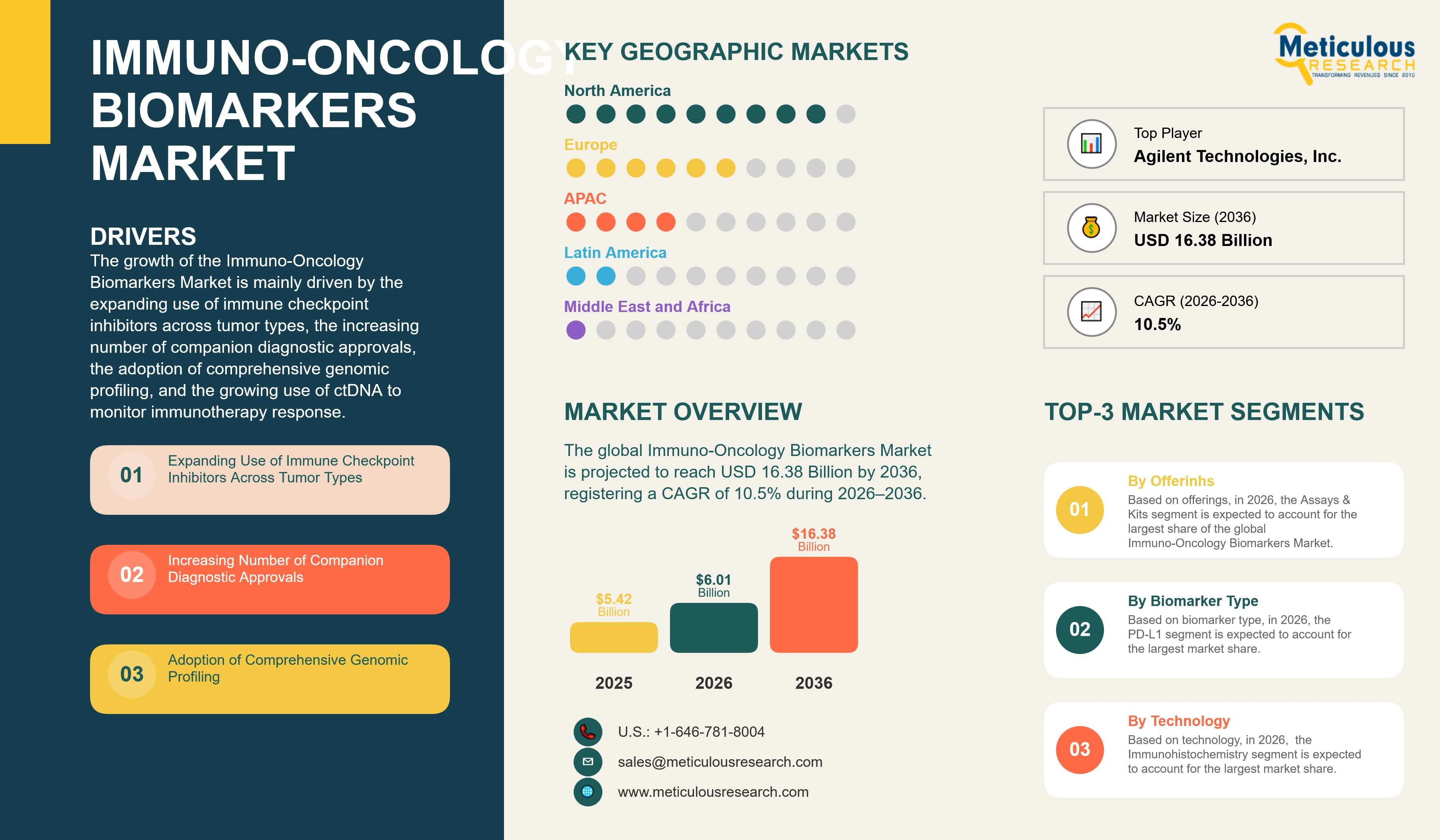
The global Immuno-Oncology Biomarkers Market was valued at USD 5.42 billion in 2025. This market is expected to reach USD 16.38 billion by 2036 from an estimated USD 6.01 billion in 2026, registering a CAGR of 10.5% during the forecast period (2026-2036).
- Published
- Oct 2026
- Pages
- 357
- Format
- PDF + Excel
- Report ID
- MR-2347
- Base year
- 2025
- 2025 · BASELINE
- $5.42B
- 2036
- $16.38B
- CAGR 2026–2036
- 10.5%
2025 baseline · 2026–2036 forecast at 10.5% CAGR · hover a bar for the value
Key highlights
The global Immuno-Oncology Biomarkers Market is projected to reach USD 16.38 billion by 2036, driven by expanding checkpoint inhibitor indications, companion diagnostic approvals, comprehensive genomic profiling, and ctDNA-based response monitoring.
North America is expected to account for the largest market share in 2026, while Asia-Pacific is projected to register the fastest growth during the forecast period, supported by high incidence of lung, gastric, esophageal, and liver cancers and the growing use of immunotherapy in China, Japan, and South Korea.
Companion diagnostic indications continue to expand. In February 2026, Agilent received U.S. Food and Drug Administration (FDA) approval for PD-L1 IHC 22C3 pharmDx as a companion diagnostic for KEYTRUDA (pembrolizumab) in epithelial ovarian, fallopian tube, or primary peritoneal carcinoma, the first immuno-oncology approval in this disease, and in March 2026 received approval in esophageal or gastroesophageal junction carcinoma for tumors with a Combined Positive Score (CPS) of 1 or higher, its eighth FDA-approved companion diagnostic indication with KEYTRUDA.
By biomarker type, PD-L1 is expected to account for the largest market share in 2026, whereas ctDNA-Based Response Monitoring Biomarkers are projected to witness the fastest growth through 2036. Natera, which offers the Signatera tumor-informed circulating tumor DNA (ctDNA) test for molecular residual disease and immunotherapy response monitoring, reported Q2 2026 revenue of USD 752.8 million, up 37.7%, with about 296,700 oncology tests processed, and raised its 2026 revenue guidance to USD 2.85 billion to USD 2.91 billion.
Laboratories are consolidating immuno-oncology testing onto automated platforms. In June 2026, Agilent received FDA approval to run PD-L1 IHC 22C3 pharmDx on its automated Dako Omnis platform for four additional tumor types, esophageal squamous cell carcinoma, triple-negative breast cancer, cervical cancer, and gastric or gastroesophageal junction adenocarcinoma, allowing laboratories to consolidate PD-L1 testing into one automated workflow.
Report summary
| Particulars | Details |
|---|---|
| Forecast Period | 2026-2036 |
| Base Year | 2025 |
| Estimated Year | 2026 |
| CAGR (Value) | 10.5% |
| Format | PDF, Excel & Cloud Portal · 357 pages |
| Market Size (Value) in 2026 | USD 6.01 Billion |
| Market Size (Value) in 2036 | USD 16.38 Billion |
| Segments Covered | By Offering: Assays & Kits, Testing Services, Instruments, Software & Digital Pathology Solutions. By Biomarker Type: PD-L1, Tumor Mutational Burden, MSI & Mismatch Repair Deficiency, ctDNA-Based Response Monitoring Biomarkers, Gene Expression Signatures, Tumor-Infiltrating Lymphocytes & Immune Cell Profiling, Other Biomarkers. By Technology: Immunohistochemistry, Next-Generation Sequencing, PCR, Multiplex Immunofluorescence & Spatial Profiling, Other Technologies. By Cancer Type: Non-Small Cell Lung Cancer, Melanoma, Gastrointestinal Cancers, Breast Cancer, Head & Neck Cancer, Genitourinary Cancers, Gynecologic Cancers, Other Cancers. By Application: Companion & Complementary Diagnostics, Treatment Response Monitoring, Prognostic Testing, Drug Discovery & Clinical Development. By End User: Hospitals & Pathology Laboratories, Reference Laboratories, Pharmaceutical & Biotechnology Companies, Academic & Research Institutes. |
| Countries Covered | North America: U.S., Canada. Europe: Germany, France, U.K., Italy, Spain, Netherlands, Rest of Europe. Asia-Pacific: China, Japan, South Korea, India, Australia, Rest of Asia-Pacific. Latin America: Brazil, Mexico, Rest of Latin America. Middle East & Africa: Saudi Arabia, UAE, Israel, Rest of Middle East & Africa. |
| Key Companies | Agilent Technologies, Inc., F. Hoffmann-La Roche Ltd, Foundation Medicine, Inc., Thermo Fisher Scientific Inc., Illumina, Inc., QIAGEN N.V., Guardant Health, Inc., Natera, Inc., Caris Life Sciences, Inc., and NeoGenomics, Inc. |
Report overview
Segments covered: offering, biomarker type, technology, cancer type, application, end user.
The growth of this market is mainly driven by the expanding use of immune checkpoint inhibitors across tumor types and treatment lines, the increasing number of companion diagnostic approvals linking biomarkers such as PD-L1, tumor mutational burden (TMB), and microsatellite instability (MSI) to immunotherapy eligibility, the adoption of comprehensive genomic profiling that reports multiple immuno-oncology biomarkers in a single test, and the growing use of circulating tumor DNA to monitor response to immunotherapy. In addition, the development of novel immunotherapies, including bispecific antibodies, cell therapies, and cancer vaccines, the emergence of spatial and multiplex tissue biomarkers, and the use of artificial intelligence (AI) in digital pathology to score biomarkers are further supporting the growth of this market.
The Immuno-Oncology Biomarkers Market, also referred to as the immunotherapy biomarkers market, IO companion diagnostics market, or checkpoint inhibitor biomarker testing market, comprises the assays and kits, instruments, software, and testing services used to measure biomarkers that predict, guide, or monitor response to cancer immunotherapies. The market includes immunohistochemistry (IHC) assays for programmed death-ligand 1 (PD-L1) and mismatch repair (MMR) proteins; next-generation sequencing (NGS) tests that measure TMB, MSI, and other genomic biomarkers; PCR-based MSI assays; gene expression signatures of immune activity; multiplex immunofluorescence and spatial assays that profile tumor-infiltrating lymphocytes and the tumor microenvironment; ctDNA tests for monitoring response; and digital pathology and AI software for biomarker scoring. The market ecosystem extends from diagnostic and reagent manufacturers to pathology and reference laboratories, comprehensive genomic profiling providers, pharmaceutical companies that co-develop companion diagnostics, oncologists, and payers.
The market is experiencing steady growth as immune checkpoint inhibitors have become standard treatments across many cancers, including non-small cell lung cancer, melanoma, head and neck, gastric, esophageal, cervical, triple-negative breast, bladder, kidney, and endometrial cancers. Because only a subset of patients respond to immunotherapy, and because these drugs carry significant cost and potential immune-related toxicity, biomarkers are essential for selecting patients, choosing among treatment options, and monitoring response. Each new immunotherapy indication typically requires a companion or complementary diagnostic, generating new testing demand.
PD-L1 testing remains the most widely used immuno-oncology biomarker. In February 2026, Agilent received U.S. Food and Drug Administration (FDA) approval for PD-L1 IHC 22C3 pharmDx as a companion diagnostic for KEYTRUDA (pembrolizumab) in epithelial ovarian, fallopian tube, or primary peritoneal carcinoma, the first immuno-oncology approval in this disease, and in March 2026 received approval in esophageal or gastroesophageal junction carcinoma for tumors with a Combined Positive Score (CPS) of 1 or higher, its eighth FDA-approved companion diagnostic indication with KEYTRUDA. In June 2026, Agilent received FDA approval to run PD-L1 IHC 22C3 pharmDx on its automated Dako Omnis platform for four additional tumor types, esophageal squamous cell carcinoma, triple-negative breast cancer, cervical cancer, and gastric or gastroesophageal junction adenocarcinoma, allowing laboratories to consolidate PD-L1 testing into one automated workflow. Roche offers the VENTANA PD-L1 (SP263) assay, which has FDA-approved non-small cell lung cancer indications for four immunotherapy drugs, including cemiplimab, as well as other PD-L1 assays on its BenchMark platforms. The continued expansion of indications and the consolidation of testing onto automated platforms are supporting stable growth in PD-L1 testing.
Genomic biomarkers measured by NGS are also central to immunotherapy selection. FoundationOne CDx is FDA-approved as a companion diagnostic to identify patients with tumor mutational burden-high (TMB-H) and microsatellite instability-high (MSI-H) solid tumors who may be eligible for KEYTRUDA, enabling genomic immuno-oncology biomarkers to be assessed alongside targeted therapy biomarkers in a single comprehensive genomic profiling test. MSI-H and mismatch repair deficiency (dMMR) are approved tumor-agnostic biomarkers for checkpoint inhibitor therapy, and dMMR tumors are particularly responsive to immunotherapy in colorectal, endometrial, and other cancers. Comprehensive genomic profiling tests from companies such as Foundation Medicine, Caris Life Sciences, Illumina, and Thermo Fisher Scientific report TMB and MSI alongside targeted therapy biomarkers, making genomic immuno-oncology biomarkers more widely available.
Monitoring response to immunotherapy is an emerging area of growth. Imaging can be difficult to interpret during immunotherapy because of pseudoprogression, and ctDNA testing can provide earlier evidence of whether a patient is responding. Natera, which offers the Signatera tumor-informed circulating tumor DNA (ctDNA) test for molecular residual disease and immunotherapy response monitoring, reported Q2 2026 revenue of USD 752.8 million, up 37.7%, with about 296,700 oncology tests processed, and raised its 2026 revenue guidance to USD 2.85 billion to USD 2.91 billion. Medicare issued a draft local coverage determination supporting coverage of Signatera for immunotherapy response monitoring, citing validation showing that the test identified non-responders with high positive predictive value when used with imaging.
New immunotherapy modalities and biomarkers are expanding the market further. Bispecific antibodies, cell therapies, cancer vaccines, and novel checkpoint inhibitors targeting LAG-3, TIGIT, and other pathways require new biomarkers for patient selection. Multiplex immunofluorescence and spatial profiling platforms are being used to characterize the tumor microenvironment and identify spatial biomarkers that predict response more accurately than single-marker IHC, and AI-based digital pathology is being applied to PD-L1 scoring and tumor-infiltrating lymphocyte assessment to improve consistency.
At the same time, the market faces challenges related to the limited predictive accuracy of current biomarkers, differences between assays and scoring systems, and reimbursement. PD-L1 expression is an imperfect predictor of response, and different assays, cutoffs, and scoring methods, such as tumor proportion score and CPS, are used for different drugs and indications. As a result, providers that can deliver standardized, automated, and clinically validated biomarker tests, and that develop new biomarkers for emerging immunotherapies, are expected to capture the largest share of growth over the forecast period.
Report infographic
Market dynamics
15 factors across 5 forcesExpanding Use of Immune Checkpoint Inhibitors Across Tumor Types
The expanding use of immune checkpoint inhibitors across tumor types and treatment lines is a major factor driving the Immuno-Oncology Biomarkers Market, as each new indication creates demand for biomarker testing to identify eligible patients. Checkpoint inhibitors are now used in the metastatic, adjuvant, and neoadjuvant settings across many cancers, and new approvals continue to extend their use. The February 2026 approval of PD-L1 IHC 22C3 pharmDx for KEYTRUDA in epithelial ovarian, fallopian tube, or primary peritoneal carcinoma marked the first immuno-oncology approval in this disease.
As checkpoint inhibitors move into earlier stages of disease and new tumor types, the number of patients tested for immuno-oncology biomarkers is expected to grow steadily, supporting demand for PD-L1 assays, MMR and MSI testing, and comprehensive genomic profiling.
Increasing Number of Companion Diagnostic Approvals
The increasing number of companion and complementary diagnostic approvals is significantly accelerating market growth. Agilent PD-L1 IHC 22C3 pharmDx has reached eight FDA-approved companion diagnostic indications with KEYTRUDA, including esophageal or gastroesophageal junction carcinoma in March 2026, and Roche VENTANA PD-L1 (SP263) has FDA-approved non-small cell lung cancer indications for four immunotherapy drugs. FoundationOne CDx is approved as a companion diagnostic for TMB-H and MSI-H solid tumors. Each approval establishes a standard testing requirement for a patient population, creating recurring demand for assays and testing services.
Adoption of Comprehensive Genomic Profiling
The adoption of comprehensive genomic profiling is expanding access to genomic immuno-oncology biomarkers. Comprehensive genomic profiling tests analyze hundreds of genes and report TMB and MSI together with targeted therapy biomarkers, allowing oncologists to evaluate eligibility for both targeted therapies and immunotherapy from a single tissue or blood sample. As comprehensive genomic profiling becomes standard practice in advanced cancers and reimbursement expands, the number of patients with TMB and MSI results is increasing, supporting market growth.
Blood-based comprehensive genomic profiling is also expanding access for patients whose tumor tissue is insufficient for testing, and FDA-approved liquid biopsy tests can report genomic biomarkers relevant to treatment selection. Together with tissue-based testing, these tests are making genomic immuno-oncology biomarkers part of routine practice in advanced cancers, increasing the value of each patient tested and supporting demand for NGS-based testing services.
Growing Use of ctDNA to Monitor Immunotherapy Response
The growing use of ctDNA testing to monitor immunotherapy response is creating a new source of demand. Changes in ctDNA levels can indicate response or resistance earlier than imaging and can help distinguish pseudoprogression from true progression. Natera, which offers the Signatera tumor-informed circulating tumor DNA (ctDNA) test for molecular residual disease and immunotherapy response monitoring, reported Q2 2026 revenue of USD 752.8 million, up 37.7%, with about 296,700 oncology tests processed, and raised its 2026 revenue guidance to USD 2.85 billion to USD 2.91 billion. As evidence accumulates and coverage expands, ctDNA-based monitoring is expected to become a routine part of immunotherapy management, driving strong growth in this segment.
Table of contents
14 chapters · 158 sections · 357 pages · click to expandSegmental analysis
| Segment | Largest share (2026) | Fastest growth (2026–2036) |
|---|---|---|
| By Offering | Assays & Kits | Software & Digital Pathology Solutions |
| By Biomarker Type | PD-L1 | CtDNA-Based Response Monitoring Biomarkers |
| By Technology | Immunohistochemistry | Next-Generation Sequencing |
| By Cancer Type | Non-Small Cell Lung Cancer | Gynecologic Cancers |
| By Application | Companion & Complementary Diagnostics | Treatment Response Monitoring |
| By End User | Hospitals & Pathology Laboratories | Reference Laboratories |
By Offering
- Immuno-Oncology Biomarkers Market Analysis by Offering
- The Assays & Kits segment is expected to account for the largest share of the global Immuno-Oncology Biomarkers Market.
- The large share of this segment is mainly due to the widespread use of PD-L1 and MMR IHC assays in pathology laboratories worldwide, the large number of companion diagnostic indications, such as the eight FDA-approved indications of PD-L1 IHC 22C3 pharmDx with KEYTRUDA, and the recurring use of reagents for every patient tested.
- However, the Software & Digital Pathology Solutions segment is projected to register the highest CAGR during the forecast period.
- The rapid growth of this segment is attributed to the adoption of digital pathology, the use of AI to score PD-L1 and tumor-infiltrating lymphocytes, and the need to reduce variability in biomarker interpretation.
- The Testing Services segment is expected to record strong growth, supported by comprehensive genomic profiling and ctDNA monitoring services offered by reference laboratories such as Foundation Medicine, Caris Life Sciences, Guardant Health, and Natera.
By Biomarker Type
- Immuno-Oncology Biomarkers Market Analysis by Biomarker Type
- The PD-L1 segment is expected to account for the largest market share, due to its use as a companion or complementary diagnostic for multiple checkpoint inhibitors across non-small cell lung, head and neck, gastric, esophageal, cervical, triple-negative breast, ovarian, and other cancers, and the continued expansion of indications in 2026.
- However, the ctDNA-Based Response Monitoring Biomarkers segment is projected to register the highest CAGR during the forecast period, owing to the growing evidence that ctDNA changes can identify response and resistance earlier than imaging, the Medicare draft coverage for Signatera in immunotherapy response monitoring, and the rapid growth of oncology testing at companies such as Natera.
- The MSI & Mismatch Repair Deficiency segment is also expected to record strong growth, supported by tumor-agnostic approvals and the use of immunotherapy in dMMR colorectal and endometrial cancers.
By Technology
- Immuno-Oncology Biomarkers Market Analysis by Technology
- The Immunohistochemistry segment is expected to account for the largest market share, due to the routine use of PD-L1 and MMR IHC in pathology laboratories, its low cost, and its integration into standard diagnostic workflows.
- However, the Next-Generation Sequencing segment is projected to register the highest CAGR during the forecast period, driven by the adoption of comprehensive genomic profiling reporting TMB and MSI and the growth of NGS-based ctDNA monitoring.
- The Multiplex Immunofluorescence & Spatial Profiling segment is expected to grow rapidly from a smaller base as spatial biomarkers are validated in clinical trials.
By Cancer Type
- Immuno-Oncology Biomarkers Market Analysis by Cancer Type
- The Non-Small Cell Lung Cancer segment is expected to account for the largest market share, due to the high incidence of lung cancer, the broad use of checkpoint inhibitors in non-small cell lung cancer, and the established role of PD-L1 testing in treatment selection.
- However, the Gynecologic Cancers segment is projected to register the highest CAGR during the forecast period, driven by the use of immunotherapy in dMMR endometrial cancer, PD-L1-positive cervical cancer, and the first immuno-oncology approval in epithelial ovarian cancer in February 2026.
By Application
- Immuno-Oncology Biomarkers Market Analysis by Application
- The Companion & Complementary Diagnostics segment is expected to account for the largest market share, as most immuno-oncology biomarker testing is performed to determine eligibility for checkpoint inhibitor therapy.
- However, the Treatment Response Monitoring segment is projected to register the highest CAGR during the forecast period, driven by the adoption of ctDNA-based monitoring during immunotherapy.
- The Drug Discovery & Clinical Development segment is expected to grow strongly, supported by the development of biomarkers for novel immunotherapies.
By End User
- Immuno-Oncology Biomarkers Market Analysis by End User
- The Hospitals & Pathology Laboratories segment is expected to account for the largest market share, due to the routine performance of PD-L1 and MMR IHC testing in hospital pathology departments.
- However, the Reference Laboratories segment is projected to register the highest CAGR during the forecast period, driven by the growth of comprehensive genomic profiling and ctDNA monitoring services offered by specialized laboratories.
Geographic analysis
North America
Largest shareIn 2026, North America is expected to account for the largest share of the global Immuno-Oncology Biomarkers Market. The large share of this region is mainly attributed to the broad use of checkpoint inhibitors, the large number of FDA-approved companion diagnostics, the high adoption of comprehensive genomic profiling and ctDNA testing, established reimbursement, and the presence of leading companies, including Agilent, Foundation Medicine, Caris Life Sciences, Guardant Health, Natera, NeoGenomics, Thermo Fisher Scientific, and Illumina. In 2026 alone, Agilent received FDA approvals for PD-L1 IHC 22C3 pharmDx in epithelial ovarian and esophageal or gastroesophageal junction carcinomas and for four additional indications on the Dako Omnis platform, and Natera processed about 296,700 oncology tests in Q2 2026. Canada is expected to contribute to regional growth, supported by provincial cancer agencies and expanding biomarker testing.
Europe
Europe is expected to account for a significant share of the market, supported by high cancer incidence, broad access to immunotherapy, and well-developed pathology networks. Testing in Europe is often performed in hospital pathology laboratories, and the EU In Vitro Diagnostic Regulation has increased requirements for companion diagnostics, favoring CE-IVD assays from established manufacturers such as Agilent, Roche, QIAGEN, and Thermo Fisher Scientific. Germany, France, the U.K., Italy, Spain, and the Netherlands are expected to account for the largest shares, supported by national cancer programs and the growing use of comprehensive genomic profiling.
Asia-Pacific
Fastest growthAsia-Pacific is projected to register the highest CAGR during the forecast period. The growth of this region is driven by the high incidence of lung, gastric, esophageal, and liver cancers, the increasing approval and reimbursement of domestic and international checkpoint inhibitors, and expanding molecular pathology and NGS capacity. China is expected to account for the largest share within Asia-Pacific, supported by a large number of domestically developed immunotherapies and a large genomics testing industry, while Japan, where comprehensive genomic profiling is reimbursed under national health insurance for eligible patients, South Korea, India, and Australia are expected to see strong growth.
Latin America
Latin America and the Middle East & Africa are expected to account for smaller shares of the market. In Latin America, demand is supported by growing access to immunotherapy in Brazil and Mexico, while in the Middle East, investment in cancer care and precision oncology in Saudi Arabia, the UAE, and Israel is expected to support demand for immuno-oncology biomarker testing.
Competitive landscape
The global Immuno-Oncology Biomarkers Market is moderately consolidated, with a small number of tissue diagnostics companies leading PD-L1 and MMR IHC testing, alongside comprehensive genomic profiling providers, liquid biopsy and ctDNA testing companies, NGS technology providers, and digital pathology and spatial biology companies. Market participants compete primarily on companion diagnostic approvals and partnerships with pharmaceutical companies, assay performance and automation, breadth of biomarker coverage, turnaround time, reimbursement, and global distribution.
Leading companies are securing new companion diagnostic approvals, expanding assays to automated platforms, developing comprehensive genomic profiling and ctDNA monitoring tests, investing in AI-enabled digital pathology, and partnering with pharmaceutical companies on biomarkers for novel immunotherapies. Recent examples include the FDA approvals of PD-L1 IHC 22C3 pharmDx in epithelial ovarian carcinoma in February 2026 and in esophageal or gastroesophageal junction carcinoma in March 2026, the approval of the test on the Dako Omnis platform for four additional tumor types in June 2026, and the continued growth of ctDNA testing by Natera.
The report provides a comprehensive competitive assessment of the leading companies operating in the global Immuno-Oncology Biomarkers Market. The key players profiled in the report include Agilent Technologies, Inc. (U.S.), F. Hoffmann-La Roche Ltd (Switzerland), Foundation Medicine, Inc. (U.S.), Thermo Fisher Scientific Inc. (U.S.), Illumina, Inc. (U.S.), QIAGEN N.V. (Netherlands), Guardant Health, Inc. (U.S.), Natera, Inc. (U.S.), Caris Life Sciences, Inc. (U.S.), and NeoGenomics, Inc. (U.S.).
- Agilent Technologies, Inc.
- F. Hoffmann-La Roche Ltd
- Foundation Medicine, Inc.
- Thermo Fisher Scientific Inc.
- Illumina, Inc.
- QIAGEN N.V.
- Guardant Health, Inc.
- Natera, Inc.
- Caris Life Sciences, Inc.
- NeoGenomics, Inc
Expert perspectives
The Immuno-Oncology Biomarkers Market is entering a period in which the number of biomarker-guided immunotherapy decisions is expanding, but the biomarkers themselves are evolving from single-marker selection tests toward multi-biomarker and dynamic monitoring approaches. With PD-L1 IHC 22C3 pharmDx reaching eight FDA-approved indications with KEYTRUDA, comprehensive genomic profiling reporting TMB and MSI in routine practice, and ctDNA monitoring growing rapidly, immuno-oncology biomarker testing is becoming more comprehensive and continuous. The binding constraint is shifting from access to testing to the need for biomarkers that predict response more accurately and guide decisions throughout treatment.
Three structural changes are expected to shape competitive positions through 2036. First, PD-L1 testing is consolidating on automated platforms while remaining the largest biomarker, favoring established tissue diagnostics companies. Second, ctDNA-based monitoring is becoming a core part of immunotherapy management, favoring liquid biopsy providers with clinical evidence and coverage. Third, novel immunotherapies and spatial and AI-based biomarkers are creating new testing categories that could replace or supplement current biomarkers.
For companies planning entry or expansion, the most defensible positions over the forecast period are likely to be found in companion diagnostics for novel immunotherapies, ctDNA-based response monitoring, AI-enabled digital pathology scoring, and spatial biomarker assays validated in clinical trials. For established providers, the principal risks are the limited predictive accuracy of current biomarkers, assay variability, and reimbursement requirements for new biomarkers.
Overall, the market is expected to grow steadily, with assays and kits, PD-L1, IHC, non-small cell lung cancer, companion diagnostics, and hospital laboratories providing the core of demand and software, ctDNA monitoring, NGS, gynecologic cancers, response monitoring, reference laboratories, and Asia-Pacific providing the fastest growth.
Customer perspectives
Insights gathered during primary interviews with pathologists, medical oncologists, and diagnostics development leaders operating in this market highlight where procurement priorities are shifting. The following perspectives reflect recurring themes raised across these discussions.
“This reflects the importance of automation and standardization in PD-L1 testing.”
“This indicates the growing role of response monitoring.”
“This points to the demand for new biomarkers for novel immunotherapies.”
Frequently asked questions
The global Immuno-Oncology Biomarkers Market is estimated at USD 6.01 billion in 2026.
Cite this report
Meticulous Research. (2026). Immuno-Oncology Biomarkers Market - Global Opportunity Analysis And Industry Forecast (2026-2036) (Report No. MR-2347). Meticulous Market Research Pvt. Ltd. https://www.meticulousresearch.com/product/immuno-oncology-biomarkers-market-7030