
Skyr Market (2025-2035)
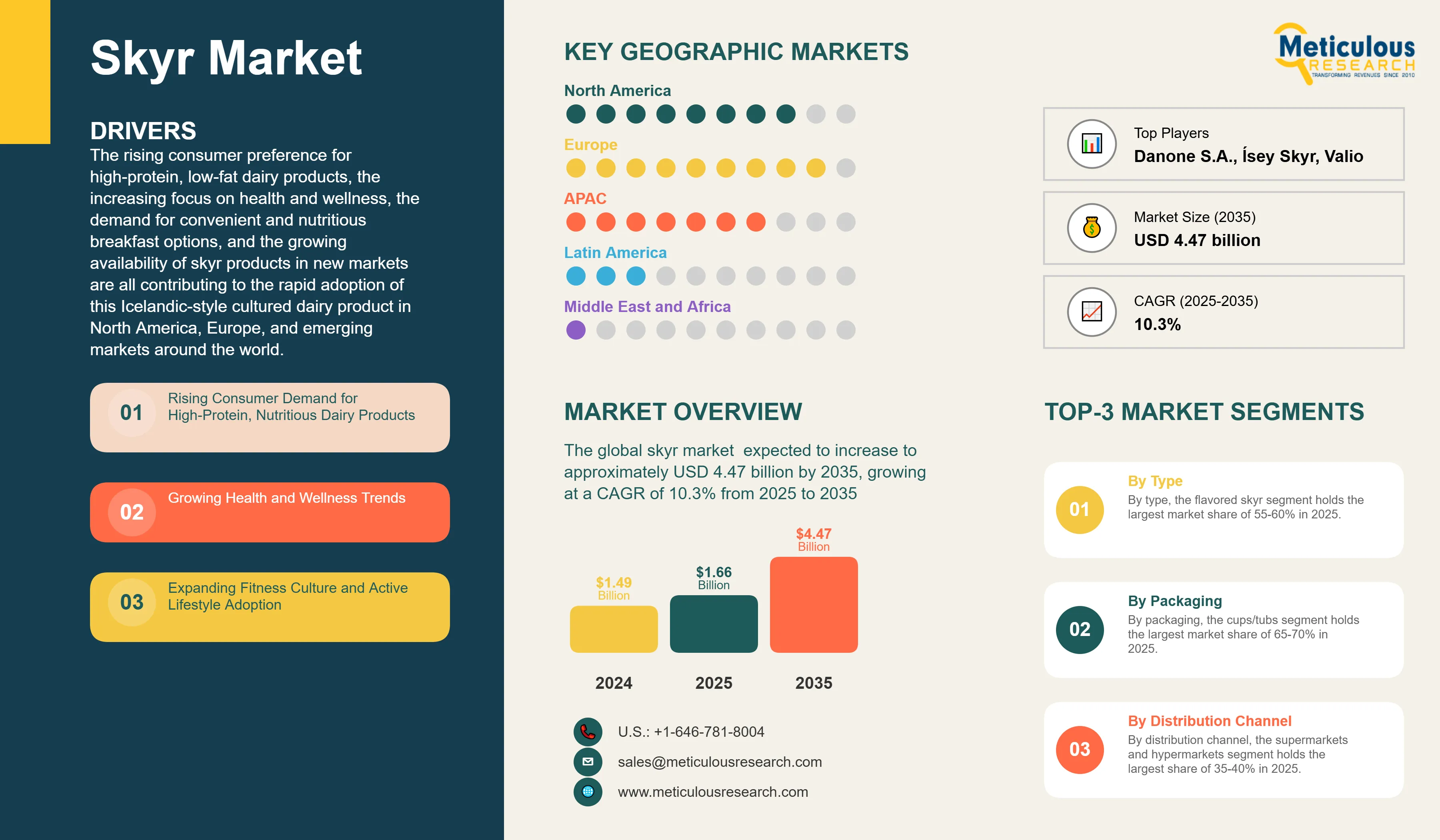
The global skyr market size was valued at USD 1.49 billion in 2024 and is expected to increase to approximately USD 1.66 billion in 2025, then expand to around USD 4.47 billion by 2035, growing at a CAGR of 10.3% from 2025 to 2035.
- Published
- Oct 2025
- Pages
- 225
- Format
- PDF + Excel
- Report ID
- MR-1616
- Base year
- 2024
- 2024 · BASELINE
- $1.49B
- 2035
- $4.47B
- CAGR 2025–2035
- 10.3%
2024 baseline · 2025–2035 forecast at 10.3% CAGR · hover a bar for the value
Key highlights
In terms of revenue, the global skyr market is valued at USD 1.66 billion in 2025 and is projected to reach USD 4.47 billion by 2035.
The market is expected to grow at a CAGR of 10.3% from 2025 to 2035.
Europe dominates the global skyr market with the largest market share of 40-50% in 2025.
North America is expected to witness the fastest CAGR during the forecast period.
By type, the flavored skyr segment holds the largest market share of 55-60% in 2025.
By type, the organic skyr segment is expected to witness the fastest CAGR during the forecast period.
By fat content, the non-fat segment contributes the highest market share of 45-50% in 2025.
By fat content, the full-fat segment is expected to witness the fastest CAGR during the forecast period.
By packaging, the cups/tubs segment holds the largest market share of 65-70% in 2025.
By packaging, the pouches segment is expected to witness the fastest CAGR during the forecast period.
By distribution channel, the supermarkets and hypermarkets segment holds the largest share of 35-40% in 2025.
By distribution channel, the online retail segment is expected to witness the fastest CAGR through 2035.
Report summary
| Particulars | Details |
|---|---|
| Report Coverage | Details |
| Market Size by 2035 | USD 4.47 Billion |
| Market Size in 2025 | USD 1.66 Billion |
| Market Size in 2024 | USD 1.49 Billion |
| Market Growth Rate from 2025 to 2035 | CAGR of 10.3% |
| Format | PDF, Excel & Cloud Portal · 225 pages |
| Dominating Region | Europe |
| Fastest Growing Region | North America |
| Base Year | 2024 |
| Forecast Period | 2025 to 2035 |
| Segments Covered | Type, Fat Content, Packaging, Distribution Channel, and Region |
| Regions Covered | North America, Europe, Asia-Pacific, Latin America, and Middle East & Africa |
Report overview
Segments covered: type, fat content, packaging, distribution channel.
The rising consumer preference for high-protein, low-fat dairy products, the increasing focus on health and wellness, the demand for convenient and nutritious breakfast options, and the growing availability of skyr products in new markets are all contributing to the rapid adoption of this Icelandic-style cultured dairy product in North America, Europe, and emerging markets around the world.
The skyr market involves the production, processing, packaging, and distribution of skyr. This traditional Icelandic cultured dairy product has a thick, creamy texture similar to Greek yogurt. However, it is technically classified as a soft cheese due to how it is made. Skyr is produced by incubating skim milk with live active cultures and then straining the mixture to remove whey. This process results in a protein-rich, low-fat product with a mild, slightly tangy taste. Authentic skyr typically contains much more protein than regular yogurt, with about 15-20 grams per serving. It also has low fat and sugar levels, which makes it appealing to health-conscious consumers, athletes, and those on high-protein diets.
The market offers various product formats, including traditional plain skyr and flavored options featuring fruits, honey, and vanilla. There are also organic choices made from certified organic milk and Greek-style skyr variants tailored to local tastes. The market is influenced by increasing consumer awareness of protein's importance for nutrition and fullness. There is a growing demand for functional foods that support active lifestyles and weight management. Additionally, more people with lactose sensitivity are interested in strained dairy products with lower lactose content. The expansion of specialty and premium dairy sections in stores and effective marketing campaigns have positioned skyr as a natural and healthy alternative to regular yogurt and snacks.
Product innovation is transforming the skyr market by moving beyond traditional recipes. It now includes a variety of flavors, functional ingredients, and convenient formats that attract more consumers. Manufacturers are creating unique flavor combinations like superfruit blends, coffee-infused options, dessert-inspired varieties, and savory options for cooking. Functional skyr products now have added probiotics, fiber, omega-3 fatty acids, vitamins, and minerals. This improves nutritional value and supports health benefits such as digestive wellness, immune support, and bone health.
Plant-based and hybrid skyr alternatives made from coconut, almond, or oat bases target vegan consumers and those with dairy allergies. They maintain the rich texture and high protein content by using alternative protein sources. New packaging ideas, like squeezable pouches, drinkable skyr formats, and single-serving sizes with separate toppings, cater to busy lifestyles and snacking needs.
Reduced-sugar and naturally sweetened options with monk fruit, stevia, or fruit concentrates meet the demand for clean labels and sugar reduction. These innovations broaden skyr's appeal beyond breakfast and snacking. They include uses for meal replacements, post-workout recovery, cooking ingredients, and dessert alternatives. This drives market growth and encourages more consumers to try skyr.
A significant trend in the skyr market is the growing consumer interest in clean-label products with minimal, recognizable ingredients and genuine production methods that respect traditional Icelandic techniques. Consumers are increasingly examining ingredient lists. They seek skyr products free from artificial flavors, colors, preservatives, and thickening agents. They prefer simple formulations that include milk, live cultures, and natural flavorings. Premium brands emphasize traditional straining processes, use grass-fed or pasture-raised milk sources, and feature heritage culture strains to set their products apart and justify higher prices. This authenticity trend includes clear sourcing stories, sustainable farming practices, and certifications like organic, non-GMO, and humane animal treatment standards. These aspects appeal to consumers who care about ethics and want products that reflect their values.
Another key trend driving market growth is the strategic positioning of skyr for multiple consumption occasions beyond traditional breakfast. These include snacking, post-workout nutrition, cooking ingredients, and dessert alternatives. Manufacturers are creating marketing campaigns and product formats that promote versatile use. This includes integrating recipes for smoothies, using substitutes in baking, and making salad dressings and dips. Single-serve portions with higher protein content aim at afternoon snacking and pre/post-exercise needs among fitness fans. Savory and herb-flavored varieties serve culinary purposes as healthier alternatives to sour cream, mayonnaise, or cream cheese. This occasion expansion strategy boosts per-capita consumption frequency, attracts new consumer groups such as athletes and cooking enthusiasts, and positions skyr as an everyday staple instead of just a specialty breakfast item. This significantly expands market potential.
North America is expected to grow at the fastest CAGR from 2025 to 2035. This growth is mainly attributed to the rapid consumer adoption after the successful establishment of the Greek yogurt market. This created awareness and demand for high-protein, thick-textured dairy products, making skyr a natural option with even higher protein content. The U.S. market has seen remarkable growth since major dairy companies like Danone, General Mills, and Chobani introduced skyr products in mass retail channels between 2015 and 2018. This transformation changed skyr from a specialty import to something commonly available.
American consumers are increasingly focused on protein consumption, maintaining an active fitness culture and welcoming international food trends. These factors create favorable conditions for the adoption of skyr in the region. The large population of health-conscious millennials and Gen Z consumers in the region seeks functional foods, clean-label products, and genuine culinary experiences, further driving demand. Major brands are investing significantly in marketing through television ads, digital campaigns, partnerships with influencers, and in-store sampling. These efforts have quickly raised awareness and encouraged trial among consumers.
Market dynamics
11 factors across 3 forcesRising Consumer Demand for High-Protein, Nutritious Dairy Products
A key factor driving the growth of the skyr market is the rising consumer interest in protein-rich foods that support active lifestyles, weight management, and overall wellness. Skyr has a high protein content, usually containing 15-20 grams per serving, while regular yogurt has only 5-10 grams. This makes skyr a better choice for health-conscious consumers, fitness enthusiasts, and people on high-protein diets like keto, paleo, and those in athletic training.
As more people recognize protein's role in feeling full, maintaining muscles, and supporting metabolic health, they seek convenient protein sources that fit into their busy lives. Skyr's favorable nutrient profile, which combines high protein with low fat and low sugar, appeals to those managing their calorie intake while ensuring they get enough protein. Its natural fermentation process and probiotic content offer additional digestive health benefits, matching the rising consumer focus on gut health and functional foods.
Current fitness trends, such as more gym memberships, home workouts, and increased athletic participation, boost the demand for post-workout recovery foods. This positions skyr as a natural, whole-food option compared to protein powders and bars. Its clean ingredient list and minimal processing, in contrast to many protein-fortified products, make skyr appealing to consumers looking for nutritious choices without artificial additives, leading to steady market growth among demographics that prioritize health and nutrition.
Table of contents
13 chapters · 135 sections · 225 pages · click to expandGeographic analysis
North America
The U.S. skyr market is projected to be worth around USD 1 billion by 2035, growing at a CAGR of 10.8% from 2025 to 2035. U.S. Skyr Market Size and Growth 2025 to 2035 North America
Europe
Largest shareEurope holds the largest market share of around 40-50% of the global skyr market in 2025. The dominance of Europe in the global skyr market comes from Icelandic roots of this product segment and its long-standing presence in Nordic countries, where it represents traditional dairy heritage with a strong cultural identity and established consumer familiarity. Iceland has the highest per capita skyr consumption in the world. The product is an essential part of daily diets, used for breakfast, snacking, and cooking. Scandinavian countries such as Denmark, Norway, and Sweden have developed sophisticated skyr markets. They offer a wide range of products, position them as premium items, and consumers are willing to pay more for quality dairy. The growth of this market in Western Europe is supported by strong dairy consumption traditions, an appreciation for authentic regional products, and consumer interest in Nordic food culture. This interest is influenced by New Nordic Cuisine trends and Scandinavian lifestyle aspirations. Major European dairy cooperatives and manufacturers like Arla Foods, Emmi Group, and Valio have invested heavily in skyr production, product innovation, and expanding distribution. Retailers in Europe prominently feature skyr within growing sections for Greek yogurt and specialty dairy. By Region
Competitive landscape
- —
July 2025 – Icelandic Provisions launched a new salted caramel and banana flavored extra creamy skyr in the U.S., targeting consumers seeking high-protein, mood-boosting snacks aligned with health-conscious lifestyles.
- —
May 2025 – Arla Foods invested in expanding high-protein skyr production capacity across Europe to meet growing demand.
- —
October 2025 – Danone's Siggi’s introduced an improved plant-based skyr blend made from coconut milk, macadamia butter, and pea protein as a dairy-free option that maintains traditional texture in North America.
Frequently asked questions
The skyr market is expected to increase from USD 1.66 billion in 2025 to USD 4.47 billion by 2035.
Cite this report
Meticulous Research. (2025). Skyr Market - Global Opportunity Analysis and Industry Forecast (2025-2035) (Report No. MR-1616). Meticulous Market Research Pvt. Ltd. https://www.meticulousresearch.com/product/skyr-market-6299