Portable Oxygen Concentrators Market (2025-2035)
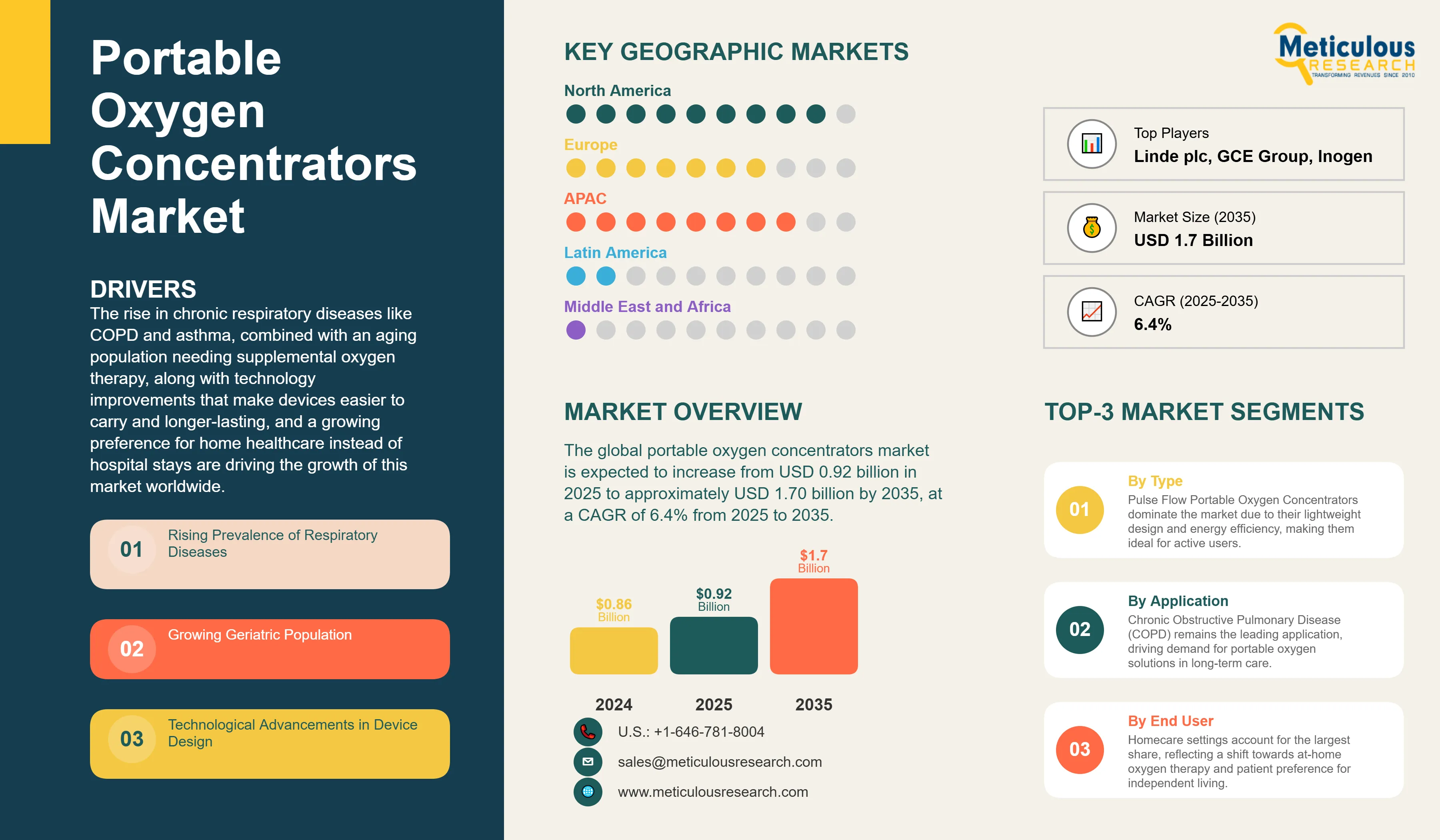
The global portable oxygen concentrators market was valued at USD 0.86 billion in 2024 and is expected to increase from USD 0.92 billion in 2025 to approximately USD 1.70 billion by 2035, growing at a CAGR of 6.4% from 2025 to 2035.
- Published
- Sep 2025
- Pages
- 210
- Format
- PDF + Excel
- Report ID
- MRHC - 1041599
- Base year
- 2024
- 2024 · BASELINE
- $860.0M
- 2035
- $1.70B
- CAGR 2025–2035
- 6.4%
2024 baseline · 2025–2035 forecast at 6.4% CAGR · hover a bar for the value
Key highlights
The global portable oxygen concentrators market was valued at USD 0.86 billion in 2024 and is expected to increase from USD 0.92 billion in 2025 to approximately USD 1.70 billion by 2035, growing at a CAGR of 6.4% from 2025 to 2035.
The home healthcare segment accounts for about 45% share of the overall market in 2025.
North America accounts for about 40% of the global portable oxygen concentrators market in 2025. This is mainly due to the high prevalence of COPD, which affects over 16 million Americans, as well as favorable Medicare and private insurance coverage for oxygen therapy.
Report summary
| Particulars | Details |
|---|---|
| Report Coverage | Details |
| Market Size by 2035 | USD 1.7 Billion |
| Market Size in 2025 | USD 0.92 Billion |
| Market Size in 2024 | USD 0.86 Billion |
| Market Growth Rate from 2025 to 2035 | CAGR of 6.4% |
| Format | PDF, Excel & Cloud Portal · 210 pages |
| Dominating Region | North America |
| Fastest Growing Region | Asia Pacific |
| Base Year | 2024 |
| Forecast Period | 2025 to 2035 |
| Segments Covered | Type, Technology, Weight, Application, End User, Distribution Channel, and Region |
| Regions Covered | North America, Europe, Asia-Pacific, Latin America, and Middle East & Africa |
Report overview
Segments covered: type, technology, weight, application, end user, distribution channel.
The rise in chronic respiratory diseases like COPD and asthma, combined with an aging population needing supplemental oxygen therapy, along with technology improvements that make devices easier to carry and longer-lasting, and a growing preference for home healthcare instead of hospital stays are driving the growth of this market worldwide.
In terms of revenue, the global portable oxygen concentrators market is valued at USD 0.92 billion in 2025 and is projected to reach USD 1.7 billion by 2035.
The market is expected to grow at a CAGR of 6.4% from 2025 to 2035.
North America dominates the global portable oxygen concentrators market with the largest market share of around 40% in 2025.
Asia Pacific is expected to witness the fastest CAGR during the forecast period.
By type, the pulse flow segment holds the largest market share of 50-55% in 2025.
By type, the dual mode (pulse & continuous) segment is expected to witness the fastest CAGR during the foreseeable period.
By technology, the molecular sieve oxygen concentrator segment contributes the highest market share of 80-85% in 2025.
By technology, the membrane separation segment is expected to witness the fastest CAGR during the forecast period.
By weight, the 5-10 lbs segment holds the largest market share of 50% in 2025.
By weight, the below 5 lbs segment is expected to witness the fastest CAGR during the forecast period.
By application, the COPD segment commands the largest share of 30-35% in 2025.
By application, the COVID-19 recovery segment is expected to witness the fastest CAGR through 2035.
By end user, the home healthcare segment accounts for the largest market share of 40-45% in 2025.
By end user, the ambulatory care centers segment is expected to witness the fastest CAGR through 2035.
By distribution channel, the direct sales segment holds the largest market share in 2025.
By distribution channel, the online pharmacy segment is expected to witness the fastest growth during the forecast period.
The portable oxygen concentrators market involves the design, manufacturing, distribution, and servicing of small medical devices that extract oxygen from the air and supply concentrated oxygen to patients who need respiratory support. These battery-powered devices use pressure swing adsorption or membrane separation technology to filter nitrogen from the air, providing medical-grade oxygen with concentrations of 87-95%.
Unlike traditional oxygen cylinders that need refilling, portable oxygen concentrators generate oxygen continuously from the surrounding air. This feature offers greater mobility and independence for patients with chronic respiratory issues. The market is driven by the increasing cases of respiratory diseases caused by air pollution and smoking. It is also fueled by greater awareness of the benefits of portable oxygen therapy, supportive reimbursement policies in developed countries, technological advancements that lower device weight and noise levels, and a rising demand for maintaining an active lifestyle among oxygen-dependent patients in home care, travel, and outdoor settings.
Artificial intelligence is transforming the market for portable oxygen concentrators. It allows for better oxygen delivery, predicts maintenance needs, adjusts therapy for each patient, and enables remote patient monitoring. AI algorithms look at breathing patterns, activity levels, and oxygen saturation data. They automatically change oxygen flow rates to ensure the best therapeutic delivery while also extending battery life.
Machine learning models can identify when devices need maintenance by spotting performance issues and signs of wear. This helps avoid unexpected breakdowns and cuts down on downtime. AI-based mobile apps track therapy compliance in real time, suggest activities based on oxygen levels, and send automated alerts to caregivers in emergencies. These smart concentrators adapt to individual patient habits over time, adjusting settings for different activities and times of day. This improves therapy effectiveness by 25-30% and increases patient comfort and device usability with voice controls and smart user interfaces.
Integration with telehealth and remote monitoring: A major trend in the portable oxygen concentrators market is the use of IoT connectivity and telehealth platforms for real-time remote monitoring of patient oxygen therapy. Connected devices send usage data, oxygen saturation levels, and device performance metrics to healthcare providers through cloud-based platforms. This allows for proactive intervention and better therapy management. It also enables virtual consultations, reduces hospital readmissions, and improves patient outcomes through ongoing monitoring and timely adjustments to oxygen prescriptions.
Ultra-lightweight and wearable designs: Another key trend driving market growth is the creation of ultra-lightweight, wearable oxygen concentrators that improve patient mobility and quality of life. Manufacturers are using materials like carbon fiber and smaller components to make devices that weigh under 3 pounds and can be worn as backpacks or belt-mounted units. These compact designs include quiet operation and long battery life, allowing patients to maintain active lifestyles such as air travel, outdoor activities, and social events without the stigma of traditional oxygen equipment.
Based on distribution channel, the direct sales segment holds the largest share of around 40% of the overall portable oxygen concentrators market in 2025. Direct sales through manufacturers and authorized medical equipment providers ensure proper patient assessment, device selection based on prescription needs, and thorough training on device operation and maintenance.
Healthcare providers prefer direct channels to ensure device authenticity, warranty support, and adherence to regulations. Direct sales allow for personalized service, including home setup, ongoing support, and help with insurance claims that patients need for complex medical devices. The option to offer trial periods, trade-in programs, and financing options through direct channels helps attract cost-conscious patients.
However, the online pharmacy segment is expected to grow at the fastest CAGR through 2035. Digital changes in healthcare and consumer comfort with buying medical devices online are driving the growth of e-pharmacy channels. These channels offer convenience, clear pricing, and discreet home delivery for oxygen therapy equipment.
Asia Pacific is expected to experience the fastest growth rate between 2025 and 2035. This growth is fueled by the rapidly aging populations in Japan, China, and South Korea, which need respiratory support. Increased air pollution in major cities contributes to the burden of respiratory diseases. Additionally, the expanding middle class is becoming more able to afford healthcare.
There is rising awareness of the benefits of oxygen therapy. People are shifting from traditional oxygen cylinders to portable concentrators. This shift is speeding up adoption. Government initiatives in countries like China and India are improving healthcare access and insurance coverage, which broadens the market.
Local manufacturing is lowering device costs, and products are being developed to meet the specific needs of the Asian market. This enhances accessibility. The growth of the medical tourism industry and increased domestic travel among the elderly are creating more demand for portable oxygen solutions.
Improved distribution networks and better after-sales services in smaller cities are expanding the market's reach.
Component Manufacturing and Technology Development This stage focuses on developing key components including compressors, sieve beds, batteries, and control systems optimized for portable oxygen concentration. Key Players: Inogen Inc., Respironics (Philips), Chart Industries, AirSep Corporation
Device Assembly and Quality Testing This stage involves assembling portable oxygen concentrators, conducting performance testing, and ensuring regulatory compliance with medical device standards.
Report infographic
Market dynamics
12 factors across 3 forcesRising Prevalence of Respiratory Diseases and Aging Population
A key factor behind the growth of the portable oxygen concentrators market is the rising global number of chronic respiratory diseases. The WHO estimates that COPD affects over 380 million people worldwide and is the third leading cause of death. The aging population, especially in developed countries, is also a concern. By 2050, the number of individuals over 65 is expected to double, leading to a larger group needing oxygen therapy for conditions like COPD, pulmonary fibrosis, and heart failure.
Environmental issues such as air pollution, workplace hazards, and smoking are raising the incidence of respiratory diseases even among younger people. The COVID-19 pandemic has introduced a new group of patients who need long-term oxygen therapy due to post-COVID pulmonary complications and recovery. Also, improved diagnosis rates and greater awareness of the benefits of oxygen therapy in emerging markets are broadening the potential patient base. Moreover, longer life expectancies are extending the need for oxygen therapy, which continues to boost market demand.
Table of contents
15 chapters · 155 sections · 210 pages · click to expandSegmental analysis
| Segment | Largest share (2025) | Fastest growth (2025–2035) |
|---|---|---|
| By End User | — | On the other hand, the ambulatory care centers |
By End User
- The home healthcare segment accounts for about 45% share of the overall market in 2025.
- The shift toward home-based care is driven by patient choice, cost issues, and limits in healthcare system capacity.
- This makes home healthcare the primary setting for providing oxygen therapy.
- Portable concentrators let patients receive therapy at home, allowing them to stay independent and avoid hospital costs.
- The trend of older adults aging in place and the emphasis on patient-centered care promote the use of home oxygen therapy.
- Improvements in remote monitoring and telehealth services make home oxygen therapy safer and more effective, reducing the need for frequent clinical visits.
- Insurance coverage for home oxygen therapy and access to home healthcare services support this trend.
- On the other hand, the ambulatory care centers segment is expected to grow at the fastest CAGR through 2035.
- The increase in outpatient respiratory clinics, pulmonary rehabilitation centers, and ambulatory surgery centers boosts the demand for portable oxygen concentrators that help with patient mobility during procedures and recovery.
Geographic analysis
North America
North America accounts for about 40% of the global portable oxygen concentrators market in 2025. This is mainly due to the high prevalence of COPD, which affects over 16 million Americans, as well as favorable Medicare and private insurance coverage for oxygen therapy. A strong healthcare system also backs home oxygen programs. Leading manufacturers like Inogen, Respironics (Philips), Invacare, and Chart Industries fuel innovation and competition in the market. Strong healthcare systems with established pulmonary rehabilitation programs and respiratory therapy services help ensure proper device prescription and patient support. High healthcare spending and patients' willingness to invest in devices that improve their quality of life encourage the adoption of premium products. The active lifestyle culture in North America creates demand for truly portable solutions that enable travel and outdoor activities. FAA approval for using portable concentrators on flights and a well-developed transportation network further boost market growth. By Region
Competitive landscape
- Inogen Inc.
- Koninklijke Philips N.V.
- Invacare Corporation
- Chart Industries Inc.
- CAIRE Inc.
- O2 Concepts LLC
- Nidek Medical Products Inc.
- ResMed Inc.
- Besco Medical Co. Ltd.
- Precision Medical Inc.
- Belluscura PLC
- Oxus America Inc.
- Longfian Scitech Co. Ltd.
- Supply Co. Ltd.
- Teijin Limited
- Linde plc
- Air Liquide S.A.
- Medical Inc.
- Rythmia Medical Inogen Inc.
Frequently asked questions
The portable oxygen concentrators market is expected to increase from USD 0.92 billion in 2025 to USD 1.7 billion by 2035.
Cite this report
Meticulous Research. (2025). Portable Oxygen Concentrators Market - Global Opportunity Analysis and Industry Forecast (2025-2035) (Report No. MRHC - 1041599). Meticulous Market Research Pvt. Ltd. https://www.meticulousresearch.com/product/portable-oxygen-concentrators-market-6282