Resources
About Us
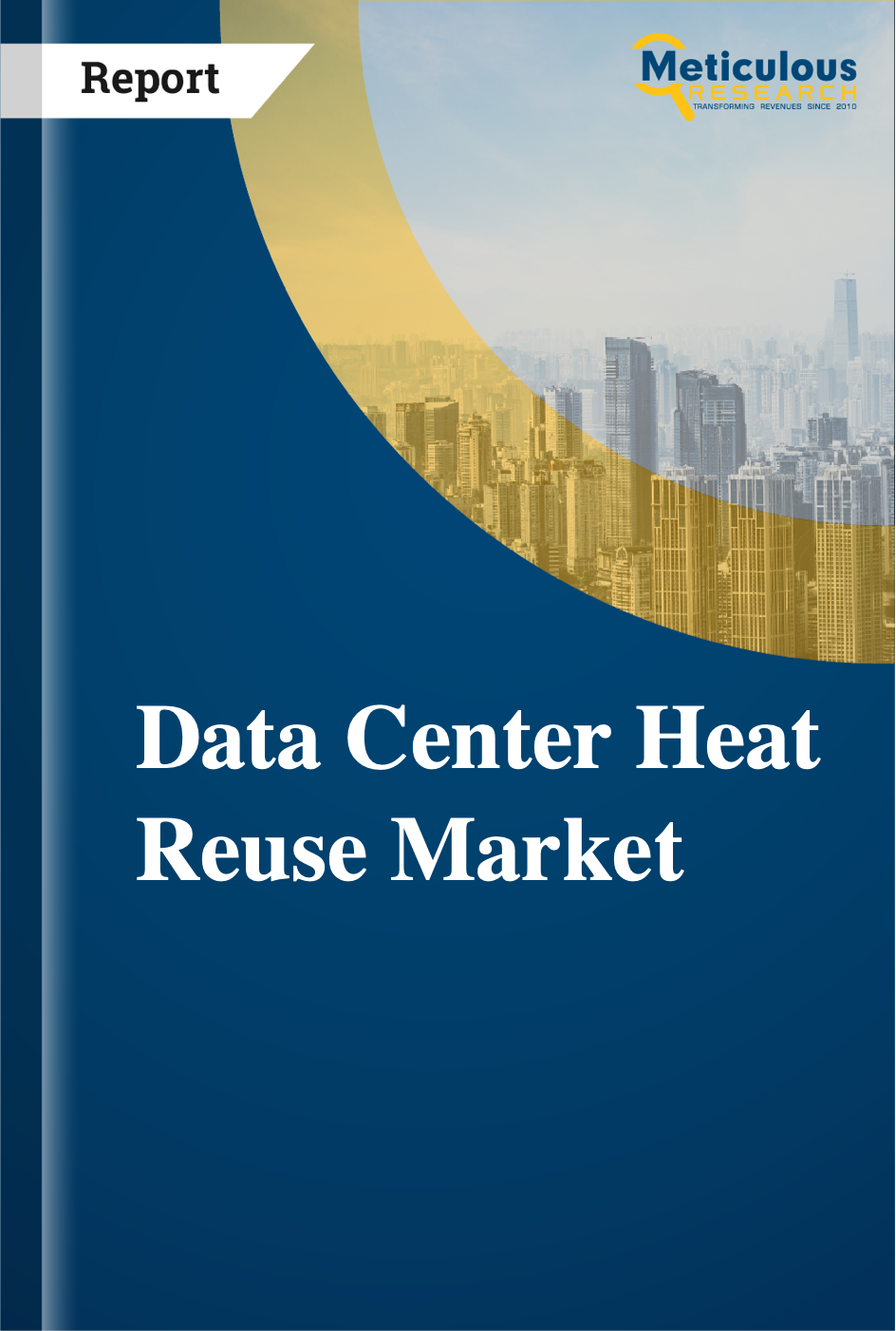
Data Center Heat Reuse Market by Technology, Component, Heat Source, Heat Utilization, Data Center Type, End User, and Geography - Global Forecast to 2036
Report ID: MRSE - 1042112 Pages: 233 Aug-2026 Formats*: PDF Category: Semiconductor and Electronics Delivery: 24 to 72 Hours Download Free Sample Report
The global Data Center Heat Reuse Market is estimated to be valued at USD 1.6 billion in 2025 and is projected to reach USD 1.9 billion in 2026. The market is expected to reach USD 8.4 billion by 2036, registering a CAGR of 16.0% during the forecast period (2026–2036).
The Data Center Heat Reuse Market comprises technologies and solutions that capture, recover, upgrade, transport, and utilize waste heat generated by data centers for productive applications such as district heating, commercial buildings, residential heating, industrial processes, greenhouse agriculture, aquaculture, and domestic hot water. These systems typically integrate heat pumps, heat exchangers, thermal energy storage, intelligent monitoring platforms, and district heating infrastructure to convert low-grade waste heat into a valuable energy resource. As AI-driven computing significantly increases server utilization and thermal output, heat reuse is emerging as an important strategy for improving both energy efficiency and sustainability across modern data centers.
The market is witnessing rapid growth due to increasing focus on decarbonization and energy efficiency. Governments and enterprises are introducing policies aimed at reducing greenhouse gas emissions while maximizing energy utilization. The International Energy Agency (IEA) estimates that data centers account for approximately 1–1.5% of global electricity consumption, with demand expected to increase substantially as artificial intelligence adoption accelerates. Rather than rejecting this heat into the atmosphere, operators are increasingly deploying heat reuse systems that supply nearby residential communities, commercial buildings, and industrial facilities, improving both economic and environmental performance.
Europe currently represents the leading market due to its extensive district heating infrastructure and supportive regulatory environment. Several European countries have introduced policies encouraging waste heat recovery and integration into district heating networks. The European Commission's Energy Efficiency Directive promotes waste heat recovery and efficient energy utilization, encouraging data center operators to integrate heat reuse technologies into new and existing facilities. Similar sustainability initiatives are gradually expanding across North America and Asia-Pacific as governments strengthen carbon neutrality commitments and encourage circular energy systems.
Technological innovation is further accelerating market growth. Manufacturers are developing high-efficiency heat pumps, advanced liquid cooling systems, AI-based heat optimization software, thermal energy storage technologies, and intelligent heat management platforms that improve heat recovery efficiency and commercial returns. Looking ahead, rapid expansion of AI gigawatt data centers, urban district heating projects, smart energy grids, and industrial waste heat utilization is expected to create significant growth opportunities for the global Data Center Heat Reuse Market.
Rising AI and High-Density Computing Workloads
The rapid deployment of AI infrastructure is significantly increasing the amount of recoverable waste heat generated by modern data centers. AI servers equipped with GPUs consume substantially more power than conventional servers and generate considerably higher thermal loads. This creates greater opportunities for recovering and utilizing waste heat through heat pumps, heat exchangers, and district heating networks. According to the International Data Corporation (IDC), worldwide spending on AI-centric systems is expected to exceed USD 1.3 trillion by 2030, reflecting continued investments in AI computing infrastructure. As AI data centers continue expanding globally, operators are increasingly investing in heat reuse technologies that improve energy efficiency while generating additional value from waste heat.
Growing Focus on Data Center Sustainability and Carbon Neutrality
Data center operators are increasingly prioritizing sustainability as governments, investors, and enterprise customers strengthen environmental requirements. Many leading cloud providers have announced ambitious carbon neutrality and net-zero commitments, driving investments in technologies that reduce environmental impact and improve energy utilization. Recovering waste heat enables operators to lower overall carbon emissions while supplying renewable thermal energy to nearby communities and industries. In addition, supportive government policies promoting energy efficiency and district heating are encouraging wider deployment of heat reuse systems. These sustainability initiatives are expected to remain one of the strongest long-term drivers of market growth.
High Initial Infrastructure Costs
Implementing data center heat reuse systems requires significant upfront investment in heat pumps, heat exchangers, thermal storage systems, distribution pipelines, monitoring platforms, and district heating connections. In many projects, additional civil infrastructure and utility integration further increase capital expenditure. These high initial costs may limit adoption, particularly for smaller data centers or facilities located far from potential heat consumers. Project economics often depend on long-term energy demand, utility partnerships, and supportive government incentives.
Limited District Heating Infrastructure and Heat Transportation Challenges
The commercial viability of heat reuse projects largely depends on the availability of nearby heat consumers and district heating infrastructure. Many regions, particularly outside Europe, lack extensive district heating networks capable of utilizing recovered heat. In addition, transporting low-temperature heat over long distances can reduce overall system efficiency and increase infrastructure costs. These geographical and infrastructure limitations remain important barriers to wider adoption of data center heat reuse technologies across several emerging markets.
Expansion of AI Gigawatt Data Centers
The rapid development of AI gigawatt-scale data centers presents a significant opportunity for the Data Center Heat Reuse Market. Next-generation AI facilities equipped with tens of thousands of GPUs consume several hundred megawatts of electricity, generating enormous volumes of recoverable waste heat. Unlike conventional enterprise data centers, these AI facilities operate with consistently high utilization rates, making heat recovery systems economically more attractive. As hyperscale cloud providers continue investing in AI infrastructure, integrating heat recovery technologies into new data center designs is expected to become an important strategy for improving energy efficiency, reducing operational costs, and creating new revenue streams through heat sales.
Urban Heat Network Development and Smart Energy Grids
Growing investments in urban district heating networks and smart energy systems are creating substantial opportunities for data center heat reuse. Cities are increasingly seeking low-carbon heat sources to reduce dependence on fossil fuels while improving energy security. Data centers located near urban developments can supply recovered heat to residential buildings, commercial complexes, hospitals, universities, and public infrastructure through modern district heating systems. In parallel, smart energy grids capable of balancing electricity and thermal energy demand are improving the commercial feasibility of heat reuse projects. These developments are expected to significantly expand market opportunities over the forecast period.
Heat Quality and Temperature Management
One of the primary challenges in data center heat reuse is maintaining sufficient heat quality for practical applications. Most servers generate relatively low-temperature waste heat, which often requires upgrading through high-efficiency heat pumps before it can be utilized in district heating or industrial processes. The efficiency of heat recovery systems depends on cooling technology, server operating conditions, and seasonal demand patterns. Optimizing heat quality while minimizing energy consumption remains a major technical challenge for operators and equipment manufacturers.
Seasonal Variability in Heat Demand
Demand for recovered heat fluctuates significantly throughout the year, particularly in regions with seasonal heating requirements. During warmer months, district heating demand declines substantially, reducing the utilization of recovered heat and affecting project economics. Although thermal energy storage technologies can partially address this challenge, long-term heat storage remains technically and economically complex. Developing diversified heat utilization applications and intelligent energy management systems will be critical to maximizing year-round utilization of recovered waste heat.
Increasing Integration of Liquid Cooling with Heat Recovery Systems
The growing adoption of liquid cooling technologies is significantly improving the efficiency of data center heat reuse. Compared with conventional air-cooled infrastructure, liquid cooling captures higher-quality waste heat at higher temperatures, making it more suitable for district heating and industrial applications. Direct-to-chip cooling, immersion cooling, and rear-door heat exchanger systems are increasingly being designed with integrated heat recovery capabilities, allowing operators to maximize energy recovery while supporting high-density AI workloads. This trend is expected to accelerate as AI computing continues to expand.
Growing Adoption of AI-Based Heat Optimization and Smart Heat Management
Artificial intelligence is increasingly being deployed to optimize heat recovery operations in modern data centers. AI-powered heat management platforms continuously monitor thermal loads, cooling performance, energy demand, and heat utilization patterns to maximize recovery efficiency while minimizing operating costs. Combined with digital monitoring systems and predictive analytics, these intelligent platforms enable automated optimization of heat pumps, thermal storage systems, and district heating integration, improving both operational performance and financial returns.
Market Analysis by Technology
Based on technology, the global Data Center Heat Reuse Market is segmented into Air-Based Heat Recovery Systems, Liquid Cooling Heat Recovery Systems, Heat Pump-Based Heat Recovery, Heat Exchanger Systems, Thermal Energy Storage Systems, and Hybrid Heat Recovery Systems.
In 2026, Heat Pump-Based Heat Recovery is expected to account for the largest share of the market due to its ability to upgrade low-temperature waste heat into usable thermal energy for district heating and industrial applications. However, Liquid Cooling Heat Recovery Systems are projected to register the highest CAGR during the forecast period as liquid-cooled AI data centers become increasingly common and generate higher-quality recoverable heat.
Market Analysis by Component
Based on component, the market is segmented into Heat Pumps, Heat Exchangers, Thermal Storage Systems, Pumps & Circulation Systems, Pipes & Distribution Infrastructure, Monitoring & Control Systems, and Heat Recovery Software Platforms.
In 2026, Heat Pumps are expected to account for the largest market share because they are the core technology used to upgrade waste heat for practical applications. However, Heat Recovery Software Platforms are projected to witness the fastest growth as operators increasingly adopt AI-based optimization, predictive analytics, and intelligent heat management solutions.
Market Analysis by Heat Source
Based on heat source, the market is segmented into Air-Cooled Data Centers and Liquid-Cooled Data Centers (Direct-to-Chip Cooling, Immersion Cooling, and Rear Door Heat Exchanger Systems).
In 2026, Air-Cooled Data Centers are expected to account for the largest market share due to their extensive installed base worldwide.However, Liquid-Cooled Data Centers are projected to register the highest CAGR during the forecast period owing to their superior heat recovery efficiency and increasing deployment in AI and high-performance computing facilities.
Market Analysis by Heat Utilization
Based on heat utilization, the market is segmented into District Heating, Commercial Building Heating, Residential Heating, Industrial Process Heating, Greenhouse Agriculture, Aquaculture, Domestic Hot Water, and Other Heat Applications.
In 2026, District Heating is expected to account for the largest market share because of widespread adoption across European countries with well-established district energy networks.However, Industrial Process Heating is projected to witness the highest CAGR during the forecast period as industries seek low-carbon thermal energy sources to support decarbonization initiatives.
Market Analysis by Data Center Type
Based on data center type, the market is segmented into Hyperscale Data Centers, Colocation Data Centers, Enterprise Data Centers, Edge Data Centers, and Modular Data Centers.
In 2026, Hyperscale Data Centers are expected to account for the largest market share due to their massive computing capacity and high waste heat generation.However, Modular Data Centers are projected to register the fastest CAGR during the forecast period because they increasingly incorporate heat recovery systems into standardized and rapidly deployable infrastructure.
Market Analysis by End User
Based on end user, the market is segmented into Cloud Service Providers, Colocation Operators, Enterprise Organizations, Telecommunications Operators, Government & Public Sector, and Research & Academic Institutions.
In 2026, Cloud Service Providers are expected to account for the largest market share due to ongoing investments in hyperscale AI infrastructure and sustainability initiatives. However, Colocation Operators are projected to register the highest CAGR during the forecast period as operators increasingly differentiate their facilities through energy-efficient infrastructure, carbon reduction initiatives, and heat reuse capabilities.
Based on geography, the global Data Center Heat Reuse Market is segmented into North America, Europe, Asia-Pacific, Latin America, and the Middle East & Africa.
In 2026, Europe is expected to account for the largest share of the global Data Center Heat Reuse Market. The region's leadership is primarily driven by its extensive district heating infrastructure, stringent energy efficiency regulations, and ambitious carbon neutrality goals. Countries such as Denmark, Sweden, Finland, Norway, Germany, and the Netherlands have well-established district heating networks that enable efficient utilization of recovered waste heat from data centers. In addition, supportive policies under the European Union's Energy Efficiency Directive, increasing investments in sustainable data centers, and strong collaboration between utilities and data center operators are accelerating market adoption. The growing deployment of AI infrastructure across Europe is further increasing the availability of recoverable waste heat, strengthening the region's market position.
However, Asia-Pacific is projected to register the highest CAGR during the forecast period. Rapid expansion of hyperscale cloud infrastructure, increasing AI investments, growing digital transformation, and rising government focus on energy efficiency are driving demand for heat reuse technologies across the region. Countries including China, Japan, South Korea, Singapore, India, and Australia are investing heavily in next-generation data centers while strengthening sustainability initiatives. Increasing adoption of liquid cooling technologies, smart city development, and district energy projects are expected to create substantial opportunities for heat recovery solutions across Asia-Pacific.
The global Data Center Heat Reuse Market is moderately fragmented, with competition among heat recovery technology providers, heat pump manufacturers, thermal management companies, data center infrastructure vendors, utilities, and engineering firms. Companies compete primarily on heat recovery efficiency, heat pump performance, system integration capabilities, intelligent energy management, district heating compatibility, and overall lifecycle cost.
Leading market participants are investing in advanced heat pump technologies, liquid cooling integration, AI-enabled heat optimization platforms, thermal energy storage systems, and smart heat management solutions. Strategic partnerships between data center operators, utilities, district heating companies, and municipal authorities are becoming increasingly common as organizations seek to commercialize recovered waste heat. Capacity expansion, acquisitions, product innovation, and investments in sustainable energy infrastructure remain the key growth strategies adopted by leading companies. As AI data centers continue to expand globally, vendors are increasingly focusing on scalable and intelligent heat reuse solutions capable of supporting next-generation digital infrastructure.
The report provides a comprehensive competitive assessment of the leading companies operating in the global Data Center Heat Reuse Market. The key players profiled in the report include Danfoss A/S, Alfa Laval AB, Schneider Electric SE, Vertiv Holdings Co., Siemens AG, Johnson Controls International plc, Trane Technologies plc, Carrier Global Corporation, Kelvion Holding GmbH, SPX Technologies, Inc., Munters AB, ABB Ltd., ENGIE SA, Veolia Environnement S.A., and Fortum Corporation.
The global Data Center Heat Reuse Market is estimated at USD 1.9 billion in 2026.
The market is projected to reach USD 8.4 billion by 2036.
The market is expected to grow at a CAGR of 16.0% during 2026–2036.
Growing AI computing workloads, increasing sustainability initiatives, carbon neutrality commitments, expansion of district heating networks, and government incentives for energy efficiency are driving market growth.
Heat quality management, seasonal demand variability, limited district heating infrastructure, and high initial infrastructure costs remain the primary market challenges.
Liquid cooling heat recovery, advanced heat pumps, thermal energy storage, smart heat management systems, AI-based heat optimization, and intelligent heat exchanger technologies are transforming the market.
Heat Pump-Based Heat Recovery is expected to account for the largest market share in 2026.
Liquid Cooling Heat Recovery Systems are projected to register the highest CAGR during the forecast period.
Heat Recovery Software Platforms are expected to witness the fastest growth due to increasing adoption of AI-enabled heat optimization and intelligent energy management.
Liquid-Cooled Data Centers are projected to register the highest CAGR because they generate higher-quality recoverable heat and support AI infrastructure.
District Heating is expected to account for the largest market share due to extensive deployment across Europe.
Industrial Process Heating is projected to register the highest CAGR as industries increasingly seek low-carbon thermal energy sources.
Hyperscale Data Centers are expected to account for the largest market share owing to their massive computing capacity and high waste heat generation.
Cloud Service Providers are expected to remain the largest end-user segment due to continuous investments in AI-ready hyperscale infrastructure.
Colocation Operators are projected to witness the highest CAGR as operators increasingly deploy sustainable infrastructure and heat recovery solutions.
Europe is expected to remain the largest regional market due to its mature district heating infrastructure, supportive regulations, and aggressive carbon reduction policies.
Asia-Pacific is expected to witness the fastest growth, supported by expanding AI infrastructure, rapid cloud adoption, and increasing investments in sustainable data center development.
Leading companies include Danfoss, Alfa Laval, Schneider Electric, Vertiv, Siemens, Johnson Controls, Trane Technologies, Carrier Global, Kelvion, SPX Technologies, Munters, ABB, ENGIE, Veolia Environnement, and Fortum.






















Published Date: Jun-2026
Published Date: Apr-2026
Published Date: Feb-2026
Published Date: Feb-2026
Please enter your corporate email id here to view sample report.
Subscribe to get the latest industry updates


