Resources
About Us
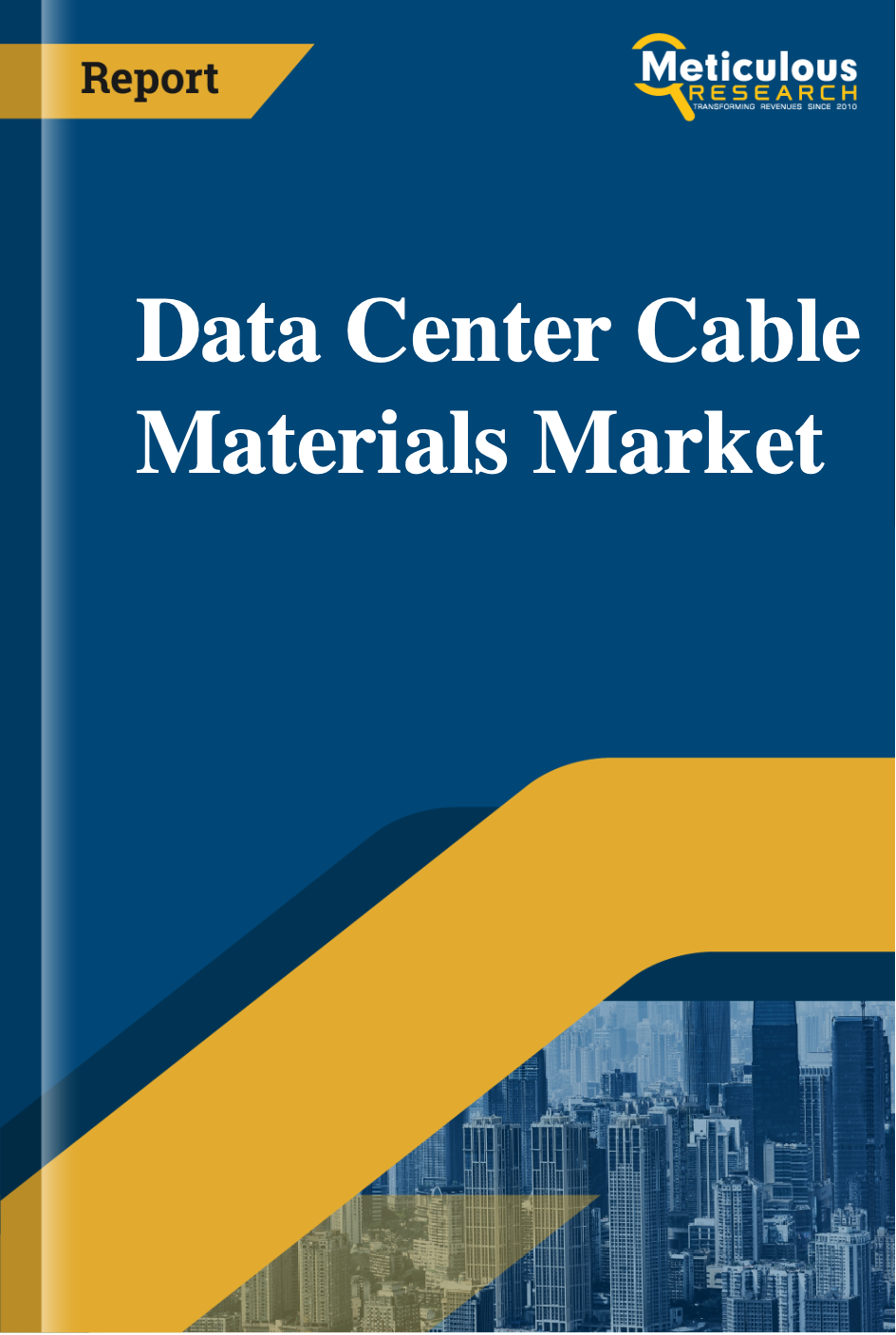
Data Center Cable Materials Market by Material Type, Cable Type, Material Application, Installation, Data Center Type, and Geography - Forecast to 2036
Report ID: MRSE - 1042113 Pages: 235 Aug-2026 Formats*: PDF Category: Semiconductor and Electronics Delivery: 24 to 72 Hours Download Free Sample Report
The global Data Center Cable Materials Market is estimated to be valued at USD 8.2 billion in 2025 and is projected to reach USD 9.1 billion in 2026. The market is expected to reach USD 24.8 billion by 2036, registering a CAGR of 10.6% during the forecast period (2026–2036).
The Data Center Cable Materials Market comprises specialized conductive, insulating, shielding, and protective materials used in manufacturing power cables, fiber optic cables, copper data cables, control cables, and hybrid cables deployed across modern data center infrastructure. These materials include copper, aluminum, fluoropolymers, cross-linked polyethylene (XLPE), polyvinyl chloride (PVC), polyethylene (PE), low smoke zero halogen (LSZH) compounds, thermoplastic elastomers (TPE), and other specialty polymers designed to provide high electrical performance, superior thermal stability, flame resistance, mechanical durability, and long-term reliability. As AI workloads, hyperscale cloud computing, and ultra-high-speed networking continue to expand, cable material performance has become increasingly important for maintaining signal integrity, operational safety, and energy efficiency.
The market is experiencing strong growth as global investments in hyperscale and AI-ready data centers continue to accelerate. Modern data centers require large volumes of high-performance cables capable of supporting high bandwidth, low latency, higher operating temperatures, and increasingly dense server architectures. The rapid migration toward 400G, 800G, and emerging 1.6T Ethernet is driving demand for advanced insulation materials and specialty polymers capable of minimizing signal loss while maintaining mechanical flexibility and fire safety. Simultaneously, increasing adoption of liquid cooling systems requires cable materials that can withstand more demanding thermal and environmental conditions.
Sustainability has become another major factor influencing market development. Data center operators and cable manufacturers are increasingly adopting recyclable polymers, halogen-free flame-retardant materials, and environmentally compliant compounds to meet stricter fire safety, environmental, and circular economy regulations. Regulatory frameworks such as RoHS, REACH, CPR, UL, and IEC standards are encouraging manufacturers to develop safer, low-emission, and sustainable cable materials without compromising electrical performance. Continued advances in polymer science, nanotechnology, and cable manufacturing processes are expected to further enhance product performance and support long-term market growth.
Rising AI and High-Density Data Centers
The rapid deployment of AI infrastructure is significantly increasing demand for advanced cable materials capable of supporting higher power densities, greater bandwidth, and improved thermal performance. According to McKinsey, average rack power density in AI-enabled data centers has more than doubled in recent years, increasing from approximately 8 kW per rack to 17 kW, and is expected to reach around 30 kW per rack by 2027 as AI workloads continue to expand. Similarly, Deloitte estimates that average rack power density will increase from approximately 36 kW in 2023 to nearly 50 kW by 2027, driven by the widespread deployment of GPU-intensive AI server
AI clusters equipped with thousands of GPUs require extensive fiber optic and power cable networks that operate reliably under continuous high-load conditions. As rack power densities continue to increase, cable materials must provide superior heat resistance, electrical insulation, flame retardancy, and signal integrity. These requirements are driving widespread adoption of specialty polymers, fluoropolymers, and advanced conductor materials across next-generation data center infrastructure.
Increasing Adoption of High-Speed Networking and Demand for Low-Loss Cable Materials
The transition from 100G to 400G, 800G, and future 1.6T networking architectures is creating substantial demand for high-performance cable materials with lower dielectric losses and improved signal transmission characteristics. Fiber optic cables and high-speed copper interconnects require advanced insulation and shielding materials that minimize attenuation while maintaining electrical reliability. At the same time, increasing deployment of hyperscale and colocation facilities is accelerating investments in low-loss polymers, high-performance fluoropolymers, and nano-enhanced cable materials capable of supporting next-generation networking technologies. These technological advancements are expected to remain key drivers of market growth throughout the forecast period.
High Cost of Advanced Insulation and Jacket Materials
Advanced cable materials such as fluoropolymers, high-performance thermoplastic elastomers, nano-enhanced compounds, and specialty flame-retardant polymers are considerably more expensive than conventional cable materials. These premium materials increase manufacturing costs while also requiring specialized processing technologies and stringent quality control procedures. The higher production costs can limit adoption among cost-sensitive projects and increase overall infrastructure expenditure for large-scale data center deployments.
Volatility in Raw Material Prices and Complex Regulatory Compliance
Manufacturers continue to face significant challenges associated with fluctuations in copper, aluminum, fluoropolymer, and specialty polymer prices. Supply chain disruptions and changing commodity markets can substantially impact production costs and profit margins. In addition, compliance with increasingly stringent fire safety, environmental, and sustainability regulations—including RoHS, REACH, CPR, UL, and IEC standards—requires continuous material innovation, testing, certification, and process optimization. These regulatory and supply chain complexities remain important restraints affecting market growth.
Expansion of AI Gigawatt Data Centers and Ultra-High-Speed Interconnect Infrastructure
The rapid deployment of AI gigawatt-scale data centers presents a significant growth opportunity for the Data Center Cable Materials Market. AI clusters equipped with tens of thousands of GPUs require enormous volumes of power cables, fiber optic cables, and ultra-high-speed copper interconnects capable of supporting high bandwidth, low latency, and continuous high-power operation. As networking technologies evolve toward 800G and future 1.6T Ethernet, demand for advanced insulation materials, specialty fluoropolymers, and low-loss dielectric compounds will continue to increase. The construction of hyperscale AI campuses worldwide is therefore expected to generate substantial long-term demand for premium cable materials capable of delivering superior electrical, thermal, and mechanical performance.
Growing Development of Sustainable and Halogen-Free Cable Materials
Sustainability initiatives across the data center industry are creating significant opportunities for environmentally friendly cable materials. Data center operators are increasingly seeking cable systems that reduce toxic emissions during fire incidents while complying with evolving environmental regulations such as RoHS, REACH, and CPR. This is accelerating adoption of Low Smoke Zero Halogen (LSZH) compounds, recyclable thermoplastic materials, bio-based polymers, and sustainable manufacturing processes. Manufacturers investing in low-carbon material technologies and recyclable cable compounds are expected to gain a competitive advantage as ESG objectives become a key purchasing criterion across hyperscale and colocation data centers.
Balancing High-Speed Signal Integrity with Fire Safety Requirements
One of the primary challenges facing cable material manufacturers is simultaneously achieving excellent electrical performance and stringent fire safety compliance. Materials capable of supporting ultra-high-speed data transmission often require specialized formulations with very low dielectric losses, while modern fire safety regulations demand superior flame retardancy and low smoke emissions. Developing cable materials that optimize both signal integrity and safety without significantly increasing production costs remains a major technical challenge for manufacturers serving next-generation data centers.
Supply Chain Constraints for High-Performance Polymers
The market continues to face supply chain risks associated with specialty polymers, fluoropolymers, and advanced flame-retardant compounds used in premium cable manufacturing. Limited production capacity, geopolitical uncertainties, raw material shortages, and fluctuations in feedstock prices can disrupt material availability and increase manufacturing costs. As demand for AI-ready infrastructure accelerates globally, maintaining stable supplies of high-performance materials while controlling costs will remain a critical challenge for cable manufacturers.
Increasing Adoption of Low Smoke Zero Halogen (LSZH) and Sustainable Cable Materials
One of the most significant trends shaping the Data Center Cable Materials Market is the growing adoption of LSZH compounds and environmentally sustainable cable materials. Data center operators are increasingly prioritizing materials that reduce smoke generation, minimize toxic gas emissions, and improve occupant safety during fire incidents. Simultaneously, manufacturers are investing in recyclable polymers, low-carbon manufacturing processes, and environmentally compliant material formulations to meet evolving sustainability targets and regulatory requirements. This trend is expected to significantly influence future product development across the industry.
Development of Nano-Enhanced and High-Performance Polymer Materials
Rapid advancements in polymer science are driving the development of nano-enhanced insulation materials capable of providing improved thermal stability, mechanical strength, electrical insulation, and signal integrity. These advanced materials enable cable manufacturers to support increasingly demanding AI workloads, higher operating temperatures, and ultra-high-speed networking applications. Combined with innovations in fluoropolymers and specialty thermoplastics, next-generation cable materials are expected to improve overall system reliability while supporting future data center architectures.
Market Analysis by Material Type
Based on material type, the global Data Center Cable Materials Market is segmented into Copper Conductors, Aluminum Conductors, Polyvinyl Chloride (PVC), Polyethylene (PE), Cross-Linked Polyethylene (XLPE), Fluoropolymers (FEP, PTFE, ETFE), Low Smoke Zero Halogen (LSZH) Materials, Thermoplastic Elastomers (TPE), and Other Specialty Cable Materials.
In 2026, Low Smoke Zero Halogen (LSZH) Materials are expected to account for the largest share of the market owing to increasing emphasis on fire safety, environmental compliance, and widespread adoption in hyperscale and enterprise data centers. However, Fluoropolymers (FEP, PTFE, ETFE) are projected to register the highest CAGR during the forecast period due to their superior electrical insulation, high-temperature resistance, chemical stability, and excellent performance in ultra-high-speed networking applications.
Market Analysis by Cable Type
Based on cable type, the market is segmented into Power Cables, Fiber Optic Cables, Copper Data Cables, Coaxial Cables, Control & Instrumentation Cables, and Hybrid Cables.
In 2026, Fiber Optic Cables are expected to account for the largest market share because hyperscale and AI data centers increasingly rely on optical connectivity to support high-bandwidth, low-latency communications.However, Hybrid Cables are projected to witness the fastest growth during the forecast period as integrated power-and-data transmission solutions gain adoption in high-density computing environments.
Market Analysis by Material Application
Based on material application, the market is segmented into Conductors, Insulation, Shielding, Jacketing, Fillers & Binders, and Flame Retardants.
In 2026, Insulation is expected to account for the largest market share because it directly determines electrical reliability, signal integrity, thermal stability, and cable lifespan. However, Flame Retardants are projected to register the highest CAGR due to increasingly stringent fire safety regulations and rising adoption of halogen-free cable technologies.
Market Analysis by Installation
Based on installation, the market is segmented into Internal Rack Cabling, Horizontal Cabling, Backbone Cabling, Underfloor Cabling, Overhead Cabling, and External Campus Cabling.
In 2026, Backbone Cabling is expected to account for the largest market share because it forms the primary high-capacity communication infrastructure connecting network equipment throughout data centers. However, Internal Rack Cabling is projected to witness the highest CAGR as increasing server density, GPU clusters, and AI computing require significantly more high-performance rack-level interconnections.
Market Analysis by Data Center Type
Based on data center type, the market is segmented into Hyperscale Data Centers, Colocation Data Centers, Enterprise Data Centers, Edge Data Centers, and Modular Data Centers.
In 2026, Hyperscale Data Centers are expected to account for the largest market share due to continuous investments by global cloud providers and AI infrastructure developers. However, Edge Data Centers are projected to register the highest CAGR during the forecast period as edge computing, 5G deployment, and distributed AI processing continue to expand globally.
Based on geography, the global Data Center Cable Materials Market is segmented into North America, Europe, Asia-Pacific, Latin America, and the Middle East & Africa.
In 2026, Asia-Pacific is expected to account for the largest share of the global Data Center Cable Materials Market. The region's leadership is driven by rapid expansion of hyperscale cloud infrastructure, increasing AI investments, large-scale data center construction, and the presence of major cable manufacturing companies across China, Japan, South Korea, and Southeast Asia. China continues to dominate regional demand due to extensive investments in AI computing facilities, cloud service expansion, and domestic production of copper conductors, polymer compounds, and specialty cable materials. Growing digital transformation, government-backed data center initiatives, and rising demand for high-speed networking infrastructure across India, Singapore, Japan, and Australia are further supporting market growth. The region also benefits from a well-established electronics manufacturing ecosystem and significant investments in fiber optic infrastructure, strengthening its position as the largest regional market.
However, North America is projected to register the highest CAGR during the forecast period. Continuous investments in AI gigawatt data centers, next-generation cloud infrastructure, and advanced networking technologies are accelerating demand for premium cable materials throughout the region. Major hyperscale operators are rapidly deploying facilities capable of supporting AI workloads requiring higher rack densities, liquid cooling systems, and ultra-high-speed interconnects. Increasing adoption of 400G, 800G, and future 1.6T networking, combined with stringent fire safety standards and growing preference for sustainable cable materials, is expected to drive strong market growth across the U.S. and Canada.
The global Data Center Cable Materials Market is moderately consolidated, with competition among cable manufacturers, specialty polymer producers, conductor suppliers, material compound manufacturers, and connectivity solution providers. Market participants compete primarily on material performance, electrical conductivity, signal integrity, fire safety, thermal resistance, sustainability, manufacturing capability, and compliance with international cable standards.
Leading companies are investing heavily in advanced fluoropolymers, halogen-free flame-retardant materials, recyclable polymer compounds, nano-enhanced insulation technologies, and sustainable manufacturing processes to address the evolving requirements of AI-ready data centers. Strategic partnerships between material suppliers, cable manufacturers, hyperscale cloud providers, and networking equipment companies are becoming increasingly common to accelerate product innovation and optimize supply chains. Capacity expansion, vertical integration, product differentiation, and investments in environmentally sustainable cable technologies remain the primary strategies adopted by leading market participants. As AI infrastructure and ultra-high-speed networking continue to evolve, manufacturers are increasingly focusing on developing cable materials capable of supporting higher bandwidth, improved thermal performance, and long-term operational reliability.
The report provides a comprehensive competitive assessment of the leading companies operating in the global Data Center Cable Materials Market. The key players profiled in the report include Prysmian S.p.A., Nexans S.A., Belden Inc., CommScope Holding Company, Inc., Corning Incorporated, Leviton Manufacturing Co., Inc., Panduit Corp., Furukawa Electric Co., Ltd., Sumitomo Electric Industries, Ltd., Fujikura Ltd., LS Cable & System Ltd., Southwire Company, LLC, HUBER+SUHNER AG, TE Connectivity plc, and Amphenol Corporation.
The global Data Center Cable Materials Market is estimated at USD 9.1 billion in 2026.
The market is projected to reach USD 24.8 billion by 2036.
The market is expected to grow at a CAGR of 10.6% during 2026–2036.
Expansion of AI and hyperscale data centers, increasing adoption of 400G/800G/1.6T networking, growing demand for high-performance cable materials, and stricter fire safety and sustainability requirements are driving market growth.
High costs of advanced cable materials, raw material price volatility, balancing signal integrity with fire safety, and supply chain constraints for specialty polymers remain key market challenges.
Low-loss insulation materials, halogen-free flame-retardant compounds, nano-enhanced polymers, recyclable cable materials, and sustainable cable manufacturing technologies are transforming the industry.
Low Smoke Zero Halogen (LSZH) Materials are expected to account for the largest market share in 2026.
Fluoropolymers (FEP, PTFE, ETFE) are projected to register the highest CAGR during the forecast period.
Fiber Optic Cables are expected to account for the largest market share owing to increasing deployment of high-speed optical networks across hyperscale data centers.
Hybrid Cables are projected to witness the highest CAGR as integrated power-and-data connectivity becomes increasingly important in AI-ready data centers.
Insulation is expected to account for the largest market share due to its critical role in electrical performance, thermal stability, and long-term cable reliability.
Backbone Cabling is expected to account for the largest market share because it serves as the primary high-capacity communication infrastructure within modern data centers.
Internal Rack Cabling is projected to witness the highest CAGR due to increasing rack densities and AI server deployments.
Hyperscale Data Centers are expected to remain the largest market segment owing to continuous investments by cloud service providers and AI infrastructure developers.
Edge Data Centers are expected to register the highest CAGR, supported by increasing edge computing deployments, 5G expansion, and distributed AI workloads.
Asia-Pacific is expected to remain the largest regional market due to rapid data center expansion, electronics manufacturing capabilities, and strong investments in AI infrastructure.
North America is expected to witness the fastest growth, driven by hyperscale AI data center investments and adoption of next-generation networking technologies.
Leading companies include Prysmian, Nexans, Belden, CommScope, Corning, Leviton, Panduit, Furukawa Electric, Sumitomo Electric, Fujikura, LS Cable & System, Southwire, HUBER+SUHNER, TE Connectivity, and Amphenol.














Published Date: Jun-2026
Published Date: Apr-2026
Published Date: Feb-2026
Published Date: Feb-2026
Please enter your corporate email id here to view sample report.
Subscribe to get the latest industry updates


